Out of Home Advertising Explained: Types, Benefits, and Top Trends
 By Kalpana Rathore
Out-of-home (OOH) advertising helps brands reach people beyond their homes through billboards, public transport, bus shelters, and digital screens in public spaces. It makes brands visible where people travel, shop, work, and spend time.
From traditional hoardings to digital displays, OOH advertising offers businesses different ways to build brand awareness and reach audiences in specific locations. Its effectiveness depends on choosing the right advertising format, location, creative message, and campaign objectives.
This guide explains what out-of-home advertising is, its main types and benefits, the latest industry trends, and how businesses can plan effective OOH campaigns.
What is OOH Advertising?
Out-of-home (OOH) advertising is a form of advertising that reaches people when they are outside their homes. It uses public spaces and everyday travel routes to display brand messages through formats such as billboards, bus shelters, buses, auto rickshaws, metro stations, and digital screens.
Businesses use OOH advertising to build brand awareness, promote products or services, and reach audiences in specific locations. The choice of format depends on the campaign objective, target audience, budget, and the areas a brand wants to cover.
Types of Out of Home Advertising
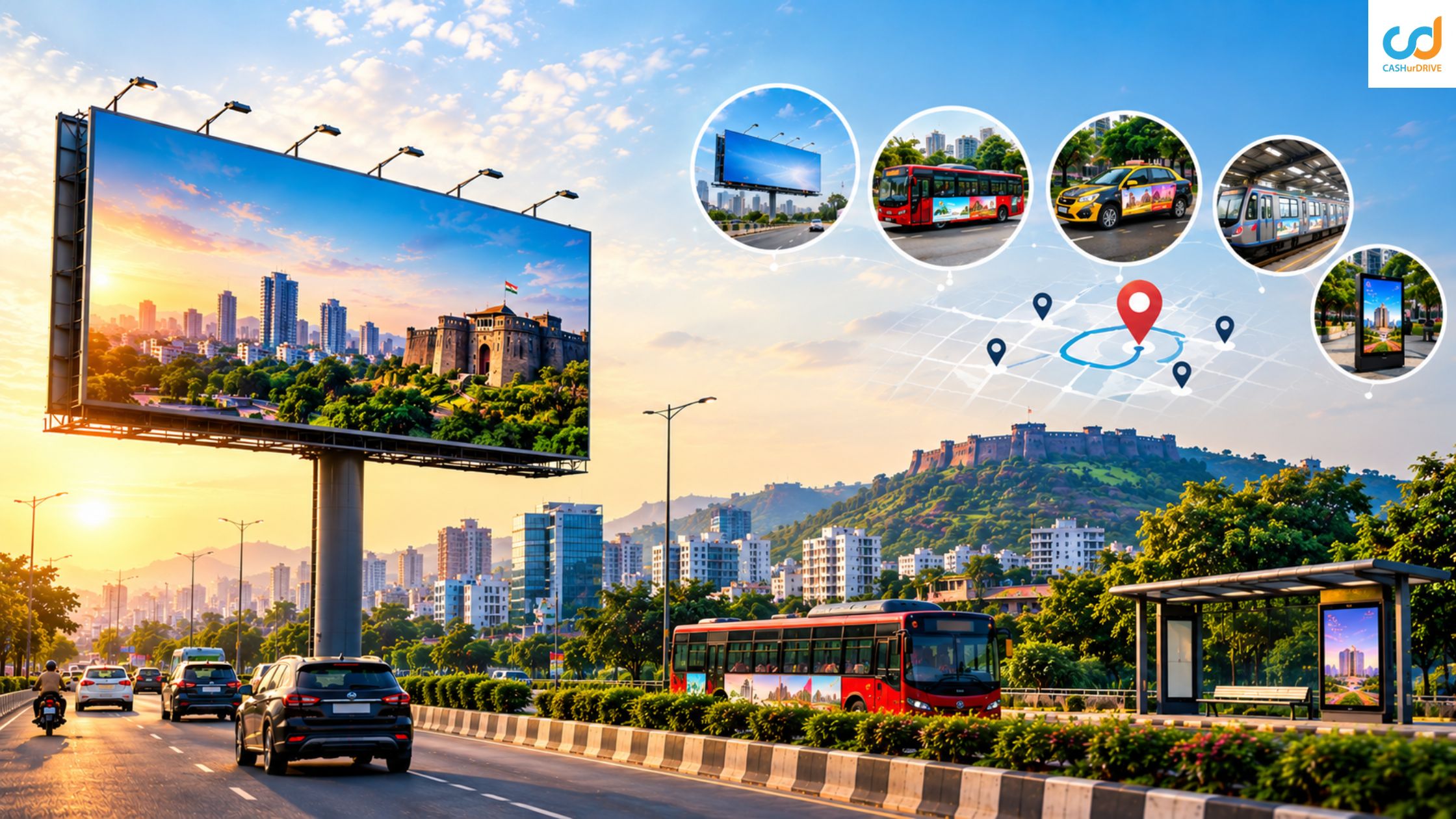
OOH advertising includes several formats that help brands reach people in different locations and everyday situations. From large billboards and public transport ads to digital screens and street furniture, each format offers different ways to build brand awareness. Here are the main types of out-of-home advertising and how they work.
Billboard Advertising

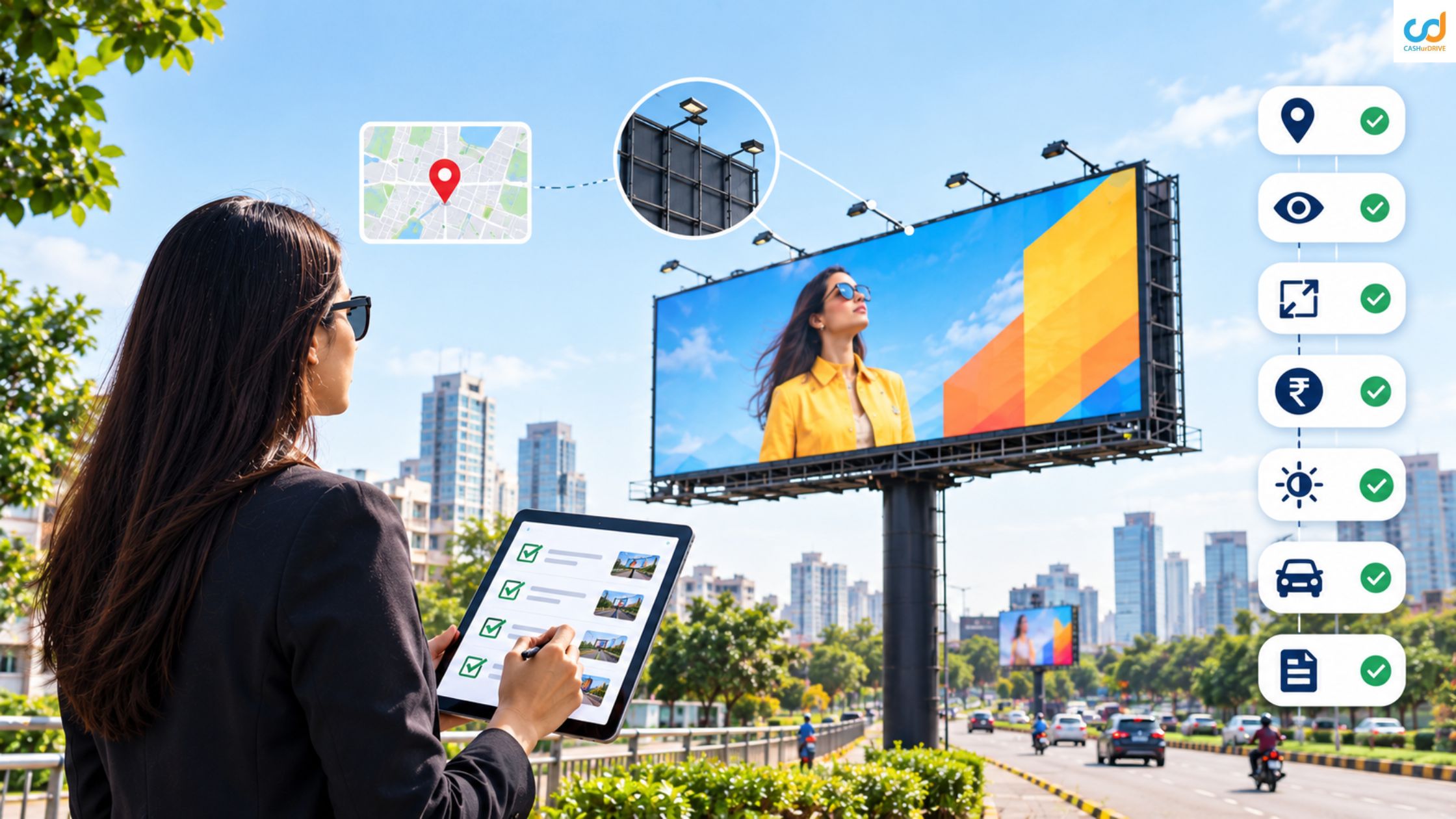
Billboard advertising displays brand messages on large structures placed along highways, busy roads, major intersections, and other high-visibility locations. It helps businesses build brand awareness among commuters, pedestrians, and local audiences.
Billboards are available in different sizes and formats, including traditional printed hoardings and digital displays. The right location, clear messaging, and eye-catching design can help a campaign stand out. Businesses planning a billboard campaign can explore billboard advertising services to understand the available options.
Transit Advertising

Transit advertising places brand messages on or inside vehicles such as buses, trains, metros, taxis, and auto rickshaws. Ads can appear as vehicle wraps, exterior panels, interior posters, or digital displays, depending on the transport format.
Because these vehicles move through different routes and neighbourhoods, transit advertising can help brands increase visibility across selected areas. Campaign reach depends on factors such as routes, service frequency, campaign duration, and vehicle coverage. Businesses can also explore transit advertising options to learn more about this format.
Digital OOH (DOOH)
Digital out-of-home (DOOH) advertising uses digital screens to display brand messages in public places such as shopping malls, airports, metro stations, and busy commercial areas. Unlike static displays, digital screens can show multiple creatives and allow advertisers to change messages according to the campaign schedule.
DOOH is useful for time-sensitive promotions, seasonal campaigns, and messages tailored to specific locations or times of day. Campaign performance depends on factors such as screen placement, audience exposure, creative quality, and the duration of the display.
Posters on Metro Station Locations

Metro station advertising helps brands reach commuters through posters, wall displays, panels, and other advertising spaces within stations. These placements can be used to promote products, announce events, or build brand awareness among people travelling through busy urban routes.
The most suitable placement depends on the station, passenger movement, campaign budget, and target audience. Advertisers should consider visibility, viewing distance, and the time commuters spend in each area when choosing metro station advertising formats.
Mobile Billboards

Mobile billboard advertising uses vehicles fitted with large advertising panels to display brand messages across selected routes and locations. Unlike fixed billboards, these ads can move between neighbourhoods, commercial areas, and event venues according to the campaign plan.
This format can suit local promotions, product launches, and event-based campaigns where brands want visibility in specific areas. When planning a mobile billboard campaign, businesses should consider route selection, traffic patterns, campaign timing, and the clarity of the advertisement.
Airport Advertising

Airport advertising places brand messages in high-visibility areas such as terminal entrances, check-in zones, departure lounges, baggage claim areas, and airport digital screens. These placements help brands connect with domestic and international travellers, depending on the airport and campaign location.
Airport advertising can suit travel, hospitality, retail, lifestyle, and premium consumer brands. The right format depends on the target audience, passenger flow, campaign budget, and the visibility of the chosen placement. Businesses should also confirm which advertising spaces are available at their selected airport.
Street Furniture Advertising

Street furniture advertising uses public amenities such as bus shelters, kiosks, benches, and other street-side structures to display brand messages. These placements are often found along pedestrian routes, busy roads, and commercial areas where people pass by throughout the day.
This format can help brands build local awareness and reach people in specific neighbourhoods. Advertisers should choose locations based on pedestrian movement, visibility, audience relevance, and campaign objectives. The design should be clear and easy to understand at a glance.
Point of Sale (POS) Advertising
Point of sale (POS) advertising promotes products or offers where customers make purchasing decisions, such as retail stores, supermarkets, and checkout areas. Common examples include promotional displays, branded stands, shelf signage, product demonstrations, and digital screens near billing counters.
POS advertising can encourage shoppers to notice a product, explore an offer, or consider an additional purchase. However, it is generally classified as in-store or retail advertising rather than a core out-of-home (OOH) format. Its inclusion here helps explain how brands can connect with consumers close to the point of purchase.
EV Charging Stations

EV charging station advertising displays brand messages at locations where electric vehicle owners stop to charge their vehicles. Depending on the site, advertising formats may include digital screens, branded charging units, and nearby display panels.
This format can help brands reach EV users in selected locations, including shopping centres, office complexes, and public charging hubs. It may be relevant for automotive, technology, mobility, and sustainability-focused campaigns. Advertisers should assess site traffic, dwell time, audience relevance, and available advertising formats before choosing a location.
The Top Benefits of Outdoor Advertising
OOH advertising helps brands build visibility in public spaces and reach people as they travel, shop, and go about their daily routines. Its value depends on factors such as location, audience relevance, creative design, and campaign duration. Here are some key benefits businesses can consider when planning an outdoor advertising campaign.
Cost-Effective Branding
OOH advertising offers formats for different campaign budgets, from local posters and bus shelter ads to large billboards and digital displays. The overall cost depends on the location, advertising format, campaign duration, production, and installation.
Digital billboards may also display multiple advertisers’ creatives in scheduled time slots, depending on the media owner’s arrangement. Businesses should compare the expected audience, location quality, and total campaign cost before selecting a format. This helps them choose an option that fits their marketing objectives and budget.
High Reach and Visibility
OOH advertising can help brands gain repeated visibility in busy locations such as major roads, commercial districts, shopping areas, and transit hubs. People travelling along these routes may see the same advertisement during their daily journeys, helping them become familiar with the brand.
For example, a fitness brand could advertise near gyms, while a local retailer could choose placements close to its store. Actual reach depends on location, traffic or footfall, viewing conditions, and campaign duration.
Targeted Advertising
OOH advertising allows brands to choose locations that are relevant to their target audience. For example, an education provider may advertise near colleges, a restaurant may focus on nearby commercial areas, and a retail brand may choose shopping districts.
Advertisers can also plan campaign timing around local events, commuting patterns, or seasonal demand. Selecting suitable locations helps make the campaign more relevant, although results depend on the audience’s exposure to the advertisement and the strength of the message.
Increased Engagement
Well-designed OOH advertisements can attract attention through clear messaging, strong visuals, and relevant placement. A campaign in a busy public area may encourage people to notice a brand, remember its message, or look for more information later.
Brands can make outdoor campaigns more interactive by adding QR codes, short website URLs, or social media prompts where appropriate. Engagement depends on the creative, placement, audience, and ease of taking the next step. Any call to action should be easy to understand at a glance.
Complements Other Channels
OOH advertising can support digital, social media, radio, and other marketing activities by reinforcing the same campaign message across different channels. For example, a billboard can feature a QR code or website address that directs interested viewers to a landing page, while a transit campaign can use the same visuals as a brand’s social media promotions.
To keep the campaign consistent, businesses should align the message, visual identity, and call to action across channels. Tracking website visits, QR code scans, or campaign-specific landing page activity can help assess how OOH supports the wider marketing effort.
Top Trends To Look Out For Out of Home Advertising
OOH advertising continues to evolve as digital technology, changing consumer behaviour, and new creative formats influence how brands use public spaces. From data-led digital screen scheduling to interactive campaigns, these developments are creating new options for advertisers. Here are some important trends shaping the OOH advertising industry.
Programmatic Out-of-Home Advertising
Programmatic DOOH uses technology to automate the buying and scheduling of ads on digital screens. Depending on the platform and campaign setup, advertisers can adjust creative content based on factors such as time, location, weather, or campaign conditions.
For example, a food brand may schedule breakfast promotions in the morning and different offers later in the day. Programmatic buying can make campaign management more flexible, but available targeting options depend on the screen network, data sources, and media provider.
Integration of Augmented Reality (AR)
Augmented reality (AR) can add a digital layer to an outdoor advertising campaign, allowing people to interact with brand content through a compatible smartphone or app. For example, a campaign may use a QR code to open an AR experience that lets users explore a product, view an animation, or engage with a branded filter.
AR can make a campaign more interactive, but it needs a clear purpose and an easy user experience. Brands should also provide simple instructions and measure participation through available campaign analytics rather than assuming that every interaction leads to a sale.
Sustainability in OOH
Sustainability is becoming an important consideration in outdoor advertising, from the materials used in campaign production to the energy consumed by digital displays. Depending on availability, advertisers may explore recyclable print materials, reusable structures, energy-efficient screens, or solar-powered installations.
Brands can also use OOH campaigns to communicate sustainability initiatives, such as electric mobility or responsible consumption. However, environmental claims should be accurate and supported by evidence. Choosing suitable materials, planning installation carefully, and managing campaign waste can help reduce the environmental impact of outdoor advertising.
Interactive Digital OOH Advertising
Interactive digital out-of-home (DOOH) advertising invites audiences to engage with digital displays instead of only viewing a message. Depending on the technology, campaigns may use touchscreens, motion sensors, mobile connections, or QR codes to offer an interactive experience.
For example, a retail brand could let people explore product information on a screen, while an event campaign could direct viewers to an online registration page. Interactive features should be easy to use and suitable for the location. Advertisers can assess performance using available measures such as interactions, scans, or landing-page visits.
Mobile Integration
Mobile integration connects outdoor advertising with digital experiences on people’s smartphones. Brands can use QR codes, short URLs, NFC technology, or clear calls to action to guide interested viewers to a website, product page, app, or campaign landing page.
For example, a billboard promoting a new product could link to more information or a special offer. To measure results, advertisers can track QR code scans, visits to campaign-specific URLs, or other available engagement data. The experience should be mobile-friendly and simple enough for users to complete quickly.
CONCLUSION
Out-of-home (OOH) advertising helps brands connect with audiences in public spaces through formats such as billboards, transit ads, street furniture, and digital screens. The right format depends on a brand’s objectives, target audience, budget, and campaign locations.
New developments such as programmatic DOOH, interactive displays, mobile integration, and sustainable production methods are creating more ways to plan outdoor campaigns. Businesses can make better decisions by selecting suitable locations, creating clear messages, and measuring available campaign results.
CASHurDRIVE helps businesses explore outdoor advertising options based on their campaign needs. From hoarding advertising to transit advertising, brands can review suitable formats and plan campaigns around their target audience and locations. Visit CASHurDRIVE to learn more about its advertising solutions.
Frequently Asked Questions About OOH Advertising
Q1: What is OOH advertising?
OOH advertising, or out-of-home advertising, reaches people when they are outside their homes. Common formats include billboards, bus shelters, transit ads, metro station displays, and digital screens in public spaces.
Q2: What are the main types of OOH advertising?
The main types include billboard advertising, transit advertising, street furniture advertising, airport advertising, mobile billboards, and digital out-of-home (DOOH) advertising. The right format depends on the campaign objective, target audience, and location.
Q3: What is the difference between OOH and DOOH advertising?
OOH advertising includes outdoor formats such as printed billboards, posters, and vehicle ads. DOOH is a type of OOH advertising that uses digital screens to display advertisements. Digital formats can allow advertisers to schedule and update creatives more flexibly.
Q4: What are the benefits of OOH advertising?
OOH advertising can help brands build visibility, reach audiences in selected locations, and reinforce messages across marketing channels. Results depend on factors such as placement, creative quality, campaign duration, and audience exposure.
Q5: How much does OOH advertising cost?
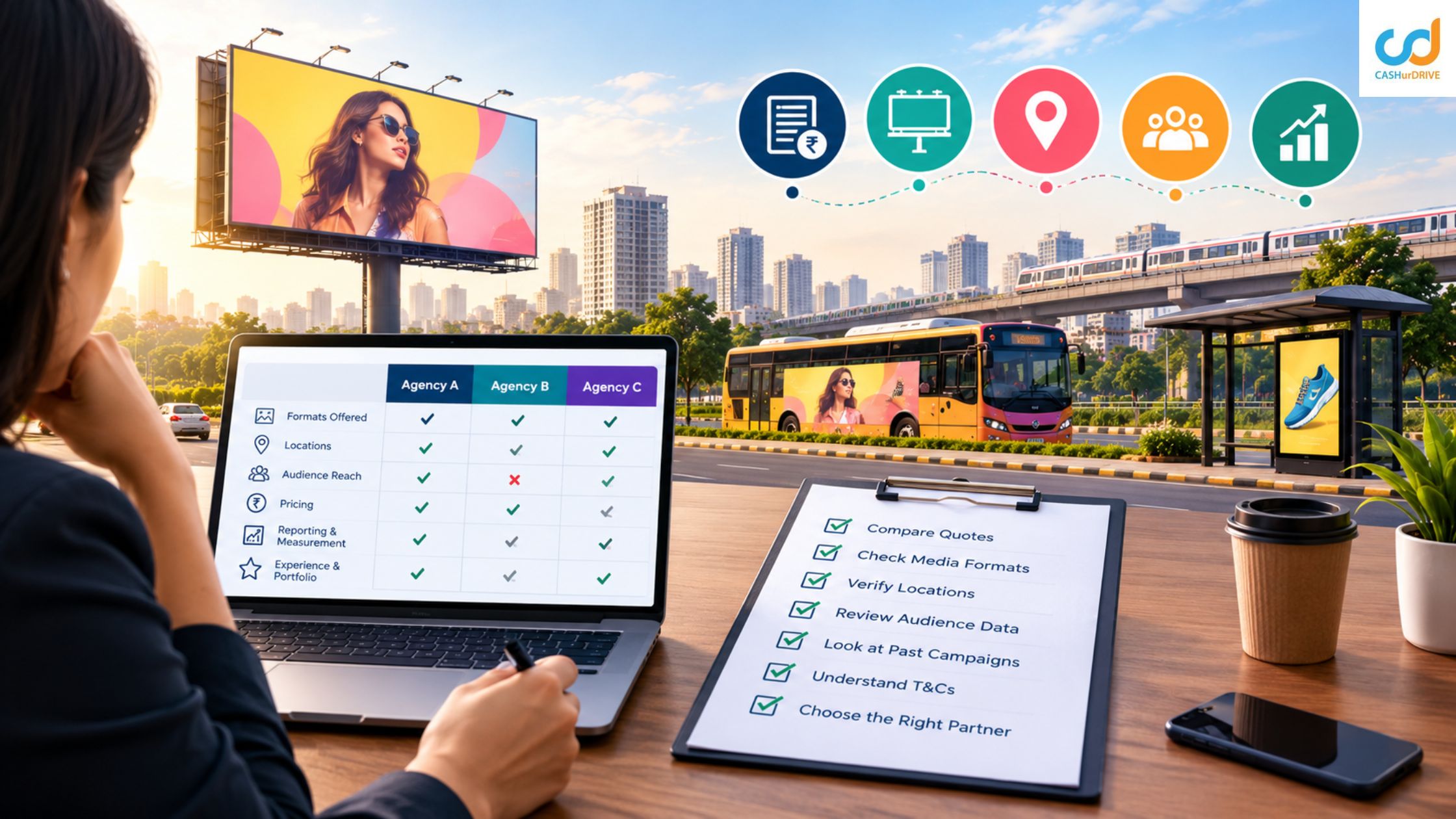
The cost depends on the advertising format, location, media size, campaign duration, production, and installation. Businesses should compare available options and request location-specific quotations before finalising a campaign.
Q6: How can businesses measure OOH advertising performance?
Businesses can assess OOH campaigns using measures such as estimated audience exposure, QR code scans, visits to campaign-specific landing pages, branded search activity, and changes in brand awareness. The suitable measurement method depends on the campaign objective and available data.