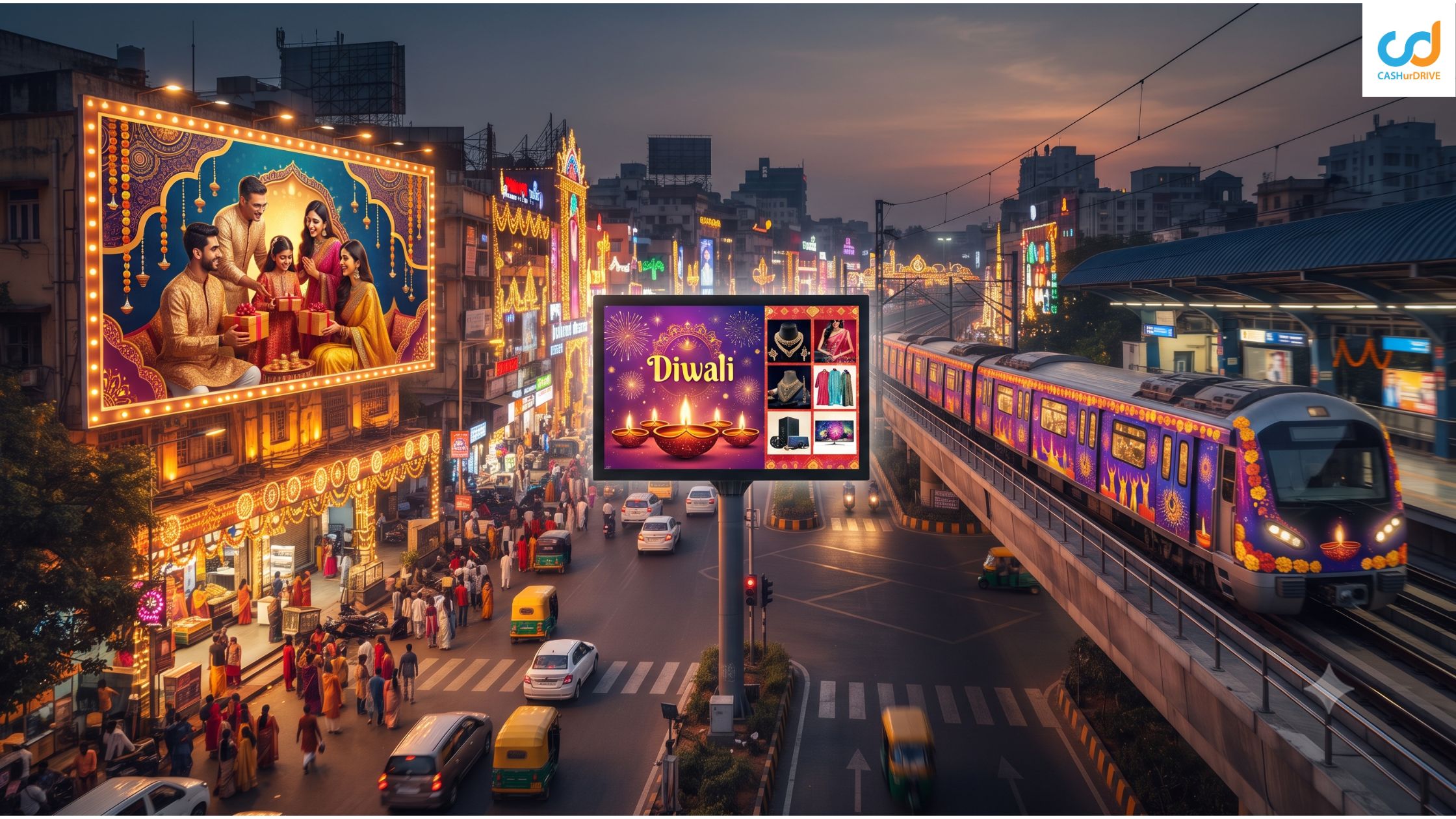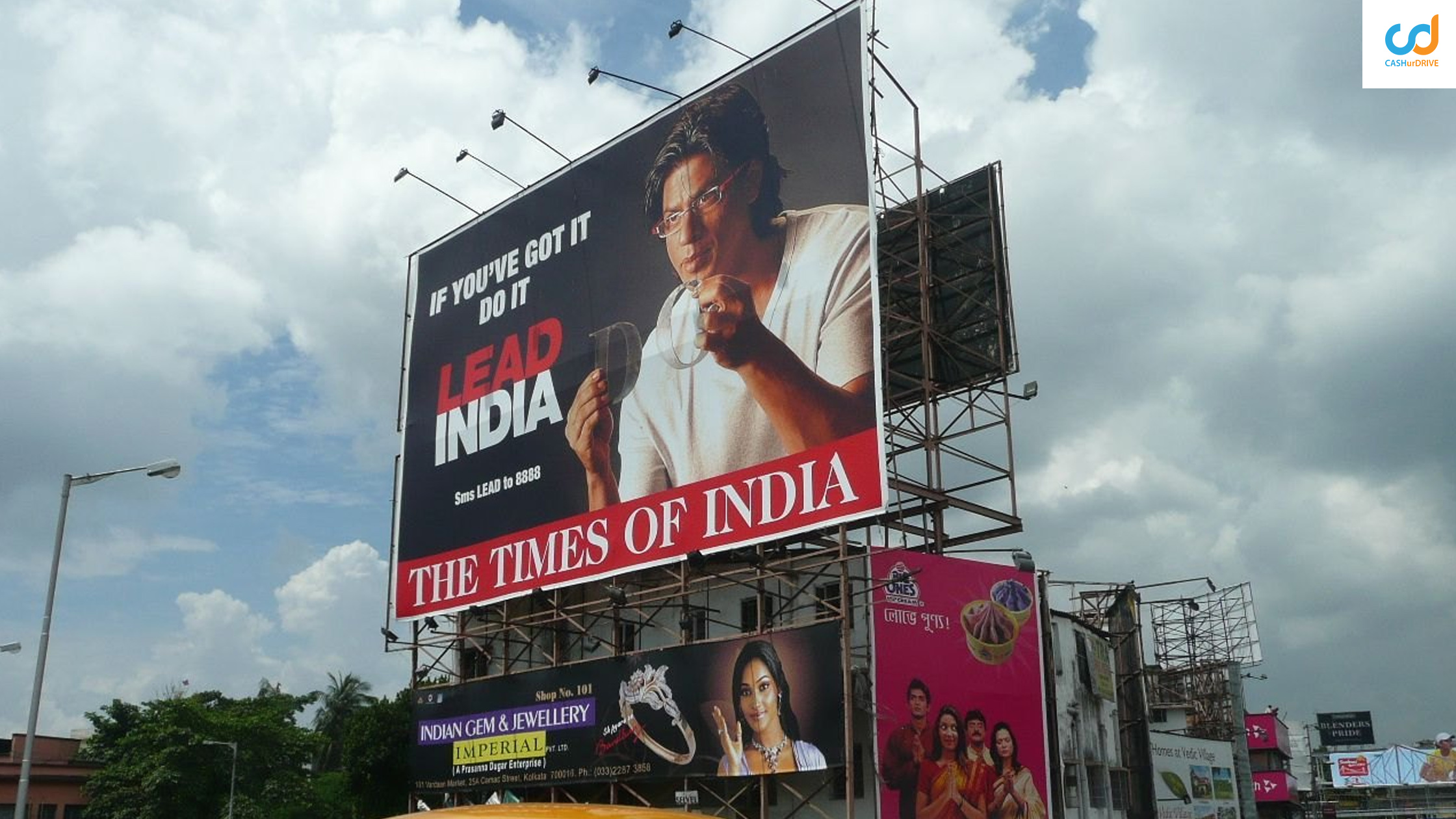
Why Brands Still Invest Crores in Billboard Ads?
 By Manan Sethi
Here is a question worth sitting with: why would a brand with access to hyper-targeted Instagram ads, programmatic display, and YouTube pre-rolls still spend ₹8 lakh a month on a hoarding in Bandra?
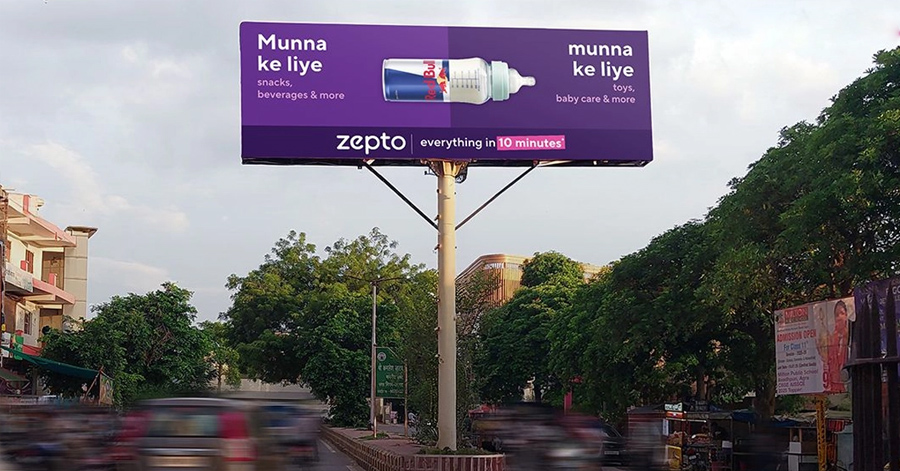
The easy answer is legacy. Old habits, old budgets, old marketing heads who grew up before the internet. But that explanation collapses when you look at who is actually buying billboard ads in India today. Zepto. Blinkit. CRED. Groww. These are not companies clinging to old playbooks. Their entire existence is digital. And they are all over hoardings across Mumbai, Delhi, and Bengaluru.
So what do they know that the “just run performance marketing” crowd does not?
Do Billboard Ads Actually Work in 2026?
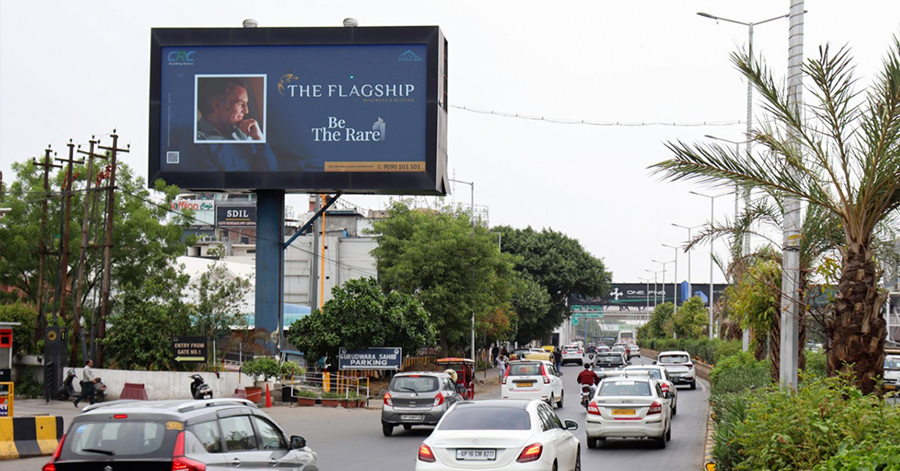
The instinct to dismiss billboard ads is understandable. You cannot track a click. You cannot A/B test a hoarding. But “hard to track” is not the same as “does not work.”
People who see a billboard are more likely to search for the brand on Google within the next few hours. The hoarding does not close the sale. It plants the thought that starts the search that leads to the conversion – and your digital campaign quietly takes the credit.
That attribution gap is exactly why billboard advertising effectiveness gets consistently underrated. The impact is real. The credit just lands somewhere else.
India’s OOH market tells the same story. According to FICCI-EY, the sector was valued at ₹3,500 crore in 2023 and is on track to cross ₹5,000 crore by 2027. That growth is not sentiment. It is brands testing the channel, measuring downstream effects, and spending more.
What makes billboard ads different from every other format?
One can neither skip hoarding nor swipe it in 5 seconds.
An individual caught in a rush hour on the Western Express Highway at 6 o’clock is forced to stare at the same hoarding for 8-25 minutes. The individual will come across the same hoarding the next day and the day after that, too. Over the course of one week, the individual’s brain will be hardwired to remember the brand.
Advertising professionals refer to this process as frequency by geography. Just a single hoarding placed strategically at the right location can do wonders, which would require much higher costs using any form of paid social media. The site stays fixed. The audience comes back to it daily because that is their commute.
There is also something harder to quantify but impossible to ignore: a billboard makes a brand feel real. Physical advertising requires money up front and commitment to a location. Consumers sense this. A D2C brand on a hoarding in Powai reads differently from the same brand in a Facebook ad. One feels like conviction. The other feels like a boosted post.
What Is Billboard Advertising Cost in India?
This is where most brands get the wrong picture. They assume billboard advertising in India is only for the Amuls and Airtels of the world. It is not.
Cost of billboard ads in metro cities
Premium junction locations in Mumbai and Delhi are worth ₹3 lakh to ₹10 lakh per month. Examples include Mahim Causeway in Mumbai and the AIIMS flyover in Delhi. Other smaller and less visible locations in both cities are worth ₹50,000 to ₹1.5 lakh per month and also cater to a large audience of commuters every day.
Also Read: Billboard Advertising in Delhi: Formats, Costs & Effectiveness
Cost of billboard ads in Tier 2 and Tier 3 cities
Going past the metro cities, the pricing dynamics change substantially. A good location in the non-metro cities like Pune and Ahmedabad will cost ₹20,000 to ₹80,000 monthly. A highway hoarding between two such cities can also be acquired for less than ₹15,000 per month.
While digital out-of-home media (DOOH) carries a higher cost compared to static billboards, one aspect stands out – the absence of any additional printing cost that needs to be incurred every time there’s a change in the creative. In fact, for campaigns involving frequent testing and promotion, it is likely to be much cheaper than static media.
The production cost involved in the making of a flex hoarding is usually between ₹20,000 to ₹70,000 per creative, which is a one-time cost.
Which Brands See the Best Returns from Billboard Advertising?
Not every category benefits equally. The brands that consistently get strong returns share a few traits.
High purchase consideration categories
Real estate, automobiles, health insurance, education – none of these are impulse buys. A customer researches for weeks before committing. A billboard during that consideration window keeps the brand present without being intrusive. No retargeting pixel replicates 30 days of physical exposure on someone’s daily commute.
Brands entering a new market
When a brand is new to a city, digital ads alone rarely create the feeling of local presence. Hoardings do. Jio’s entry in 2016 was so dominant in OOH that people in Tier 2 cities felt like Jio had always been there, even before the SIM was in their phone. That kind of market arrival is difficult to engineer through performance marketing alone.
D2C and startup brands that need to build trust fast
After the 2021–2023 startup funding boom, consumers became noticeably more skeptical of brands they only encountered online. A physical hoarding in their neighbourhood carries credibility that no landing page can fake. This is precisely why digitally native brands like Zepto and Nykaa invested heavily in OOH – not because it was cheap, but because it was necessary to be taken seriously.
How to Run Billboard Ads Without Wasting the Budget?
Choose sites the way you choose keywords – with intent
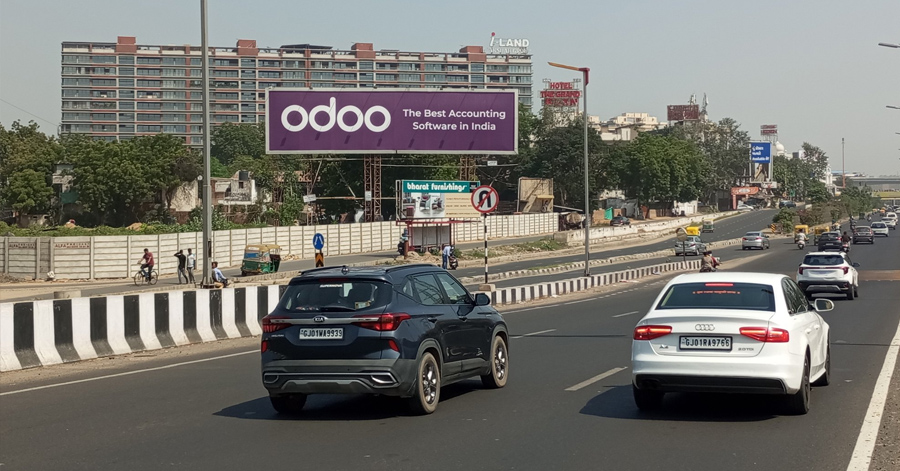
Site selection is everything in billboard advertising. A hoarding facing away from traffic, placed too high to read at 60 kmph, or obscured by a tree is money gone. A good billboard advertising company will negotiate the right sites, verify visibility conditions on ground, and share impression estimates based on actual traffic count data rather than estimates.
Keep the creative brutally simple
The creative rules for billboard ads are strict and unforgiving. Copy must work in under three seconds. One thought per board. If the message needs more than seven words to land, it is not clear enough yet. Amul has built a cultural institution on this constraint for over five decades. Most brands overthink it.
Run long enough to matter
A two-week campaign almost never moves brand recall. Thirty to forty-five days is the floor for most markets. The first week, people notice the board. By week four, they remember the brand. By week six, it starts to feel familiar – which is exactly where purchase decisions begin.
Measure what can be measured
The measurement gap in billboard advertising is real but smaller than it used to be. Geo-fenced mobile data can tell you how many devices passed a site and later visited your store or website. A vanity URL or promo code on the hoarding attributes direct traffic. Branded search volume during the campaign period is a reliable indirect signal of impact.
Collaborating with experienced hoarding advertisement service companies enables one to enjoy superior site inventories, DOOH technology, and analytics capabilities that smaller firms cannot provide.
FAQs
Q1. Do billboards increase sales or only raise awareness?
Both, but it depends on the design of the campaign. Billboards that emphasize awareness raise branded searches, which subsequently get converted online. Billboards designed strategically, with an offer and call-to-action (CTA), generate footfalls and web hits, especially if the website is located close to the place of sale.
Q2. What is the smallest budget required for a billboard campaign in India?
A campaign for a single city with three to four selected billboard sites in a Tier 2 market can be conducted for ₹2 to ₹3 lakh over 45 days, inclusive of production. Metropolitan campaigns with any degree of scale begin at ₹8 to ₹10 lakh per month.
Q3. How is billboard advertising performance measured?
It is done primarily through mobile location tracking using geo-fencing technology, rise in branded searches during the campaign period, use of promo codes or vanity URL on the ad, and pre-campaign/post-campaign surveys for brand lift measurement. None of these approaches is as accurate as digital attribution, but together they give us a fairly accurate assessment of performance.
Q4. Are billboard ads worth it for a small or new brand?
In Tier 2 and Tier 3 cities, yes, costs are low enough that even a small brand can build strong local visibility. In metros, the answer depends on whether the budget is large enough to own a few high-quality sites. One great site consistently beats five mediocre ones spread thin across a city.