Premium vs Mass Transit Routes: Which Delivers Better ROI?
 By Sahil Munjal
Most transit advertising strategies fail for one simple reason. Brands focus on vehicles. But they should focus on routes instead.
More buses, cabs, or autos do not always mean better reach. In fact, that is often a costly mistake. The route matters far more than fleet size.
One vehicle on the right route can beat many on weak roads. So, route planning is now key to every transit advertising strategy.
This is especially true in India. Cities move differently here. Delhi, Mumbai, and Bengaluru each have unique travel patterns. So, a route that works in one city may fail in another.
The question is simple. Should brands choose premium routes or mass routes?
What Are Premium Routes in Transit Advertising?
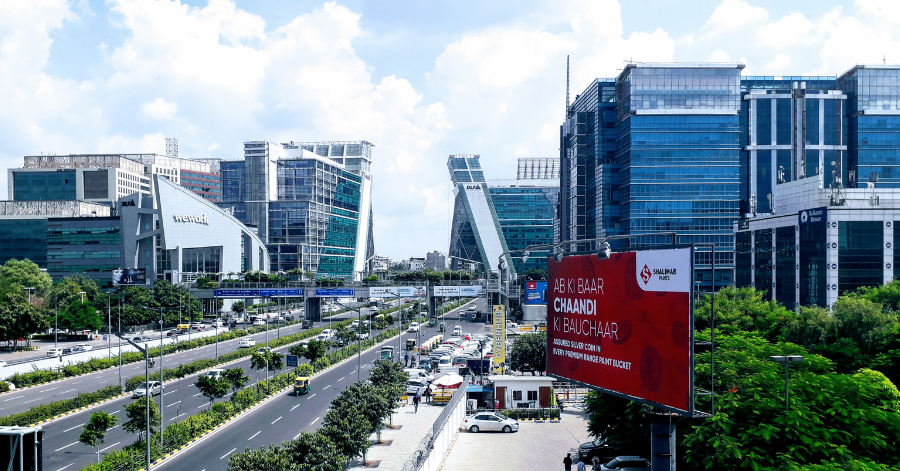
Premium routes are high-value travel corridors. They pass through airport roads, IT parks, and finance hubs. Such routes also cover luxury shopping areas and business districts.
Cyber City in Gurgaon and BKC in Mumbai are strong examples. These routes may not always be the busiest. But they attract a more valuable crowd.
That is why premium routes advertising India campaigns work well. They suit luxury, fintech, real estate, and auto brands.
Why do Premium Routes Work?
Premium routes help brands reach the right people. For instance, someone on an airport road will notice a finance ad. The setting makes the message feel relevant.
Being seen in a premium zone also shapes brand image. People begin to connect your brand with trust.
Also, repeated exposure to the same route builds recall. Many brands study transit advertising costs in India. They soon realise that route quality beats quantity.
What Are Mass or High-Traffic Routes?
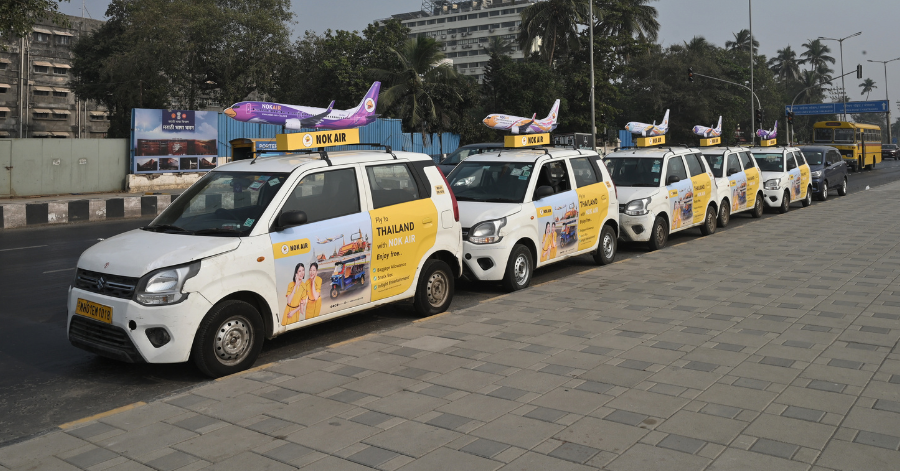
Mass routes focus on reach and scale. These roads stay busy all day. They include metro feeder roads, railway areas, and bus corridors. Market zones and dense housing areas are also part of this group.
This is where high-traffic route advertising becomes powerful. These roads create a massive daily reach. As a result, brands connect with a large crowd at a lower cost.
In many Indian cities, transit ads on busy routes create thousands of impressions every day.
Why Brands Prefer Mass Routes?
Mass routes create a habit. And habit builds memory. People on the same route see the same ad daily. So, over time, they recall it clearly.
That is why mass routes work so well for awareness campaigns. They suit FMCG brands, telecom firms, retail chains, food delivery apps, and more.
In crowded cities, reach is everything. Therefore, many brands base their bus advertising strategy on busy roads.
Premium Routes vs Mass Routes: The Main Difference
The gap is clear. Premium routes focus on audience quality. Mass routes, on the other hand, focus on scale.
Here is a quick look. Better targeting comes from premium routes, while stronger reach comes from mass routes. Brand image grows on premium routes, whereas broad recall grows on mass routes. Premium routes cost more, but mass routes are far cheaper.
This makes it possible for many wise brands to combine the two routes.
Which Route Performs Better in India?
Each and every city in India has its own traffic patterns. For instance, what would work in Mumbai might be ineffective in Delhi. It is because of this reason that transit media planning must take place prior to any campaign.
For Awareness Campaigns
A mass transit route would perform better in such a case. This is because awareness is determined by recall which, in turn, is influenced by the number of exposures.
This type of campaign is ideal for FMCG products, retail companies, and telecom businesses. In busy cities, therefore, repeated exposure helps brands stay top of mind.
For Premium Brands
Premium routes are the better choice for luxury or high-ticket products. These brands do not need random reach. Instead, they need the right audience.
Airport roads, business zones, metro corridors, and IT hubs work best. That is why brands study the best routes for advertising in Delhi carefully. Most focus on office and airport roads. The audience fit is simply stronger there.
For Hyperlocal Campaigns
Hyperlocal campaigns need precise targeting. For example, a restaurant in South Delhi should focus on nearby routes. Covering the entire city is not needed.
This is where location-based transit ads work very well. Local fit often leads to more visits and stronger sales.
Also, brands planning cab advertising routes Delhi campaigns focus on specific zones. Airport pick-up points and office areas work best. The audience match is far more precise there.
How to Build an Effective Transit Advertising Strategy?
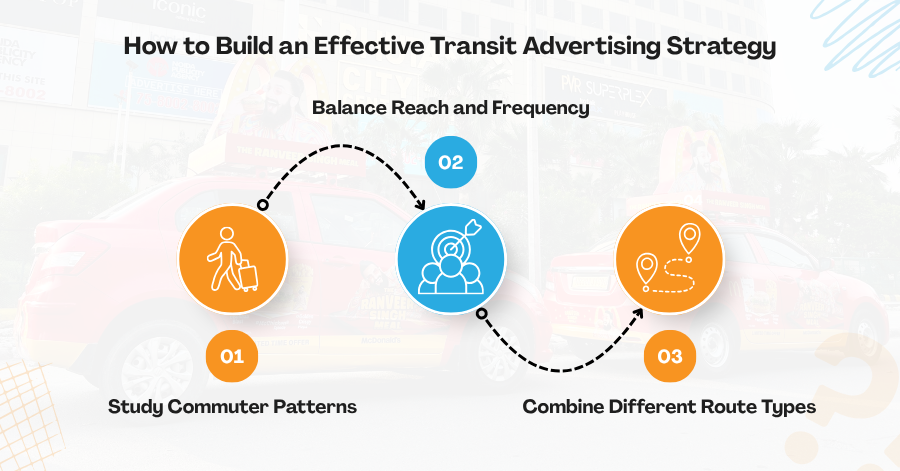
Every strong transit advertising strategy starts with a clear goal. Before choosing routes, ask yourself what you need. Do you want more reach, stronger recall, or local impact? Your answer will shape the route choice.
1. Study Commuter Patterns
Good planning always starts with real data. Study office traffic, peak hours, and housing density. Also, look at metro links and key business zones.
This helps you find the best transit routes for advertising. It is based on how people move through the city.
2. Balance Reach and Frequency
Many brands focus only on reach. But that is not enough. The real power of transit advertising lies in repeat exposure. So, frequency matters just as much as reach.
In many cases, fewer vehicles on strong routes beat large fleets on weak ones. That is why frequency must be part of every fleet advertising strategy.
3. Combine Different Route Types
The best campaigns mix route types. For example, premium routes build trust and mass routes build recall. Local routes drive sales. This layered method reaches different groups of people. Also, it consistently improves ROI over time.
Common Mistakes Brands Make
Many brands still repeat the same errors. Routes get chosen only by traffic volume. Audience quality gets ignored. All city zones get treated the same. Peak travel windows get missed. The same message goes on every route.
A busy road means very little if the audience is wrong. So, route insight matters far more than fleet size in any transit advertising strategy.
Conclusion
There is no single winner between premium routes and mass routes. Both work well. But they solve very different problems.
Mass routes help brands build reach fast. Premium routes, on the other hand, help brands find the right audience. As a result, savvy advertisers often combine both.
FAQs
Q1. Are premium transit routes more expensive in India?
Yes, they usually cost more. But they often deliver better audience quality and a stronger brand fit.
Q2. Do high-traffic routes always perform better?
Not always. They offer a strong reach. But premium routes give better targeting for specific audiences.
Q3. Which industries benefit most from premium routes?
Fintech, luxury retail, banking, real estate, and premium education brands perform well on premium routes.
Q4. Why does route planning matter for a strong transit advertising strategy?
Route quality directly affects recall, audience fit, and ROI. In many cases, route choice matters more than fleet size.