How We Execute a Pan-City Cab Advertising Campaign: Step-by-Step Breakdown
 By Kalpana Rathore
A cab advertisement campaign on a city-wide scale transforms into a moving advertisement since most cabs are on the road. They go into the busy locations and make people notice the brand. Cab branding provides constant exposure in business, residential, and high-traffic areas when done properly.
The strategy is optimal when the brand can afford to hire a number of cabs in large cities. A complete campaign is made, designed, installed, and checked by a professional team in the following steps.
Step 1: Define Objectives and Select Scope
The first step is to set the campaign goal. It can be brand awareness, a product launch, or a local store promotion. Clients tell the cab branding company the target areas, how many people they want to reach, and how long the campaign should run. A clear goal helps decide if the campaign needs full-body wraps, rooftop ads, or inside-the-cab ads.
The next step is to choose the size of the campaign. Big brands use city-wide campaigns. Local businesses use small-area campaigns. The ads on cab team check footfall, traffic, and population flow to decide how many cabs the campaign needs.
Step 2: Choose the Right Format
A cab branding campaign may take various shapes. Formats include:
- Complete cab wrap (through sides, bonnet, rear and roof).
- Half wraps/door-panel advertisements in moderate visibility.
- Taxi roof advertising is commonly in the form of inert panels or moving LED displays.
- Teams put ads on seat-backs or rear windows. Passengers can see these ads easily inside the cab.
The ad format depends on the budget, the coverage, and the message. Full-wrap ads and rooftop ads give the best visibility. Inside-cab ads work well when the message needs more details, like promo codes or QR offers.
Step 3: Budgeting and Cost Estimation
The cost depends on the number of cabs, the ad style, the city, and how long the campaign runs. In India, car advertising costs vary. Basic taxi ads usually start from ₹5,000 to ₹10,000 per cab per month.
Full-wrap and rooftop ads cost more. They cover more area and reach more people. Vehicle advertising agencies offer packages to brands. A 30-day campaign with outside branding on many cabs can fit small, medium, or large budgets.
Step 4: Route & Fleet Planning
Campaign impact is chosen by the choice of which cabs and which routes to use. Planning is done by transit advertising solutions, mapping out areas within the city, the most populated districts, business areas, entertainment areas, and residential areas to construct a coverage.
This stage involves:
- The selection of the fleet and cab model. Depending on the area of wrap, the hatchback, sedan or bigger vehicle.
- Delivery of vehicles to routes that serve specific areas.
- Planning run-time to optimise exposure, peak time, night shifts, and traffic jams.
Proper planning of routes means that the ads will be placed where the target audiences will travel.
Step 5: Creative Design and Production
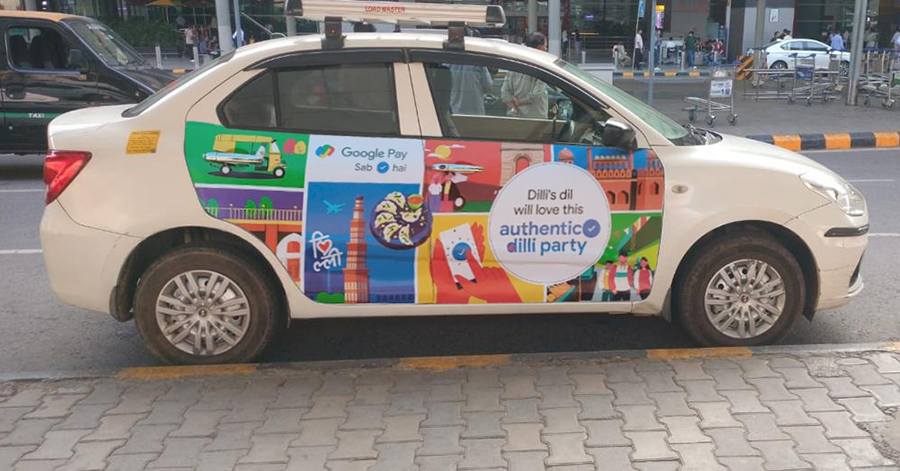
The ad design must be easy to see and show the message clearly. The design process includes:
- Preparing wrap templates or rooftop panel art based on cab dimensions, provided by the agency.
- Ensuring readability: bold visuals, limited text, clear brand logo, striking but uncluttered layout.
- For rooftop or digital ads, you can use changing content, like time-based offers or event messages.
- Teams print ads on strong vinyl or tough panels. This keeps them safe from weather and daily wear.
Once the design is ready and approved, production begins.
Step 6: Wrapping & Deployment

The wrapping or delivery department assumes control. Process includes:
- Arranging the material and editing the advertisements.
- Installation of professional wrap or panel, to have a clean fit, good alignment on doors, roofs and panels. This keeps off wrinkles and peeling.
- Teams check each cab for quality before using it. They make sure the design looks right and the structure is safe.
- Normal design approval through deployment is between 7-10 days.
When it is ready, the cabs take their routes.
Step 7: Live Campaign Operations & Monitoring
Once live, tracking begins. Strong BTL advertising company offers:
- Record of routes that every cab satisfies.
- Teams use GPS or photos to check that ads appear in the right areas. This is done especially for rooftop or digital ads.
- The campaign uses digital taxi-top screens, impressions, location data, and time or zone data.
This tracking gives clear results. It helps brands know how many people saw the ads and where they saw them.
Also Read: 10 Real-Life Case Studies That Prove Cab Advertising Works
Step 8: Measurement and Impact Assessment
After the campaign ends, the agency compiles a report. The report includes:
- The campaign tracks the number of vehicles, ad formats, total kilometres driven, and estimated views. Studies in India show that one transit ad can reach up to 30,000 people in a day.
- Reach across demographics and zones, citywide exposure, coverage in commercial/residential zones.
- Impact metrics depend on campaign goal, brand recall lift, footfall increase, promo response, or awareness uplift.
This data helps assess return on investment and plan future campaigns.
Benefits of a Well-Executed Cab Branding Campaign
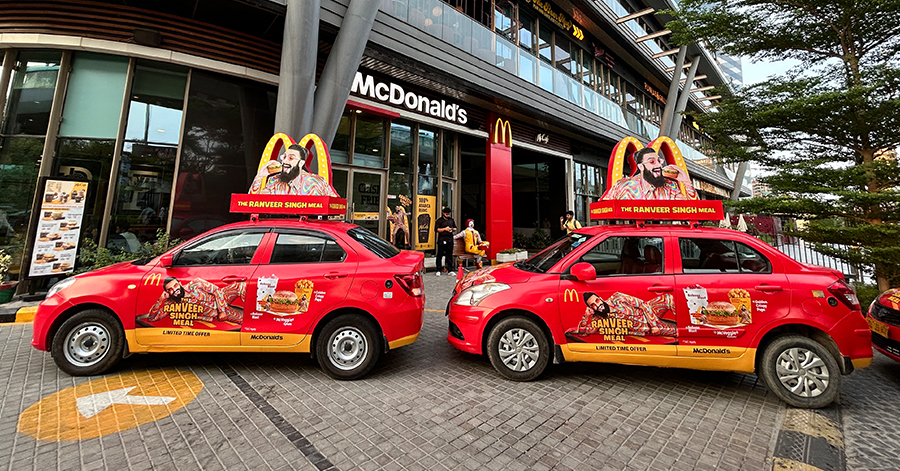
Taxi advertising has a number of benefits when used in the right way:
- Ability to move freely and extensive coverage in an urban area.
- Round-the-clock visibility. Cabbies tend to work 12 to 18 hours per day, and ads have a long exposure time.
- Affordable relative to massive billboards or fixed hoardings.
- Flexibility of format, full wraps down to rooftop panels, interior adverts, and digital signage.
- Capability to access various segments of the audience, pedestrians, commuters, and traffic at differing locations within the urban areas.
Common Challenges and How to Mitigate
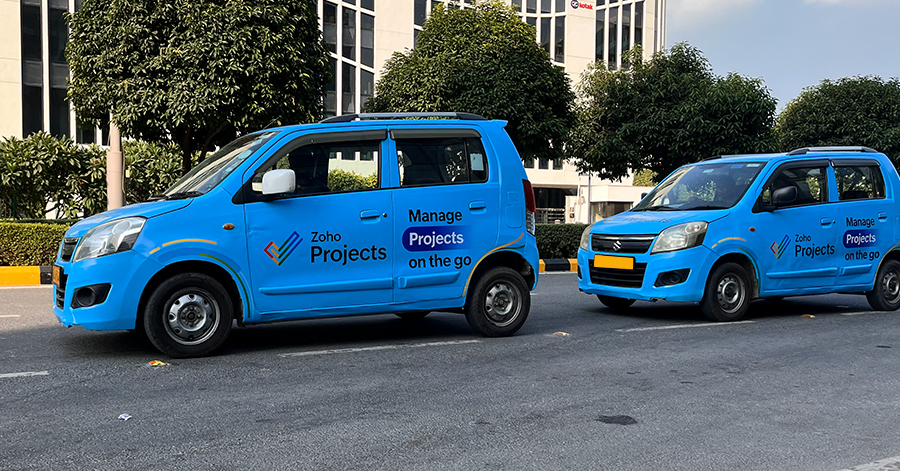
Certain difficulties can be encountered, yet they can be reduced with the help of appropriate planning:
- Inefficient design will result in ignored ads. That is prevented by clear, bold graphics and the use of adequate text.
- Too many graphics on full wraps may decrease legibility. Be sure that the layout is kept clean and the fonts are large.
- Efficiency of the route, cabs remain in congested areas. This is to be solved with careful route planning and a city-wide coverage plan.
- Vinyl peeling or damage, as well as the problems with maintenance. Wrap materials should be of good quality, and regular check-ups should be done.
Conclusion
A city-wide cab advertising campaign can give high visibility, wide reach, and measurable results at low costs. A good cab branding company or vehicle advertising agency can run it.
Brands can reach many types of people in a city by setting clear goals, choosing the right ad formats, planning routes, making clear designs, and tracking the campaign.
Following these steps helps brands advertise successfully on cabs. When done well, taxi advertising becomes a powerful way to communicate across the city.
FAQs
1) How effective is a pan-city cab branding campaign in terms of reach?
A city-wide cab branding campaign covers many areas, like markets, homes, and busy roads. Cabs run for long hours, so people see the ads all day. Studies in India show that one moving cab can create thousands of views each day because it travels through crowded places. This makes cab campaigns good for wide and repeated exposure.
2) What factors influence the cost of cab advertising in India?
Cost depends on the number of cabs, the type of wrap, the campaign time, and the city. Full wraps cost more than partial wraps or inside ads. Rooftop panels and digital screens also increase the car advertising cost. Cab ads become more expensive when they use premium vinyl and bigger wrap areas. Campaigns in many cities or with more cabs need higher budgets.
3) Which formats work best for large-scale taxi advertising campaigns?
Full-cab wraps and Taxi rooftop advertising deliver the strongest visibility because they cover prominent exterior surfaces. Rear-window designs and internal seat-back placements support detailed messages. A mix of formats often works best for pan-city rollouts, especially when supported by a vehicle advertising agency or cab branding company that understands route mapping and design requirements.