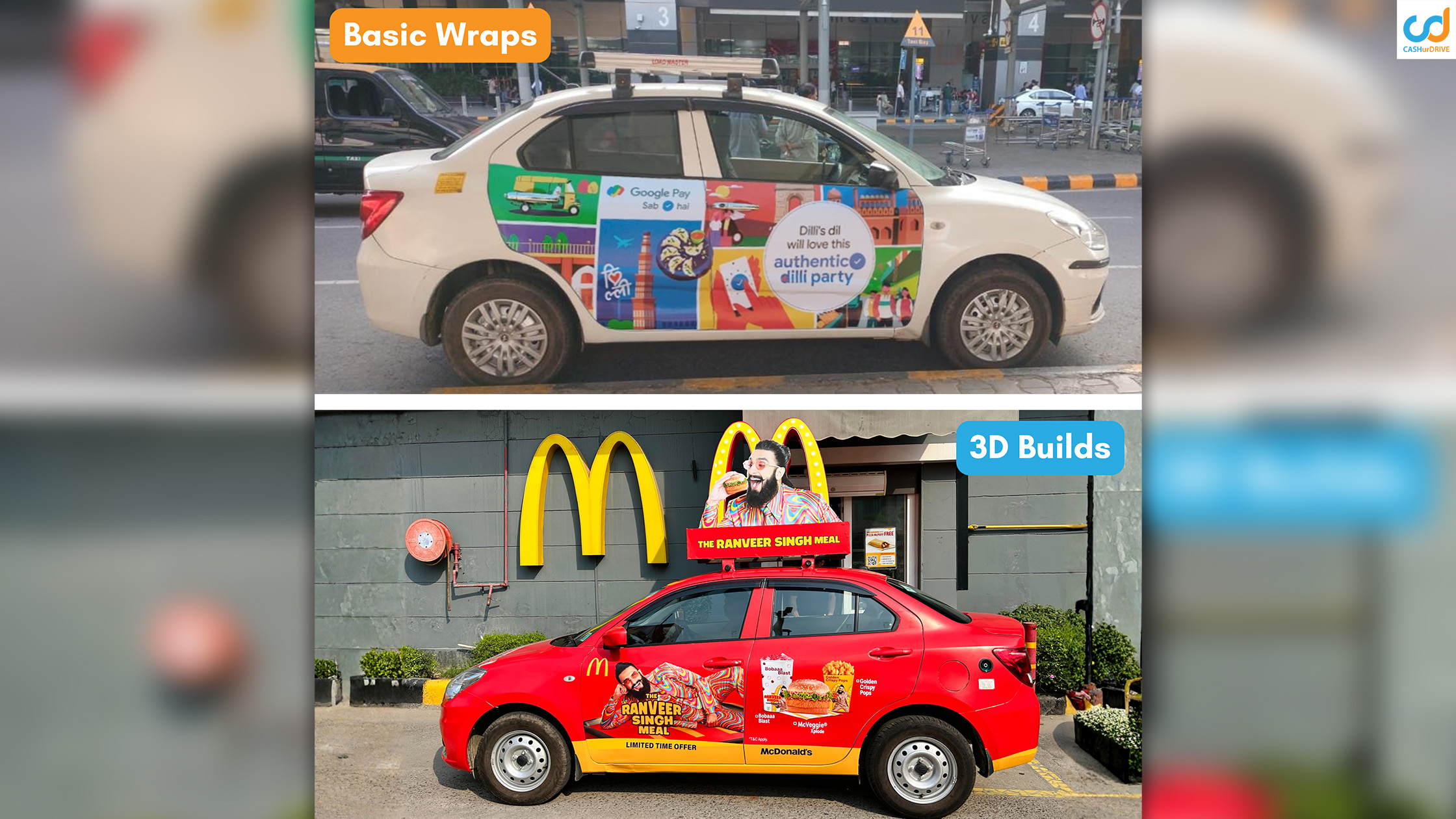
From Basic Wraps to 3D Builds: Innovation in Cab Branding Explained
 By Manan Sethi
The streets of our modern cities are no longer just for transport. Instead, they have become a fast-moving gallery for brands. Today, digital ads are everywhere, which often leads to “screen fatigue” for most people. Innovation in cab branding has therefore become a breath of fresh air for marketers. It is no longer sufficient to simply slap a logo on a car door. Brands want to now use vehicles as moving, breathing stories that stop people in their tracks at every red light.
Transit media is currently booming in India. In fact, reports suggest the Indian OOH market will likely hit ₹7,000 crore by 2026. This growth is largely driven by a massive surge in tech-enabled and creative transit formats.
Why Innovation in Cab Branding is Shifting to 3D?
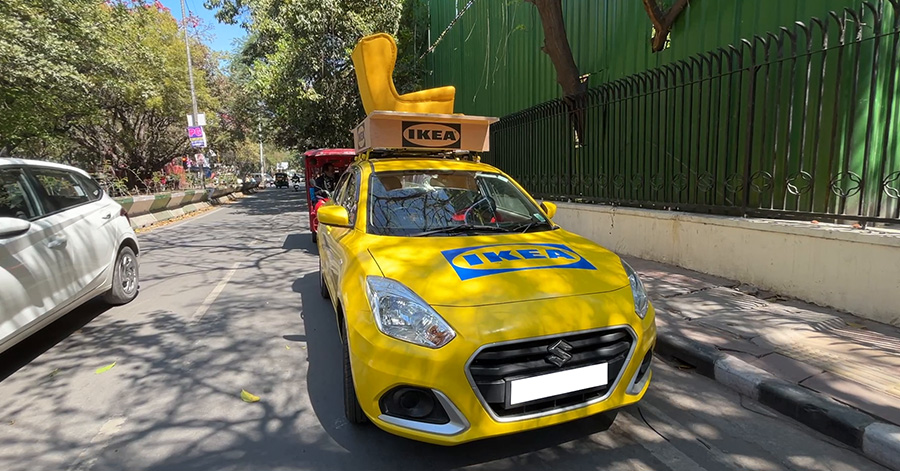
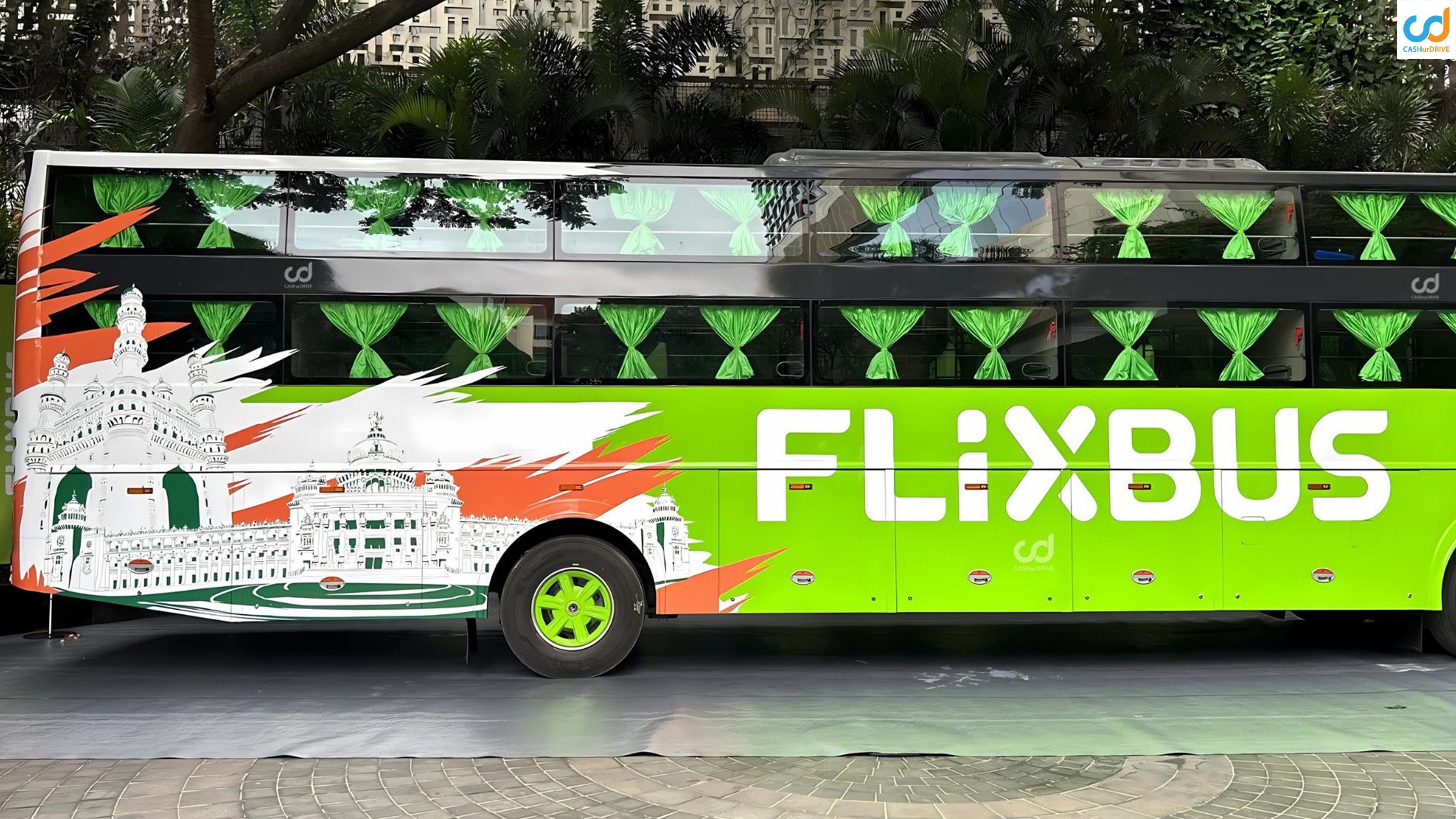
For a long time, cab wrap advertising was the only way to brand a vehicle. These flat vinyl stickers are great for mass reach, but they lack depth. However, the game changed when agencies started experimenting with 3D builds. Now, you might see a giant coffee cup or a toy car replica mounted on a cab roof. This innovation in cab branding ensures that a message lingers in the viewer’s mind for a much longer period of time than a simple flat image.
Creative designs such as these are more than simply eye candy. They are strategic assets. When a vehicle’s shape changes, it breaks the visual pattern of the road. Pedestrians naturally look twice. This “stop-and-stare” effect is the core of experiential cab advertising. It turns a standard trip into a brand event. Because of this, luxury and tech brands are moving away from traditional ads. They want something that feels real and physical in a digital world.
Fresh Cab Advertising Ideas for 2026
If you examine the most effective cab advertising concepts today, you will find that they all have one thing in common: interaction. Brands are now using textured wraps that feel like leather or grass. Others use LED outlines that glow at night. These ideas help a brand stand out in crowded hubs like Mumbai or Bangalore.
Furthermore, many cab advertising services now offer “smart” builds. These include solar-powered lighting or even scent diffusers. Imagine walking past a branded cab and smelling fresh coffee. This multisensory approach is the next level of innovation in cab branding. It targets more than just the eyes. Through this, brands can establish a more emotional connection with the public. Recent studies have found that billboards and transit ads produce up to 55% brand recall, compared to 21% for digital banner ads.
The Reality of Taxi Advertising in India
Taxi advertising in India has its own set of realities. You have to take into account the weather, the traffic, and the road conditions. For example, a 3D build has to be durable enough to withstand the monsoon. It must also be light enough to keep the car safe. Most professional cab advertising services use high-grade polymers for this reason. These materials stay vibrant and secure for months.
While creativity is key, the “un-skippable” nature of transit ads is their biggest win. You cannot block a branded cab like you block an online ad. The cab moves through the city, reaching different neighbourhoods every hour. This mobility provides a huge advantage for local businesses. They can target specific office zones during the day and residential areas in the evening.
Understanding the Cab Advertising Cost
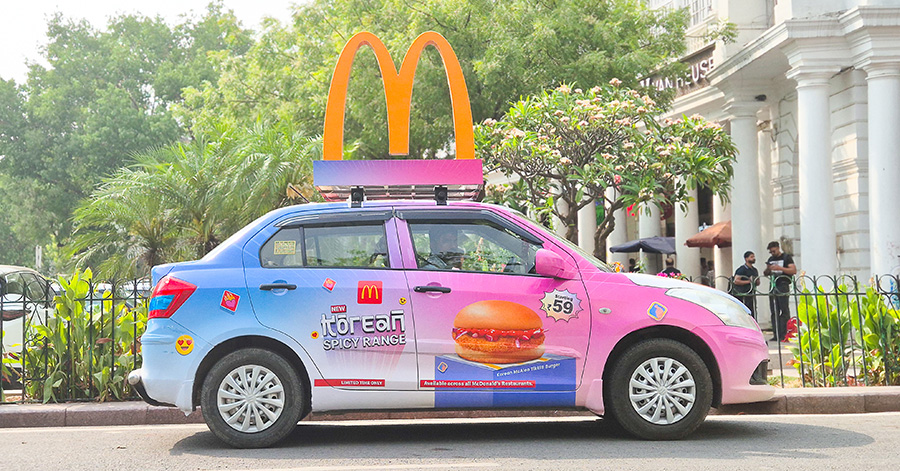
Many businesses worry about the cab advertising cost of advertising when they think about 3D builds. A physical structure indeed costs more than a standard cab wrap advertising job. However, you must look at the “earned media” value. A unique 3D cab usually ends up on Instagram or YouTube. People love to take photos of strange or beautiful things in traffic.
This organic sharing gives you free reach. As such, the actual cost per impression will be lower. In the year 2026, a standard full wrap in a metro city would start at ₹3,300 per month. Adding a 3D component is a luxury, but the ROI is often greater. This is because the ad doesn’t just get seen; it gets remembered and discussed.
Also Read: How We Execute a Pan-City Cab Advertising Campaign: Step-by-Step Breakdown
Why Performance Data Matters Now?
The age of guessing is over. Modern innovation in cab branding now uses GPS and AI to track results. Brands can now see exactly where their 3D fleet is moving. They can even count how many people were near the car at any given time. This data helps marketers justify their budgets.
Moreover, transit ads are becoming “phygital.” Many cabs now feature QR codes. A passenger or a passerby can scan the code to get a discount. This bridge between the physical and digital world is vital. It allows a brand to see a direct link between a street ad and a website sale.
Leading the Charge with CASHurDRIVE
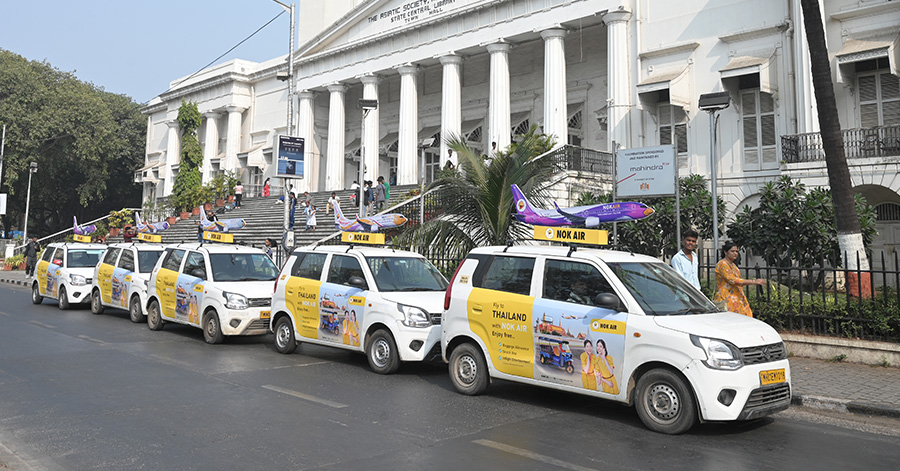
This transformation of Indian roads started with a bold vision. CASHurDRIVE, founded by Raghu Khanna in 2009, pioneered the idea of using cars as media assets. As an IIT Guwahati graduate, Khanna brought a data-driven approach to outdoor marketing. He saw that transit was the most undervalued space in India.
Today, the firm is a leader in its sector. They have partnered with big brands such as Google and Uber to develop impactful campaigns. Their projects demonstrate that innovation in cab design is more than just an attractive image. It is engineering, logistics, and innovation. By concentrating on 3D builds and smart wraps, they continue to innovate and redefine how brands communicate with moving people.
FAQs
-
Is 3D cab branding safe for the vehicle?
Yes. Modern 3D builds are made from lightweight materials. They are designed to fit the car’s shape without affecting its balance. Professional agencies use mounting systems that do not damage the original body of the car.
-
How long does a 3D cab campaign last?
Most campaigns run for 1 to 3 months. This is enough time to cover all major city routes while the 3D structure stays in peak condition.
-
Does innovation in cab branding work for small brands?
Absolutely. Although 3D builds are expensive, you can opt for unique textures or neon wraps that are less costly. These designs are still highly impactful compared to regular vinyl.
-
How do you track the success of these ads?
Agencies use GPS tracking and AI sensors. These tools provide data on routes, impressions, and “dwell time” in traffic. QR codes are also used to track direct digital engagement.
-
Are 3D builds allowed on all types of cabs?
Most 3D designs are applicable to hatchbacks and SUVs. However, a creative agency can develop a design for almost any vehicle provided it adheres to safety and road visibility guidelines.