The Ground Reality of Geofencing in Outdoor Advertising
 By Kalpana Rathore
Modern marketing often suffers from a strategic oversight where physical presence and digital tracking exist in silos. For years, brands have poured capital into massive billboards at bottlenecks like the Kathipara flyover or the OMR IT corridor, only to face a tough reality. This is the inability to measure actual reach. This lack of data creates a common legacy trap where high-visibility assets are written off as mere branding expenses rather than performance drivers.
Geofencing in Outdoor Advertising is the shift that finally bridges this gap. It addresses the messy reality of stagnant metrics by using virtual boundaries to capture anonymous audience signals. This move from passive visibility to active intelligence allows brands to stop guessing and start quantifying how physical world presence influences digital behavior. It is about actual results. Data must lead the way.
Strategic Comparison: Traditional OOH vs. Geofenced Intelligence
| Feature | Traditional OOH Advertising | Geofencing-Enabled OOH |
| Data Attribution | Estimated traffic counts (Potentially inflated) | Actual mobile device pings in the zone |
| Customer Journey | Ends when the driver passes the board | Continues via cross-device retargeting |
| Audience Profile | General mass audience | Behavioral segments (e.g., Luxury, Tech) |
| Optimization | Static (Fixed for the duration) | Dynamic (Shift spend to high-performing zones) |
| Measurement | Theoretical impressions | Tangible CTR and landing page visits |
Outdoor Advertising Has a Measurement Problem
Traditional methods, such as highway hoardings and metro advertising, offer scale but suffer from a major waste of potential. You might capture attention at a busy transit hub. However, without a digital link, that attention evaporates. The ground-level truth is that most campaigns lack a feedback loop. Brands often struggle to justify the shift in budget when they cannot prove a billboard in a premium market actually drove store visits. This results in misaligned ROI. High-intent zones become wasted space without tracking.
The industry has relied on “opportunity to see” (OTS) metrics for too long. These figures are often based on historical traffic data that fails to account for current urban movement. For instance, a hoarding near a major tech park might claim a reach of 500,000 weekly views. But how many of those viewers belong to your target demographic? Without a way to connect that physical exposure to a digital profile, the investment remains a leap of faith. This is a tough pill for modern CMOs to swallow. They need precision.
What is Geofencing in Advertising?
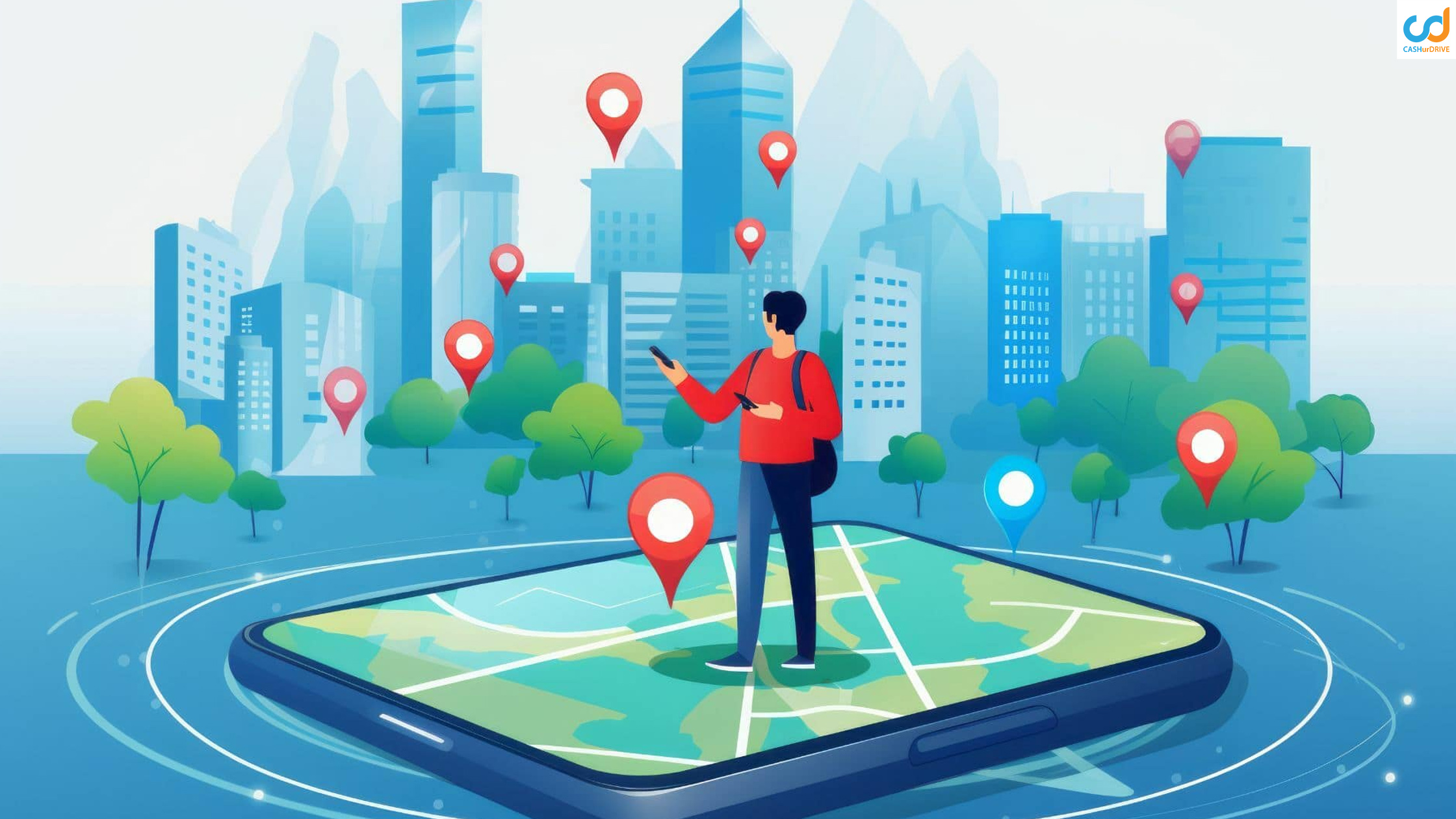
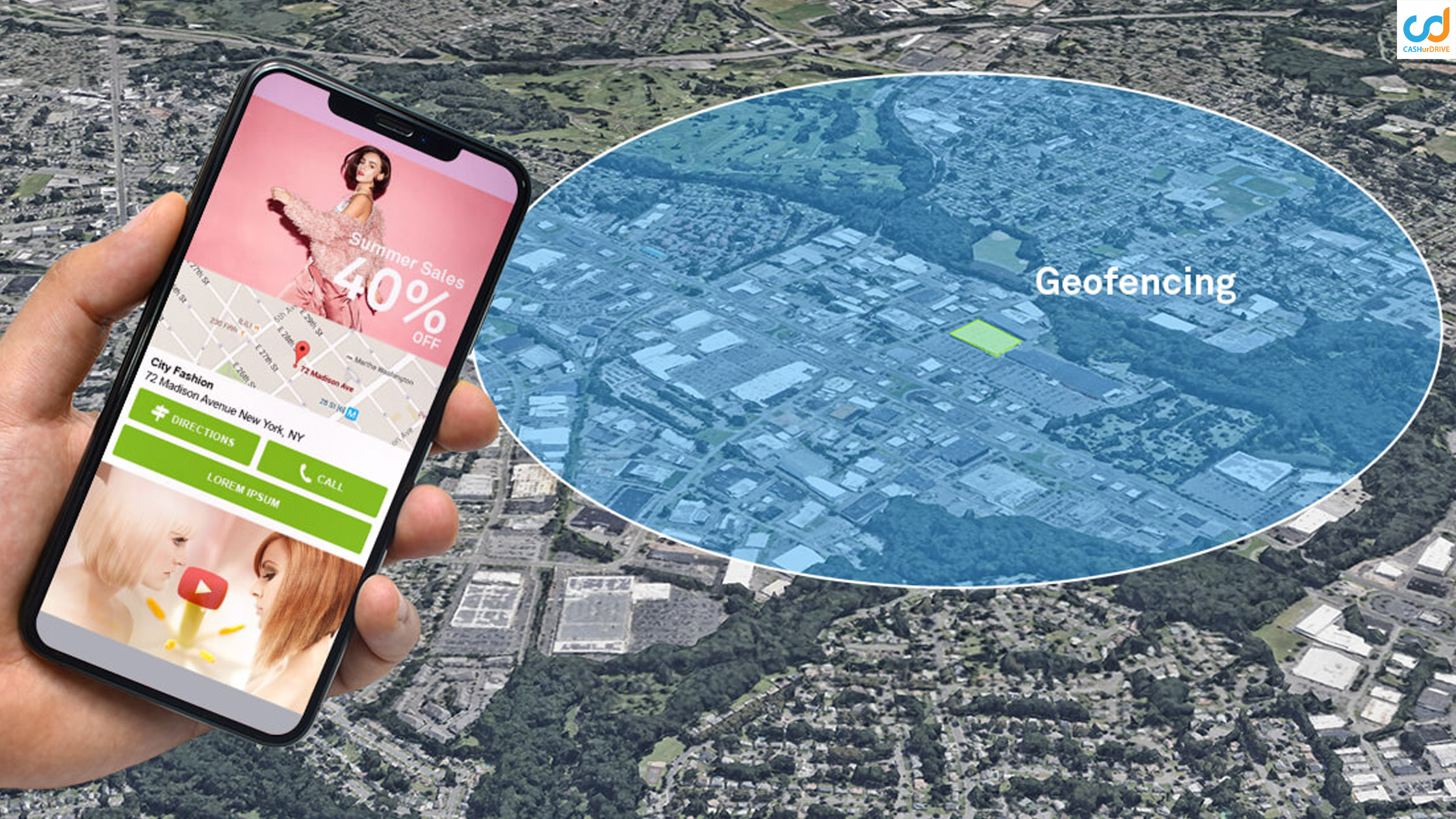
At its core, Geofencing in Advertising is a location-based technology that draws a virtual perimeter around a specific physical asset. When a user with location-enabled apps enters this zone (perhaps stuck in traffic near a major metro station), their device ID becomes part of an audience pool. This transforms a billboard from a static image into a source of audience intelligence. It is not about tracking individuals. It is about mapping movement patterns. This shift is turning OOH into a performance marketing ecosystem.
The technical setup is straightforward but powerful. Advertisers define a latitude and longitude point. They then set a radius (often between 50 to 200 meters) depending on visibility angles and local traffic density. Once a device enters this “fence,” it triggers a signal. That signal does not tell us who the person is. Instead, it tells us that a high-intent consumer was present at a specific time and place. This is the bridge. It connects the physical world to the digital funnel.
Why Geofencing is Becoming Critical for Brands?
Consumer behavior is no longer linear. A commuter sees a billboard near a business district. They do not buy immediately. They research later during their dead time on a smartphone. Without retargeting, your brand is forgotten. Geofencing for Brands ensures that the physical trigger is reinforced by digital reminders. Modern marketing requires multiple touchpoints. Digital reinforcement helps brands dominate attention longer.
Consider the psychological impact of frequency. A single exposure to a billboard is a handshake. A follow-up ad on a mobile app is a conversation. When these two work in tandem, the brand recall scores skyrocket. This is not just a theory. It is a documented shift in how luxury and high-value brands maintain top-of-mind awareness. In a crowded market, the brand that stays visible across multiple screens wins.
How Geofencing Actually Works in Outdoor Advertising?
The technical execution of these campaigns involves five distinct stages that turn raw movement into actionable data. Each step must be calibrated to avoid data noise.
Step 1: Defining High-Value Locations
Brands must identify strategic hubs like airports, premium markets, or business districts. A billboard in a low-traffic residential area offers less intelligence than one near a high-footfall mall. The goal is to capture high-intent movement.
Step 2: Creating Virtual Boundaries
A digital boundary is placed around the OOH asset. This fence is not always a perfect circle. It might be a polygon that follows the line of sight of a specific highway billboard. Precision at this stage prevents capturing “accidental” traffic from adjacent streets.
Step 3: Audience Detection
When users move through the area with location-enabled apps active, anonymous identifiers become available. This process respects privacy by focusing on the device, not the person. It provides a count of unique visitors versus repeat commuters.
Step 4: Behavioral Intelligence
Platforms analyze the collected data to find patterns. Are these users frequent flyers? Do they spend time in luxury car showrooms? This transforms random traffic into structured segments. It is ground-level intelligence.
Step 5: Digital Retargeting
Once identified, these audiences receive ads on Instagram, YouTube, or mobile apps. The interaction that started on the road continues on the couch. This creates a seamless loop.
Why Are Real Estate Brands Aggressively Moving Toward Geofencing?
Real Estate Advertising requires high trust and long-term recall. A buyer looking at a premium township will not sign a check because of one hoarding. They need to see the walkthrough on YouTube. They need an ad on Instagram. Geofencing allows real estate developers to follow a high-intent prospect who visited a site office or a competing project. This hyper-targeted approach reduces ad spend waste. It focuses on people with actual financial capacity.
Property decisions are slow. The decision cycle can last six months. During this time, a builder must remain present. If a prospect drives past a “Ready to Move” hoarding on the way to work, geofencing allows the builder to serve a “Book a Site Visit” ad that same evening. This direct link between physical visibility and digital action is the only way to prove OOH works for real estate. It turns a static sign into a lead generation engine.
The Role of Data and AI in Modern OOH

Outdoor advertising is no longer a “set it and forget it” medium. Modern campaigns use mobility intelligence and AI-based optimization to shift budgets in real time. If a specific billboard at an airport is capturing more high-net-worth individuals than expected, the digital retargeting spend can be increased for that specific segment.
This level of control was once reserved for Google and Meta ads. Now, it is available for physical world assets. Attribution modeling allows brands to see the “path to purchase” starting from a physical street corner. This is a major shift in how we view urban space. Every street is now a data point.
Privacy and Data Compliance
A major misconception is that this technology tracks people. In reality, most systems use anonymized advertising identifiers and aggregated behavior. Reputed platforms follow regional data laws and opt-out systems. Consumer trust is as valuable as reach. Transparency is mandatory for long-term success.
The technology relies on “pings” from apps that have already received user consent for location services. We are not looking at names or private messages. We are looking at coordinates. This distinction is what keeps the industry compliant while still delivering high-value results. Ethical data usage is the foundation of the modern OOH ecosystem.
The Rise of Measurable Outdoor Advertising

The biggest evolution in the industry is the demand for proof. Brands no longer want only visibility. They want measurable business outcomes. Marketers now ask which city converted better or which creative generated higher intent. Geofencing helps answer these questions by providing performance reporting. It integrates OOH into the same performance ecosystem traditionally dominated by digital ads.
We can now track “Footfall Attribution.” This means we can prove that a person who saw a billboard in Chennai eventually walked into a store in Bangalore. This level of granularity was impossible ten years ago. It justifies the high cost of premium OOH placements by showing their actual impact on the bottom line.
Final Conclusion
Outdoor advertising once ended the moment a consumer drove past a billboard. Today, that interaction continues across mobile devices and social platforms. This is the real power of geofencing. It transforms outdoor advertising from a visibility medium into a measurable conversion system. The results are undeniable. It is time to bridge the physical-digital divide. Stop buying space. Start buying intelligence.
FAQ’s
Q1: Does geofencing violate user privacy?
No. The system uses anonymized advertising identifiers and aggregated data. It does not access personal names or phone numbers. Most platforms operate on a consent-basis through app permissions. It is a secure, compliant process.
Q2: Can geofencing work for transit media like moving buses?
Yes. This requires dynamic fencing. Instead of a static circle, the fence moves with the vehicle’s GPS. This allows brands to target audiences in different neighborhoods throughout the day. It is highly effective for mass-market FMCG brands.
Q3: How do we measure the actual success of these campaigns?
We look at conversion lift. This measures how many people who were exposed to the physical billboard and the digital ad actually visited the website compared to a control group. This provides a clear ROI figure.
Q4: What is the ideal radius for a geofence?
It depends on the visibility angle. A highway billboard might have a larger, elongated fence. A mall entrance fence would be much tighter (usually within 100 meters) to ensure actual exposure. Precision prevents data waste.