Why Moving Ads Capture More Attention Than Static Ads?
 By Manan Sethi
Here is a small experiment. Try it tomorrow morning.
Stand at any busy traffic signal in your city. Look around. Notice what your eyes go to first. Is it the hoarding on the wall to your left? Or is it the bright, fully wrapped bus that just pulled up next to you?
Almost everyone picks the bus. Without thinking. Without trying.
And honestly, that one observation tells you everything about why vehicle advertising works the way it does. So today, let us get into it properly. Why moving ads beat static ones. What makes them stick? And why this format deserves far more attention than it usually gets.
Why Does Your Brain Notice Moving Things So Fast?
This goes back further than advertising. Way further.
Our ancestors lived in a world where movement meant something important. A shifting shadow. A running animal. A shape in the dark. So the brain learned early that movement needed immediate attention. Ignoring it could be dangerous.
That instinct never left us. Scientists call it the orienting response. Basically, your brain is still wired to notice movement before almost anything else around you. And it happens automatically, before you even decide to look.
So when a vehicle wrapped with your brand rolls through traffic, your brain flags it instantly. You are not choosing to pay attention. Your brain is making that choice for you.
What Exactly Is Vehicle Advertising?
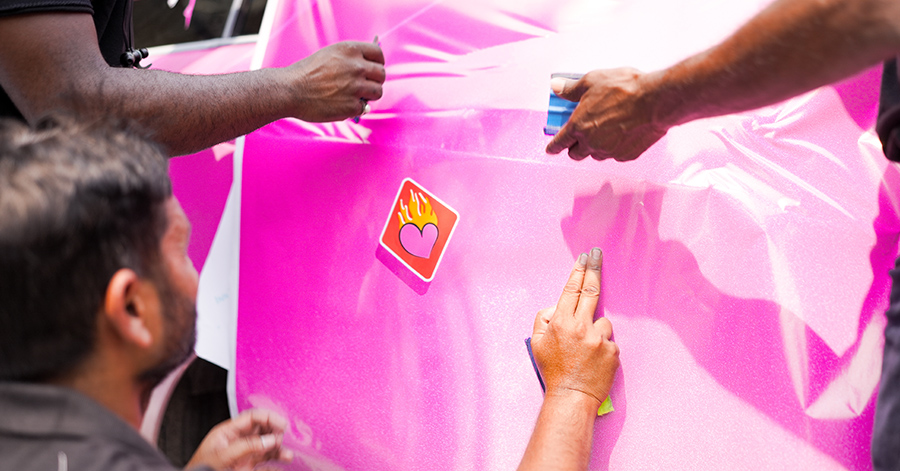
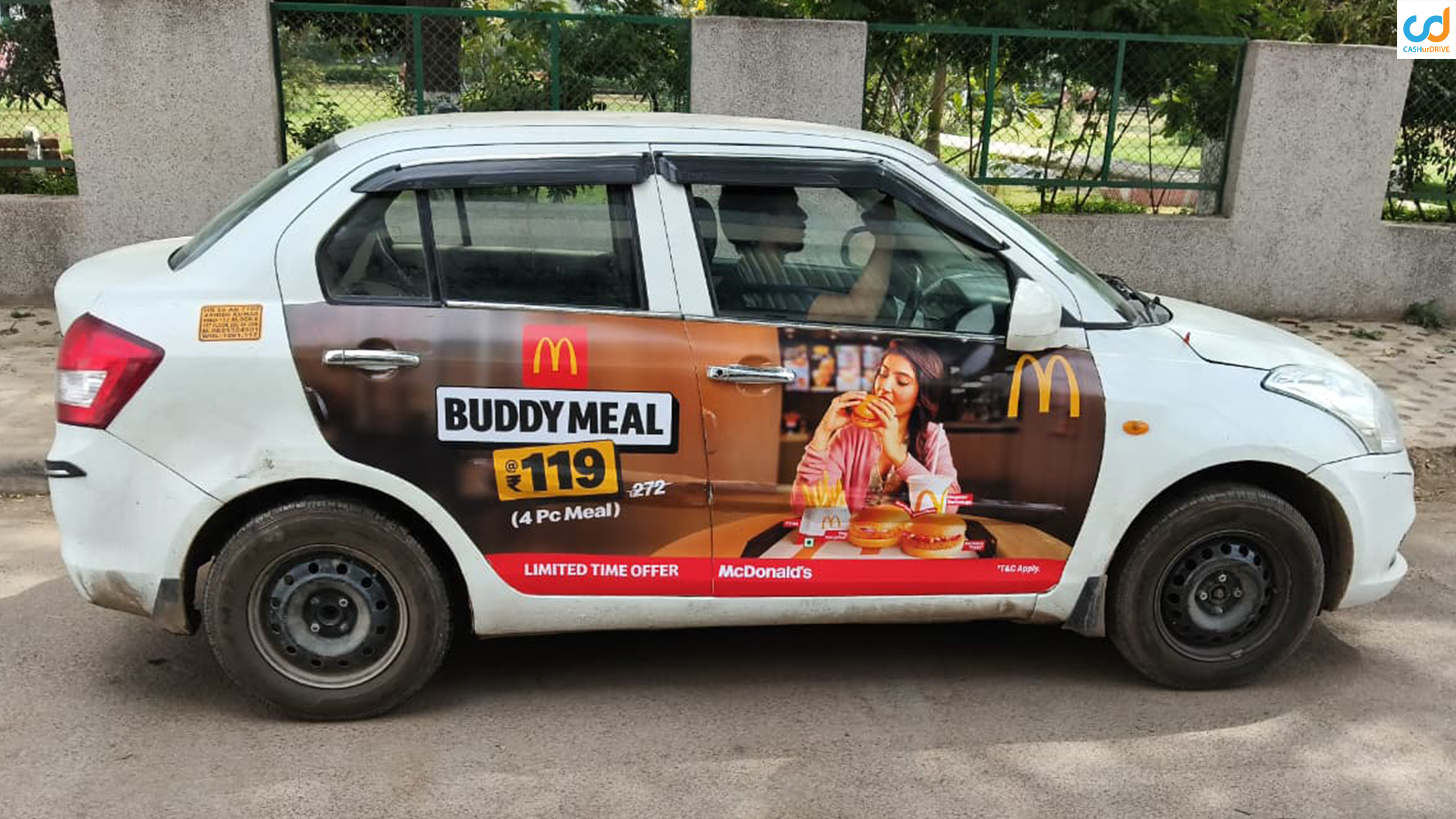
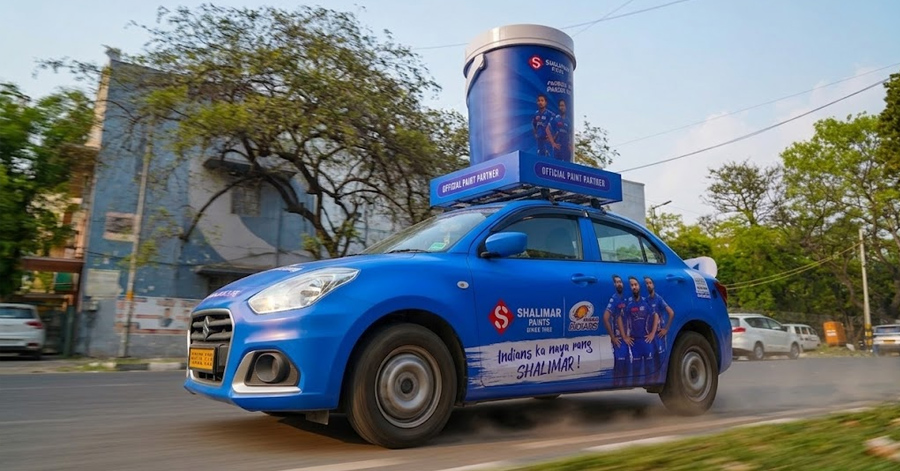
Vehicle advertising is basically putting up your brand on a moving vehicle. It may be a bus, an auto, a cab, a delivery vehicle, a truck, or even a metro train.
Now, here is the thing that makes vehicle advertising really different from hoardings.
A hoarding is static and remains in one place, on one wall, and waits for people to walk past it. That is all it can do. But a vehicle goes through different streets, different areas, and different neighborhoods every day. So, your brand goes wherever your vehicle goes.
And here are the numbers that show you exactly how powerful this is:
According to the Outdoor Advertising Association of America, one vehicle wrap delivers an average of 30,000 to 70,000 impressions every day. One vehicle, one day, and tens of thousands of real people seeing your brand at eye level every day.
What Types of Vehicle Wrap Advertising Are Available?
Not all campaigns need to look alike. So, here are the top formats that you need to get familiar with.
- Full vehicle wrap: This entails covering the entire vehicle with your branding design. This is probably the most aggressive form of advertising on vehicles. If your brand wants maximum exposure, this is probably what you need.
- Partial wrap: covers only certain sections, usually the sides, rear, or back panel. It is easier on the budget. But it is still very visible, especially in slow city traffic where the back of a vehicle stays in your line of sight for a long time.
- Stickers and Decals: This entails smaller branding elements placed at strategic points of the vehicle. This is probably what you see on autos and cabs. Best suited for campaigns that are local and target a particular area.
- Car Wrap Advertising: This is a new form of advertising due to app-based cabs such as Ola and Uber. Today, brands partner with these firms to wrap hundreds of cabs at once. This ensures that your brand moves all over the city each and every day of the month without requiring any further effort from your side once the campaign is live.
Each format has its own use case. But they all come back to the same thing. Movement. And movement, as we know, means attention.
Also Read: Full Wrap vs Partial Wrap Cab Branding: Cost & Visibility
Moving Ads vs Static Ads: An Honest Look
Here is a clear side-by-side so you can see the difference.
| Factor | Vehicle Ads | Static Hoardings |
| Attention trigger | Very high, automatic movement reflex | Moderate, needs conscious attention |
| Daily coverage | Multiple zones and routes | Fixed to one location only |
| Daily impressions | 30,000 to 70,000 | Depends on location footfall |
| Can people avoid it | Very hard to avoid | Fairly hard to avoid |
| Repeat exposure | High, same route daily | Only for regular passers-by |
| Cost per impression | Very competitive | Moderate to high |
| Ad lifespan | Weeks to months | Fixed contract period |
The reach advantage is very clear. However, the bigger thing is something the table does not fully show.
For example, when the same branded bus passes through your neighbourhood every morning for two months, something starts to happen. That brand begins to feel familiar. Not because you thought about it. Simply because you kept seeing it.
Why Is This Format Growing So Fast in India?
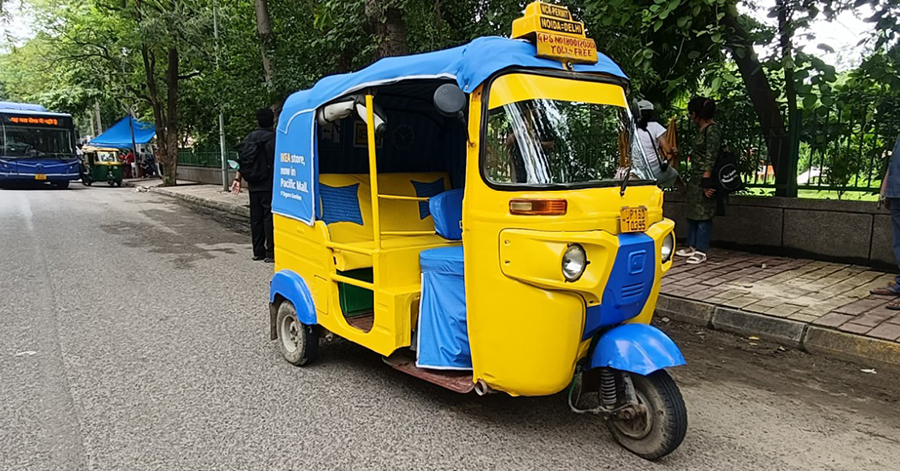
India’s roads are full. And that is exactly the point.
With over 300 million registered vehicles and cities that keep growing every year, more people are on the move every single day. More commuters naturally means more eyes. And more eyes means more opportunity for transit media advertising to do its job.
According to MAGNA Global, India’s mobility advertising segment is one of the fastest-growing areas in the entire OOH industry right now. Brands across FMCG, real estate, food, education, and fintech are all increasing their investment. Because the returns are real.
Also, vehicle advertising does not care whether your audience lives in a premium neighbourhood or a crowded local market. If a vehicle passes through, your brand reaches them. That kind of cross-city, cross-income-group reach is very hard to replicate with fixed outdoor formats alone.
How Does Vehicle Advertising Actually Build Brand Memory?
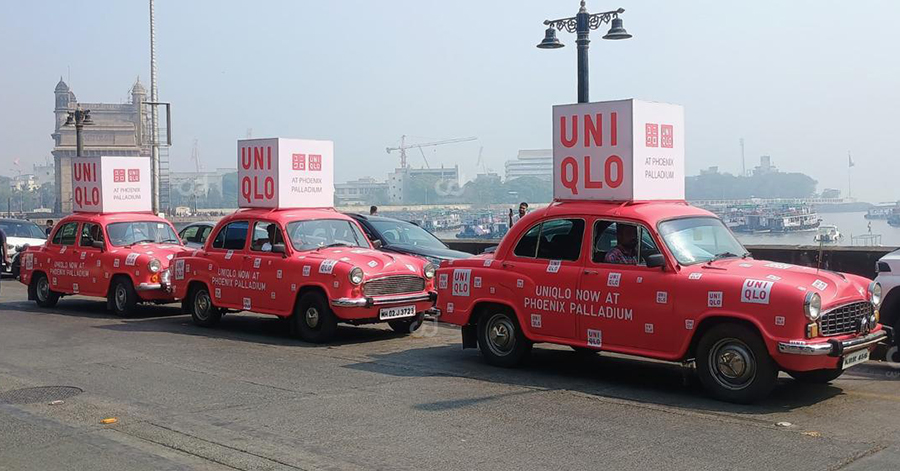
Brand recall does not happen after one exposure. Instead, it builds slowly through repetition.
The first time someone sees your wrapped vehicle, they notice it because it moves. The second time, they recognise the brand. By the fourth or fifth time, it starts to feel familiar. And once it feels familiar, it starts to feel trustworthy. Trusted brands, as a result, get picked at the point of purchase.
Research from 3M found that vehicle wraps have a recall rate of over 97% among people who are regularly exposed to them. That is significantly higher than most other outdoor formats. The combination of movement, bold colours, large format, and daily repetition creates a memory that stays put long after the vehicle has moved on.
This is also why campaign duration matters more than most brands realise. A two-week campaign is just starting out, but a three-month campaign creates the level of recall that actually drives purchasing decisions. The more time your brand is on the road, the deeper the level of impression.
How Do You Run a Vehicle Advertising Campaign That Works?
Three things really matter here.
- Keep the design very simple: A vehicle is moving. So your message has about two to three seconds to land. Big fonts. Strong colour contrast. Clear brand name. One simple message. That is genuinely enough. Trying to fit too much onto a moving surface almost always makes it unreadable.
- Pick the right vehicle for your audience: Buses work best for mass city-wide awareness on high-traffic fixed routes. Autos and cabs, however, work better for hyperlocal targeting in specific areas. Delivery vans work well along corridors where your customers live or work.
- Stay on the road long enough: This is the mistake brands make most often. They run a short campaign and then wonder why the results were weak. Therefore, commit to at least two to three months. Recall needs time. Short campaigns waste a great format.
Which Brands See the Best Results?
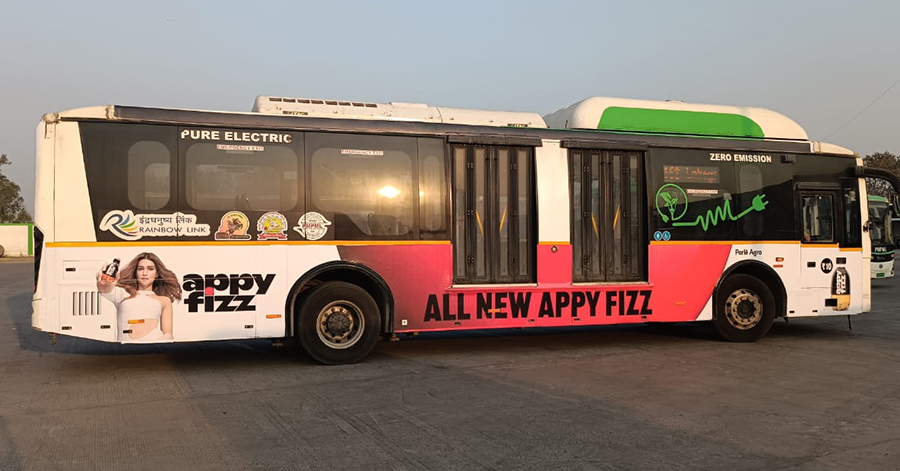
Almost any category can make this work well. However, some see especially strong results.
- FMCG brands: use it for daily mass visibility across the whole city, keeping the brand top of mind for everyday purchase decisions
- Real estate brands: wrap vehicles in target areas before launching a new project, building local awareness before a single hoarding goes up
- Food and beverage brands: run bus and auto campaigns near residential and market zones to build consistent mealtime recall
- Fintech and app brands: use cab wraps to reach young urban professionals during their daily commute
- Education institutes: advertise on autos and buses in college zones to reach students and parents where they actually are
The strategy is always the same. Match the vehicle route to where your audience spends their time. When that match is right, everything else follows naturally.
The Real Takeaway
Static ads wait for the attention of the public. Moving ads, on the other hand, go to where the public already is.
This is the entire story in one sentence. Vehicle advertising allows for the reaching of more people, covering more ground, for less money, with a higher brand recall than most other outdoor advertising mediums today.
So, if your goal is to get your brand seen by an entire city, rather than just a segment of it, then getting your message on a moving vehicle is perhaps the smartest business decision you can make. Just make sure your design is simple, your vehicle of choice is the right one, and your vehicle stays on the road long enough.
The brands that the public remembers aren’t the ones that stood still. They’re the ones that were everywhere, every day, and never stopped.
FAQs
Q1: Why do moving ads attract more attention than static billboards?
Because of the way our brain works. We notice movement before we notice anything. So when we see a moving vehicle we look away.
Q2: How many impressions can a single wrapped vehicle generate daily?
A single wrapped vehicle can generate approximately 30K – 70K impressions daily. It usually depends on the city, the route the vehicle takes and the quantity of traffic. Bigger vehicles like buses can reach people because they are larger and drive around more often.
Q3: Is vehicle advertising affordable for businesses?
Yes, vehicle advertising is affordable for businesses. It is actually one of the cost-effective ways to advertise outside. Even if you just wrap one or two of your delivery vehicles, people in your neighbourhood will start to recognise your business over time. You do not need to spend a lot of money to do it.
Q4: How long should a vehicle advertising campaign run?
A vehicle advertising campaign should run for at least two to three months. This is how long it takes for people to really remember your ads. If you only run a campaign for one or two weeks it is not time to make a big impact. The longer your campaign runs, the more people will remember your vehicle ads and your business will become well known.