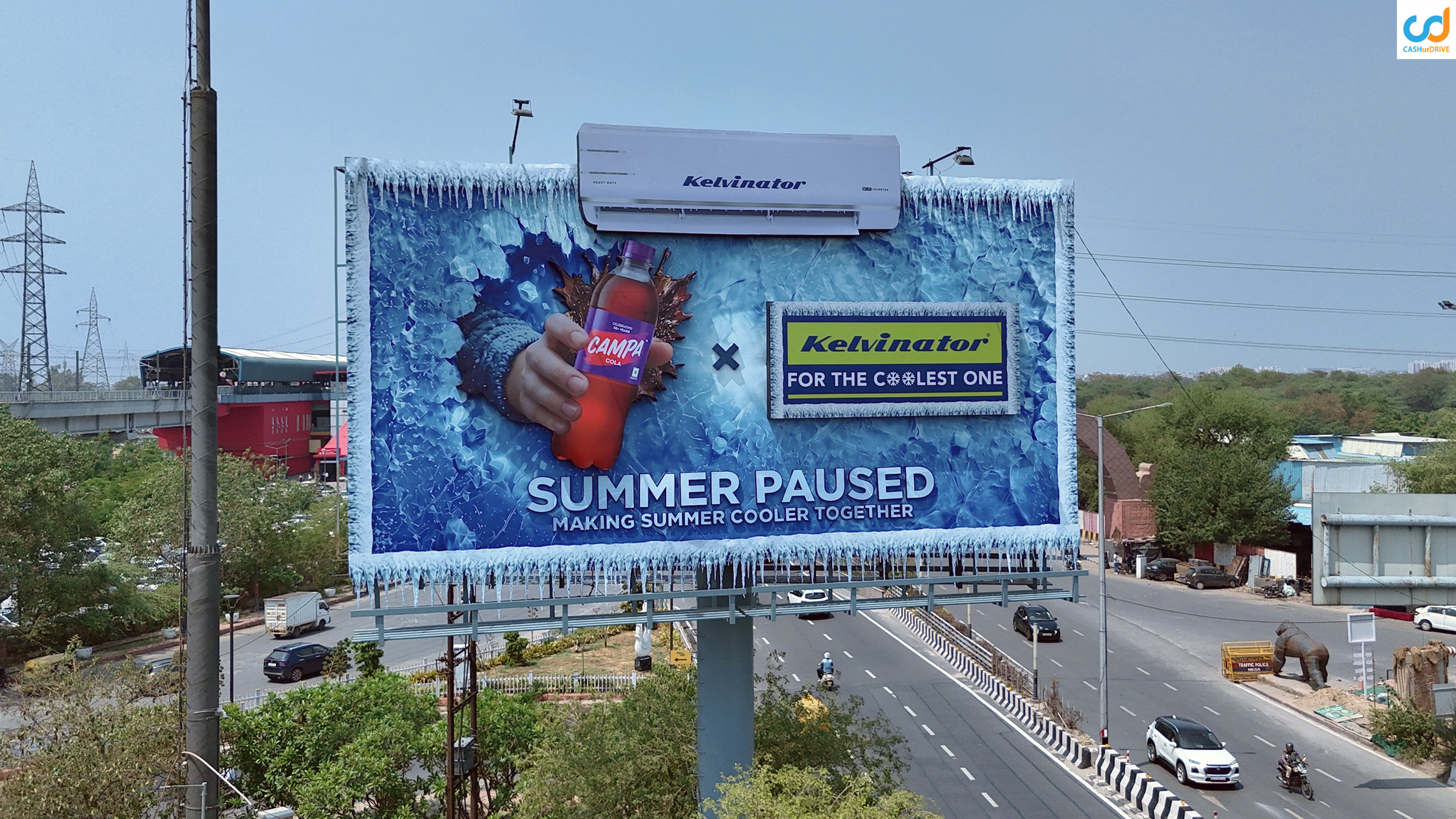
How Much Does OOH Advertising Cost in India? 2026 Budget Guide
 By Annu
However, OOH advertising cost in India does not have a standard rate card. Most vendors will give you one if you ask. So you need to know what a realistic rate looks like before you enter a negotiation. Also, this guide gives you the 2026 indicative planning ranges for every major OOH format in India.
Specifically, all the rates below are indicative. However, they are planning ranges, not fixed prices. In fact, the final cost depends on the specific site, city, size, visibility, duration, seasonal demand and negotiation. So use these numbers to build a starting budget. Then confirm the actual rates with the partner.
No Single Price Tag: Why OOH Costs Vary So Much
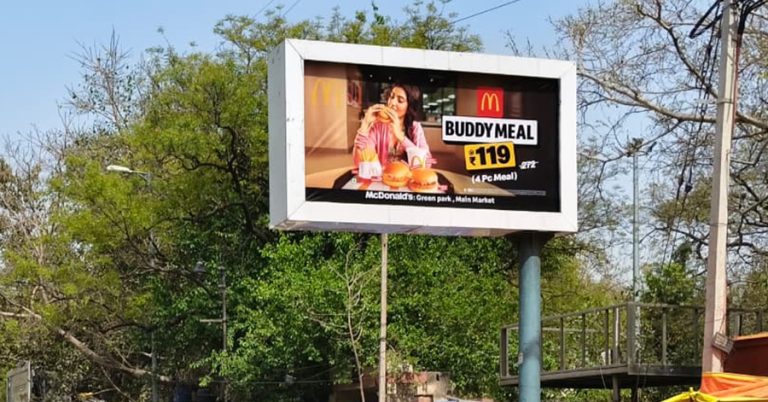
Specifically, OOH covers more than a dozen distinct formats. Also, each format has different pricing logic. For example, a billboard is priced by location, size and visibility. Bus wraps, however, are priced by fleet size and route. Meanwhile, a DOOH screen is priced by impressions, time slots or monthly rate.
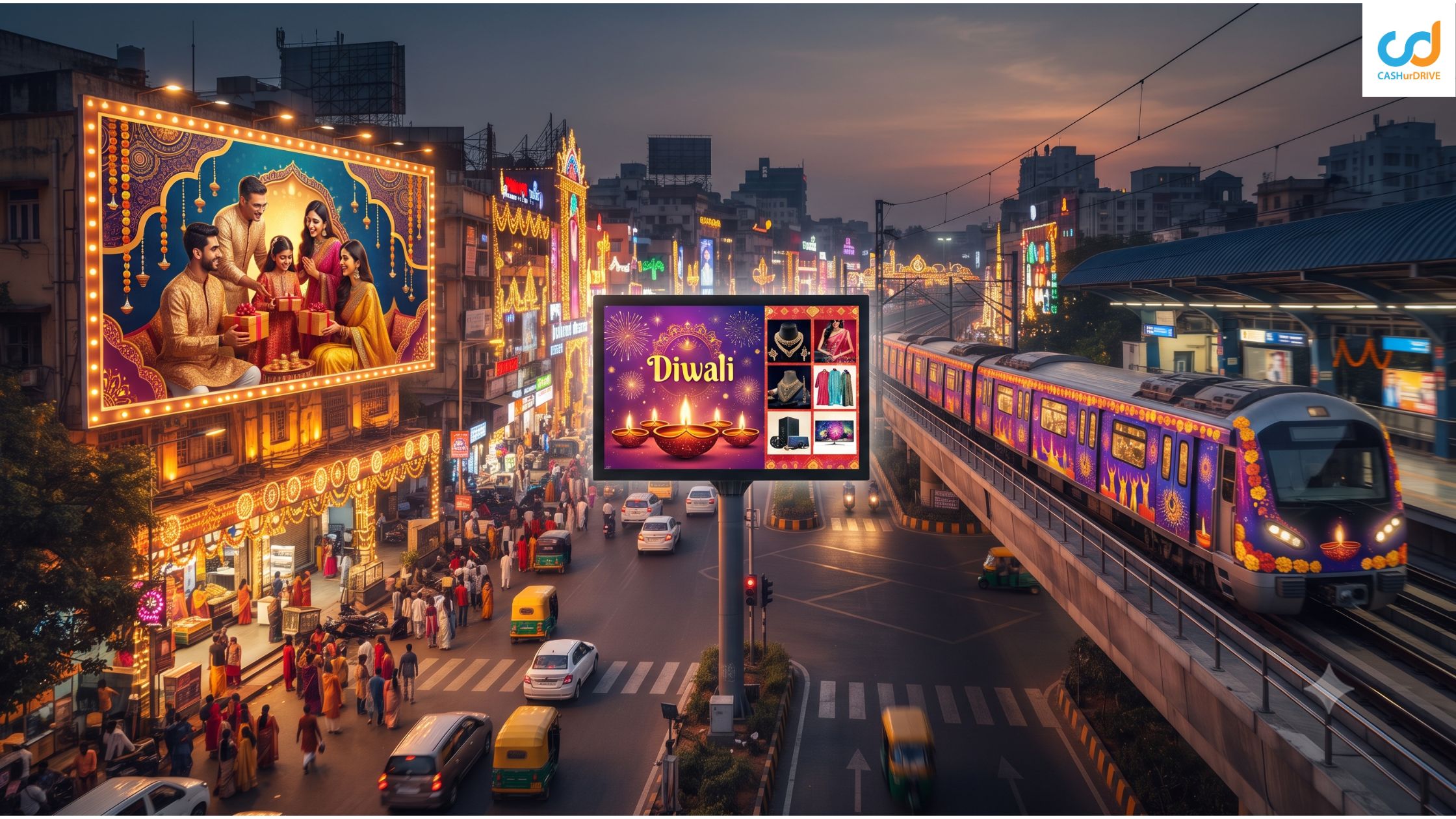
Moreover, the same format varies enormously by city. A premium hoarding in Connaught Place costs 5-10 times more than a comparable site in a Tier 2 city. In short, the city matters enormously. Similarly, a Diwali campaign runs at 1.5x to 2x the standard base rate. So no two OOH campaigns cost the same.
However, the variables follow a pattern. Specifically, five things determine any OOH rate:
- Format: billboard, transit, DOOH, metro, cinema or wall painting
- City and zone: premium commercial vs standard arterial vs local area
- Site visibility: frontlit, backlit, illuminated, direction of traffic
- Campaign duration: most formats are monthly, some are weekly
- Timing: festive windows carry a premium of 1.5x to 2x
OOH Advertising Cost by Format: 2026 Indicative Rates
All rates below are indicative planning ranges only. Instead, they are not fixed rate cards. In fact, actual costs can vary by site, city, size, season and negotiation. So always confirm the current rate with the inventory partner before booking.
Billboard and Hoarding Advertising
For a detailed breakdown of billboard costs specifically, see billboard advertising cost in India. Specifically, the summary ranges below cover all major cities.
|
City and zone |
Indicative rate |
Notes |
| Delhi – premium (CP, South Extension, NH48) | ₹1.25L-₹10L+ / month | Large-format unipoles at the upper end |
| Delhi – standard arterials | ₹1L-₹4L / month | Use as initial budget guide |
| Delhi – secondary / local | ₹20K-₹80K / month | Good for local area campaigns |
| Mumbai – premium | ₹3L-₹12L+ / month | Western Express Highway and BKC at upper range |
| Mumbai – standard arterials | ₹1.5L-₹5L / month | Strong mid-market inventory |
| Bengaluru – premium | ₹1L-₹5L / month | Outer Ring Road and commercial corridors |
| Gurugram / Noida corridors | ₹60K-₹8L+ / month | Wide range by exact site and corridor |
| Tier 2 cities (Ahmedabad, Jaipur, Pune etc.) | ₹15K-₹2L / month | Significantly lower than metros |
All pricing is structured as a one-time campaign activation. Fleet size, zone coverage, and campaign duration are planned on a per-campaign basis. For a customised plan and current availability, contact CashUrDrive directly.
Transit Advertising
Also, transit advertising covers bus, cab, auto-rickshaw and metro formats. For a full breakdown, see OOH advertising formats and rates.
|
Format |
Indicative rate |
Notes |
| DTC / BEST bus – full wrap | ₹60K-₹2.25L / bus / month | Depends on panel format and route; full wrap at upper end |
| DTC / BEST bus – partial panel | ₹6K-₹30K / bus / month | Rear panel or side strip only |
| Cab / ride-share wrap | ₹3K-₹8K / cab / month | Interior and exterior; varies by operator and city |
| Auto-rickshaw advertising | ₹3K-₹12K / auto / campaign | Depends on campaign duration, zone and format |
| Delhi Metro station panel | ₹50K-₹5L+ / panel / month | Wide range by station tier and format type |
| Delhi Metro train branding | ₹2L-₹15L+ / train / month | Full train wrap at upper end; partial branding lower |
All pricing is structured as a one-time campaign activation. Fleet size, zone coverage, and campaign duration are planned on a per-campaign basis. For a customised plan and current availability, contact CashUrDrive directly.
Digital OOH (DOOH)
For a full breakdown of screen types and DOOH pricing, see DOOH advertising cost in India. Indicative summary below.
|
Screen type |
Indicative rate |
Notes |
| Small DOOH (kiosk, retail display) | ₹5K-₹20K / month | High variation by network and footfall |
| Medium DOOH (mall, commercial zone) | ₹25K-₹1.5L / month | Premium retail zones at upper range |
| Large DOOH (premium junction) | ₹75K-₹3.5L / month | High-footfall city junctions |
| Metro DOOH screens | ₹40K-₹2L / screen / month | Depends on station tier and dwell time |
All pricing is structured as a one-time campaign activation. Fleet size, zone coverage, and campaign duration are planned on a per-campaign basis. For a customised plan and current availability, contact CashUrDrive directly.
Other Formats
|
Format |
Indicative rate |
Notes |
| Wall painting | ₹5K-₹30K per wall (one-time) | Long exposure; production cost is the main component |
| Cinema advertising | ₹3K-₹15K / screen / week | Depends on screen tier, city and week type |
| Airport advertising | ₹5L-₹50L+ / month | Enormous range; depends on terminal and format size |
| Mall advertising | ₹50K-₹5L / month | Depends on mall tier, zone and format |
| Bus shelter advertising | ₹15K-₹75K / shelter / month | City-dependent; DMRC and private networks vary |
All pricing is structured as a one-time campaign activation. Fleet size, zone coverage, and campaign duration are planned on a per-campaign basis. For a customised plan and current availability, contact CashUrDrive directly.
Need indicative rates for a specific city or format? Get an Indicative OOH Budget & Media Plan →
What’s Included – and What’s Not
Specifically, most OOH quotes cover only the media rental cost. However, several other costs are always separate. In fact, knowing which ones to budget for prevents surprises when the invoice arrives.
What’s usually included in the quoted rate
- The media rental for the agreed period
- Basic site availability and proof-of-display photos
What’s usually NOT included
- Creative production: artwork design fees
- Printing: ₹15,000-₹50,000 per hoarding creative for static formats
- Vinyl and installation for transit: ₹3,000-₹15,000 per unit
- Removal and reinstallation of previous artwork
- Authority permits and approvals (in some cities and formats)
- GST at 18% on all OOH spends
- Agency fees if booking through a media agency
In fact, a quote that does not mention production, printing, GST or agency fees is a partial quote. So always ask for the all-in number before approving the plan.
City, Location and Season: How Each Affects the Rate
City tier
Specifically, Mumbai and Delhi are the most expensive OOH markets in India. In fact, rates in premium zones run 3-5x higher than Tier 2 cities. Bengaluru, however, sits between the two. Also, Pune, Ahmedabad, Jaipur and Chandigarh are more cost-efficient for OOH.
Location within the city
Within any city, however, the zone matters as much as the city itself. For example, a site in Connaught Place costs 5-10x more than a North Delhi site. Similarly, a BKC or Worli site in Mumbai costs significantly more than a Thane or Andheri arterial. So the exact location is the biggest pricing variable after the format itself.
Visibility and size
Specifically, a frontlit illuminated hoarding costs more than a non-lit one. Also, a 40×20 ft unipole costs more than a 20×10 ft standard hoarding. Also, sites with high visibility, no obstructions and facing high-traffic directions command a premium. In fact, two sites at the same intersection can have very different rates.
Seasonal demand
Specifically, October to December is the festive and year-end season. During this window, OOH rates across India typically rise 1.5x to 2x above base rates. Specifically, premium sites in Delhi and Mumbai can see demand-led premiums above 2x. So booking 6-8 weeks early prevents paying the last-minute premium.
Cost Per Impression: How OOH Compares to Digital
In fact, OOH is often dismissed as expensive by brands used to digital CPMs. However, the comparison is misleading. OOH CPM is calculated differently and should be evaluated differently.
|
Channel |
Estimated CPM (India, 2026) |
Notes |
| Premium billboard (Delhi/Mumbai) | ₹0.5-2.5 per thousand impressions | Based on daily traffic counts |
| DTC bus branding (Delhi) | ₹0.3-1.5 per thousand impressions | Route-level frequency across the city |
| Delhi Metro station panel | ₹1-4 per thousand impressions | Captive audience with high dwell time |
| Instagram / Facebook ads (India) | ₹40-120 per thousand impressions (festive) | Rises 3-5x during festive season |
| Google Display (India) | ₹10-40 per thousand impressions | Wide range by audience and targeting |
In fact, OOH CPM is 10-30x lower than digital CPM in most comparisons. However, the comparison is not perfect. Specifically, digital offers targeting, click-through and attribution. Meanwhile, OOH offers scale, unavoidability and presence. So the right question is not which is cheaper. It is which delivers the right result for the campaign goal.
Reading a Vendor Quote: Six Questions to Ask
Specifically, every OOH vendor quote should be evaluated on the same six questions. Also, any vendor unwilling to answer these in writing before booking is a risk.
- Is this rate media-only, or does it include production, printing and installation?
- Is GST at 18% included in the quoted price or added on top?
- What is the exact site address, size and illumination status?
- What traffic or audience data supports the impression estimate, and what is the source?
- Which proof-of-display and reporting commitments does the vendor offer?
- Are there any make-good or replacement terms if the site becomes unavailable?
Also ask for a site photograph taken in the last 30 days. Visibility can change significantly after a new building goes up or a tree grows. Old photos do not show current conditions.
Budget Ranges: What You Get at Different Spend Levels
The following examples use Delhi as the reference city. However, the same logic applies in other cities with adjusted rates.
|
Budget level |
What it typically buys in Delhi |
Best suited for |
| ₹1-3 lakh / month | 3-5 secondary hoardings or a small auto-rickshaw campaign | Local awareness, hyperlocal retail, small D2C brands |
| ₹3-5 lakh / month | One standard arterial hoarding + 10 bus rear panels | Mid-size brands, corridor-level reach |
| ₹5-10 lakh / month | One standard arterial hoarding + 30 bus panels or metro station | FMCG and D2C brands, broader city presence |
| ₹10-20 lakh / month | One premium site + metro branding + transit support | National brands, festive campaigns |
| ₹20L-₹1 crore / month | Multi-zone campaign with premium, transit and DOOH layers | Pan-city campaigns for large brands |
| ₹1 crore+ / month | Multi-city campaign with full format mix | National launches, large FMCG and auto brands |
However, all examples above are illustrative. In fact, the actual inventory depends on availability, season and the specific city plan. Also, the site options at each budget level will vary. However, these ranges give a realistic starting point for planning conversations.
Frequently Asked Questions
Rates and Pricing
Q1. How much does a billboard cost in India per month?
For example, a secondary local site starts at around ₹20,000 per month. A premium arterial site in Delhi or Mumbai, however, can run to ₹10 lakh or more. However, these are indicative planning ranges only. The final rate depends on the specific site, city, size, illumination, duration and negotiation.
Q2. What is the cost of transit advertising in India?
Specifically, transit advertising costs vary by format. For example, a DTC bus partial panel runs from ₹6,000 to ₹30,000 per bus per month. A full bus wrap, however, runs from ₹60,000 to ₹2.25 lakh per bus per month. Also, auto-rickshaw campaigns run from ₹3,000 to ₹12,000 per auto for a campaign. Cab wraps, similarly, run from ₹3,000 to ₹8,000 per cab per month. Specifically, all transit rates depend on the route, city and campaign duration.
Q3. How does the festive season affect OOH advertising costs?
In fact, the festive season from October to December adds a premium to OOH rates. Specifically, this is typically 1.5x to 2x on top of standard base rates. Specifically, premium sites in Delhi and Mumbai can command demand-led premiums above 2x during Diwali week. Consequently, campaigns booked 6-8 weeks early avoid paying the last-minute premium. So start inventory discussions by mid-September for Diwali 2026 (8 November).
Planning and Budgeting
Q4. What is not included in an OOH media quote?
Specifically, most OOH quotes cover media rental only. For example, production and printing runs from ₹15,000 to ₹50,000 per hoarding creative. Also, vinyl and installation for transit adds ₹3,000 to ₹15,000 per unit. Furthermore, authority permits, GST at 18% and agency fees are also typically separate. So always ask for the all-in cost before approving the plan.
Q5. What is a realistic OOH budget for a single-city festive campaign?
For example, a meaningful single-city campaign in Delhi or Mumbai for one month typically runs between ₹5 lakh and ₹20 lakh for a mid-size brand. Specifically, this covers a mix of one or two arterial hoardings with transit support. However, effective campaigns also run at lower budgets. In short, the key is choosing the right format and audience zone.
Use These Rates as a Starting Point, Not a Final Quote
In fact, OOH advertising in India is a negotiated market. However, the rates in this guide are planning ranges, not the final word. However, knowing the realistic range puts you in a stronger position. Consequently, you enter the conversation much better prepared.
So ask for the all-in cost. Also, confirm the site specifics. Then check the audience data. Also, book early — especially for the festive window, where inventory and pricing move fast.
In summary, the right OOH budget is one that is well-placed rather than well-sized. In fact, a smaller, well-planned campaign almost always outperforms a larger budget spread too thin.
Get an Indicative OOH Budget & Media Plan
Author: CashUrDrive Editorial Team
This article was produced with AI assistance and reviewed by the CashUrDrive editorial team.