Unipole Advertising Cost in India: Location, Format and Budget Factors
 By Annu
Unipole advertising cost in India varies from ₹30,000 per month for a secondary city location to over ₹7,00,000 per month for a prime highway position in Mumbai or Delhi. The range is wide because the format itself is high-impact and the site selection criteria are strict – not every location supports a unipole structure.
A unipole is a single-column billboard structure on a large-diameter steel pole. It stands independently – without a wall or frame. The pole is anchored directly into the ground. Because of this, a unipole can occupy positions where wall-mounted hoardings cannot. Highway shoulders, flyover approaches, and open plots are all viable. However, that structural independence comes at a cost. Installation, land lease, and municipal permissions are all factored into the monthly rate for unipole advertising in India.
Quick Answer: Unipole advertising in India costs ₹30,000-₹7,00,000 per month depending on city, location, size, and illumination. Prime highway unipoles in Delhi NCR and Mumbai typically cost ₹2,00,000-₹5,00,000/month. Secondary arterial and Tier 2 city sites cost ₹30,000-₹1,20,000/month. These are indicative rates for 2025-26. Final pricing depends on site availability, campaign duration, and the operator’s current inventory.
This guide covers what determines unipole advertising cost, how rates differ across Delhi, Mumbai, Bangalore, and Pune, and what a media plan should include before any budget is committed.
What Is a Unipole? Format and Structure
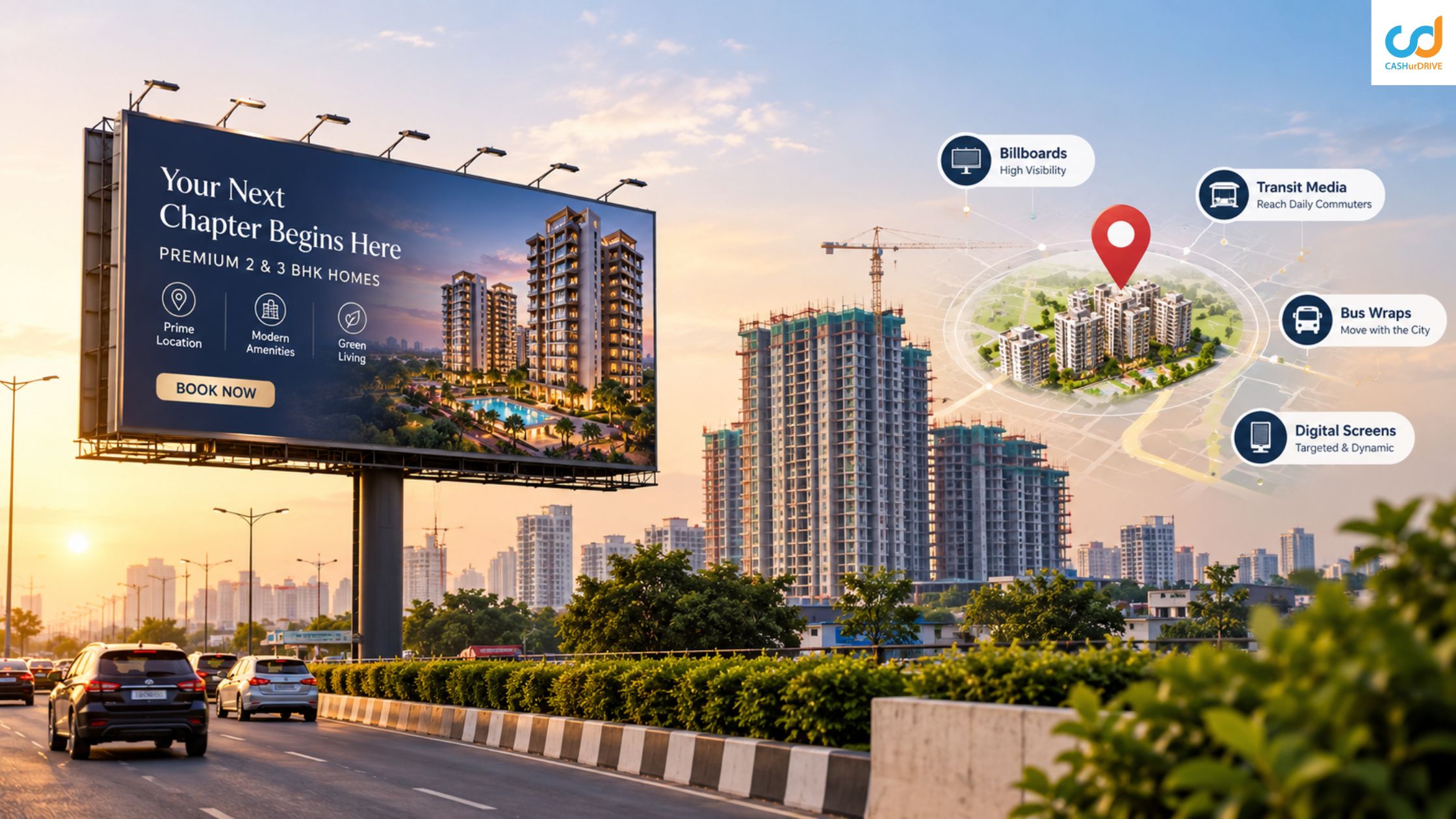
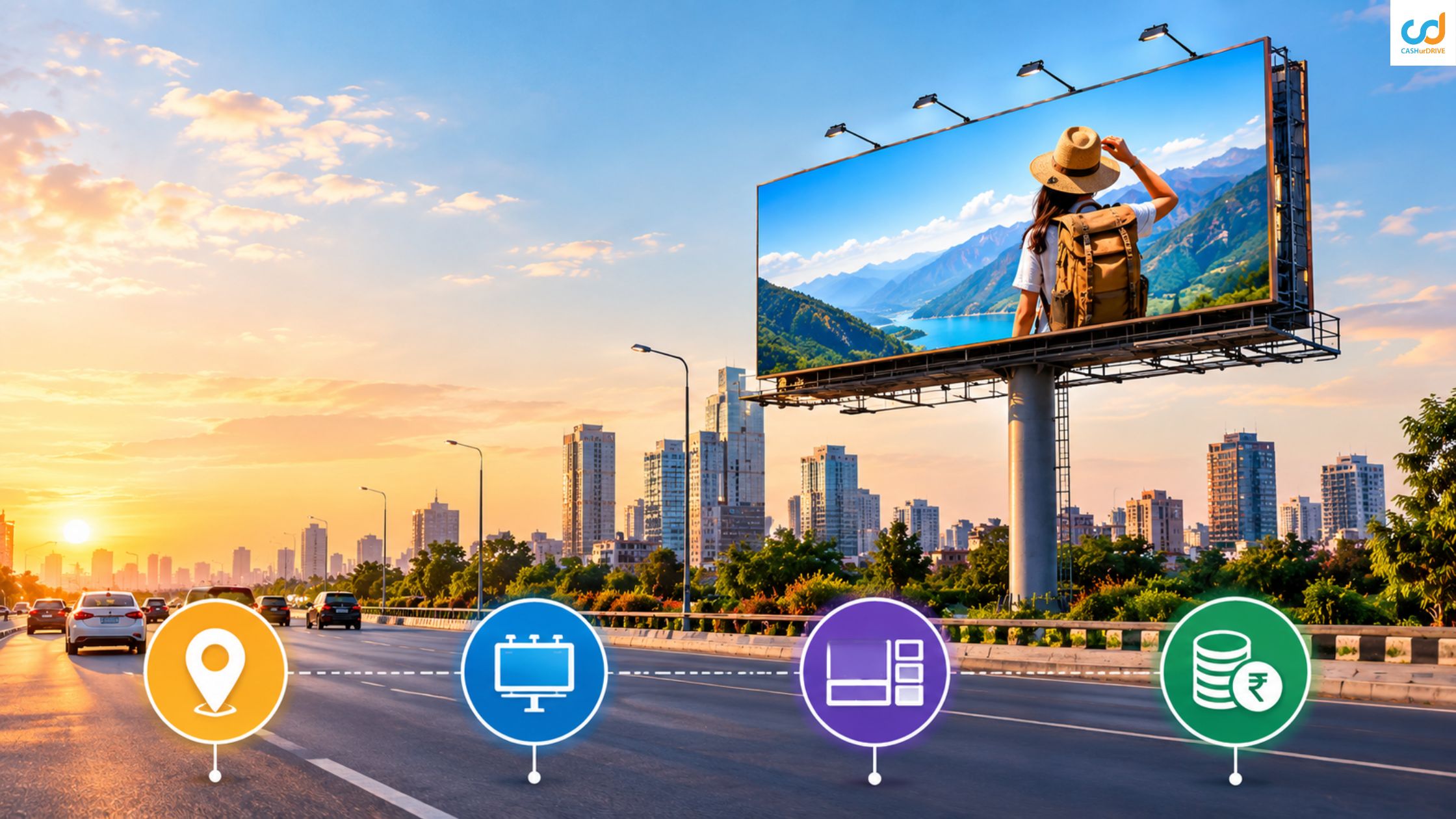
A unipole is an out-of-home (OOH) advertising structure on a single, large-diameter steel pole. It is not wall-mounted or frame-supported. The pole goes directly into the ground. As a result, unipoles can stand in locations where traditional hoardings cannot be installed.
Typical unipole dimensions range from 30×15 feet for secondary locations to 60×20 feet or larger for premium highway positions. The display face is usually backlit, which ensures visibility after dark and in low-light conditions. Some newer unipole installations support a double-sided display panel, effectively doubling the reach from a single location.
Why brands choose unipoles
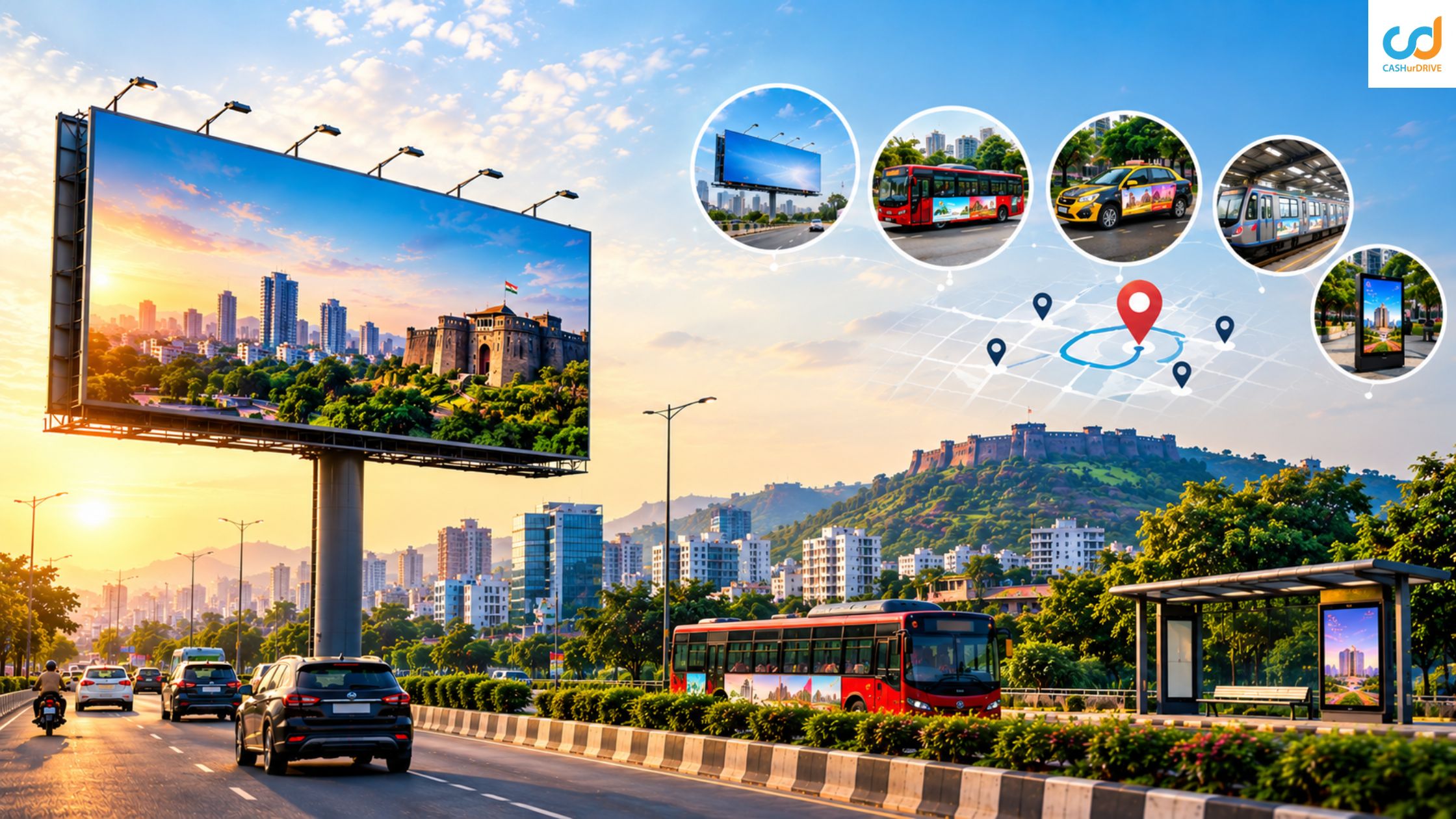
Unipoles are placed on highways, ring roads, and major arterial approaches. These positions deliver two advantages over standard billboards. First, unipoles stand above surrounding buildings, trees, and ground-level signage. This reduces visual obstruction significantly. Second, highway placements deliver high impression volumes at consistent vehicle speeds. The height advantage and sightline length of a highway unipole give drivers more sustained viewing time than a kerb-level hoarding in a congested urban streetscape, where surrounding signage and slower, irregular traffic break attention.
In India, unipole placement is subject to regulation. Expressway and national highway advertising falls under state highway authority rules. That said, placement near flyover approaches, ring roads, and major city entry points remains commercially available. Established OOH operators maintain active inventory at these positions.
Unipole Advertising Cost in India: City-by-City Overview
The table below shows indicative unipole advertising rates for 2025-26 across major Indian cities. Rates are for a 30-day booking and are exclusive of production and installation. Actual rates depend on site availability, operator, and campaign duration.
|
Location |
Unipole Size (ft) | Monthly Cost (₹) |
Audience Profile |
|
Delhi NCR – Prime (NH-8, Outer Ring Road) |
40×20, 60×20 | 2,00,000 – 5,00,000 | Mixed: commuter, business, transit |
| Delhi NCR – Secondary arterials | 40×20, 30×15 | 80,000 – 2,00,000 |
Residential, neighbourhood traffic |
|
Mumbai – Western/Eastern Express Highway |
60×20, 50×20 | 3,00,000 – 7,00,000 | High-income, daily commuter |
| Mumbai Secondary corridors | 40×20 | 1,20,000 – 3,50,000 |
Mixed residential and commercial |
|
Bangalore – Outer Ring Road, Hosur Road |
40×20, 50×20 | 1,50,000 – 4,00,000 | Tech sector, young professionals |
| Bangalore – Inner corridors | 30×15, 40×20 | 60,000 – 1,80,000 |
Mixed retail, residential |
|
Pune – Pune-Mumbai Expressway, SH-27 |
40×20 | 80,000 – 2,50,000 | Manufacturing, IT corridor |
| Tier 2 cities (Jaipur, Lucknow, Surat) | 30×15, 40×20 | 30,000 – 1,20,000 |
Aspirational urban consumer |
Indicative market rates for 2025-26 compiled from operator inventory data. Verify against current CashUrDrive rate cards before publication. Actual rates depend on site availability, operator, and booking terms.
Mumbai highway unipoles command the highest rates in India, followed by Delhi NCR. The gap between prime and secondary location rates within the same city is typically 2-3×. Tier 2 cities offer substantially lower entry points, though inventory is limited and booking lead times can be short.
What Determines the Cost of a Unipole?
Unipole advertising cost in India is not a single market price. It is the sum of several site-specific factors. Understanding these factors helps a brand manager negotiate effectively. It also prevents paying a premium rate for a site that does not justify it.
1. Location and traffic volume
Traffic volume is the primary driver of unipole advertising cost in India. A site on the Western Express Highway in Mumbai will cost 3-5× more than a comparable site on a secondary arterial. The same applies to the Delhi-Gurugram Expressway versus inner-city corridors. Operators price on estimated daily vehicle or footfall count. This data comes from manual traffic surveys or road authority records. Prime urban national highway stretches in Delhi and Mumbai carry significantly higher sustained traffic volumes than secondary arterials, which is why highway unipole rates command a substantial premium over other OOH formats in the same city.
2. Unipole size
Larger display panels command higher rates. A 60×20 foot site in Mumbai costs roughly 1.5× a 40×20 site at the same location. However, larger sizes also carry higher production costs. A 60×20 foot panel has 50% more display area than a 40×20 panel – print material, transit, and installation costs scale proportionally with panel size and must be factored into the total campaign budget.
3. Illumination type
Backlit unipoles typically carry a premium over non-illuminated structures at comparable locations. The illumination premium reflects power costs and the higher impression quality during evening peak hours. In cities where evening commute traffic is significant – particularly Mumbai, Pune, and Bengaluru – backlit unipoles often deliver a higher share of total impressions in the 6-10 PM window.
4. Campaign duration
Most operators price unipoles on a 30-day minimum booking. Longer campaigns typically attract operator discounts on the effective monthly rate, subject to inventory availability. Prime highway sites in Mumbai and Delhi often book at full rate regardless of duration, as demand at those positions is consistent. Secondary arterial and Tier 2 city sites offer more negotiating room on longer bookings.
5. Land lease and municipal permissions
The operator’s underlying cost includes a land lease fee and state-level advertising hoarding permission. These costs are built into the published rate. In some states, additional cess or inspection fees apply. So a site that appears cheap in isolation may carry hidden operator costs that affect long-term availability or maintenance quality. Asking for the land lease tenure remaining on a proposed site is a reasonable due-diligence step for any campaign longer than 90 days.
Prime vs Secondary Locations: Cost Comparison
In practice, the difference between a prime and secondary unipole is not just price. It is also audience profile and impression quality.
A prime unipole on Bengaluru’s Outer Ring Road delivers a clear sightline extending several hundred metres – far longer than a kerb-level hoarding in a congested streetscape. The same applies to the Pune-Mumbai Expressway approach. The audience is in-transit and exposed to the creative for several seconds without distraction. A secondary arterial site may offer higher dwell time. However, it also carries higher visual clutter from surrounding signage, local businesses, and street furniture.
Brands with a single-city budget often ask whether two secondary sites deliver better value than one prime site. The answer depends on the campaign objective. For broad awareness, a single prime site on a daily commuter corridor delivers more consistent exposure. Two secondary sites on different, lower-frequency routes cannot match that consistency. For a localised activation – for example, a restaurant chain opening a new outlet – secondary sites around the location may outperform a distant prime site, regardless of traffic volume.
Atlas Insight: CashUrDrive’s Atlas platform maps device-level audience movement at proposed sites before any booking is confirmed. For unipole campaigns, Atlas provides an NCCS segment breakdown at each shortlisted location, showing the proportion of A, B1, B2, and C segment audiences that move through the site during the campaign period. This allows media planners to compare sites on audience match – not just traffic count and cost.
How to Verify a Unipole Site Before Booking
A published rate and a photograph are not sufficient basis for booking a unipole. Three additional checks should be completed before budget is committed.
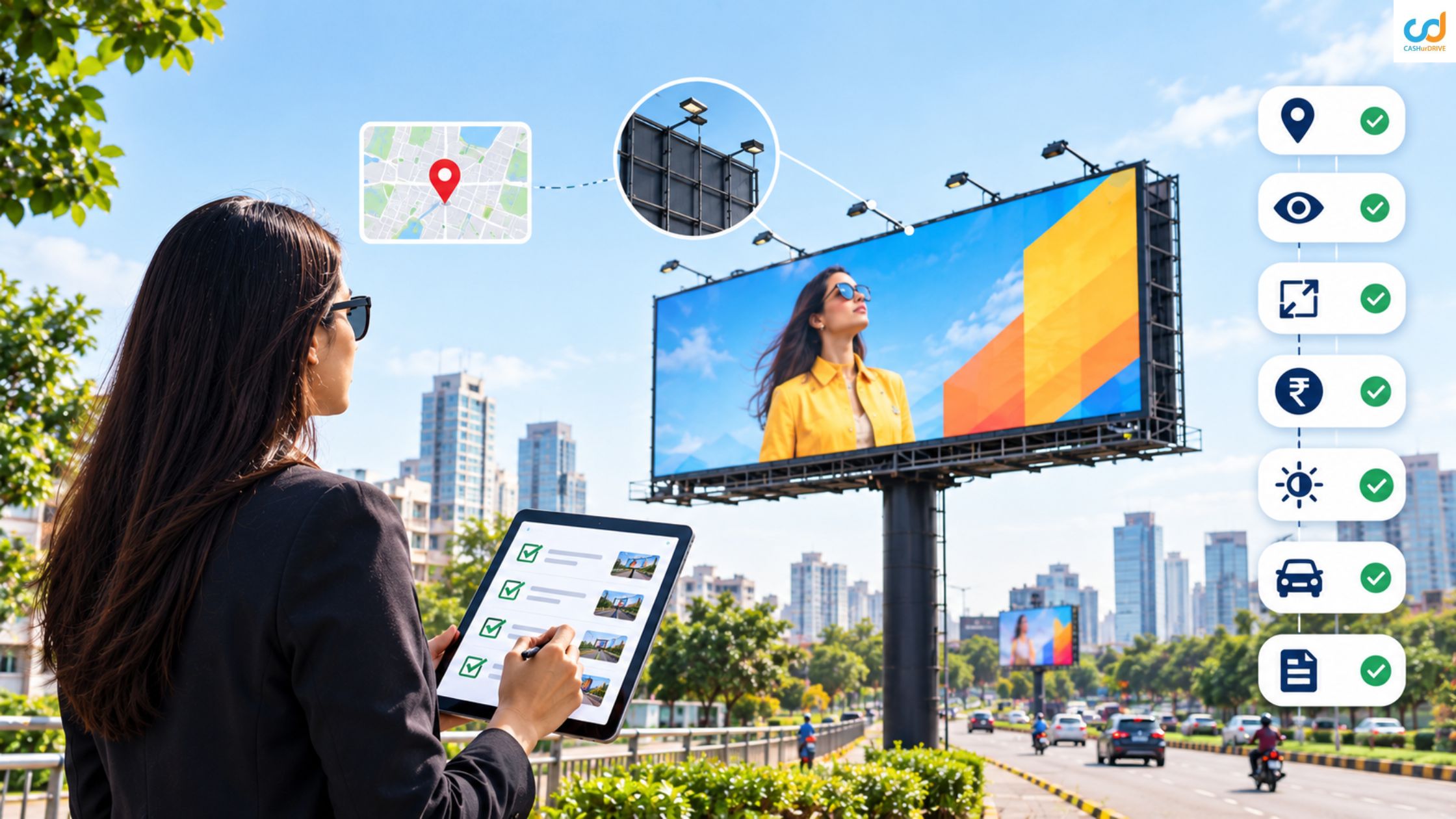
Physical site visit or verified photo audit
Confirm that the structure is fully installed. Check that the display face is visible from the primary approach direction. Also verify that no new obstruction has reduced the effective sightline since the operator’s photograph was taken. Construction hoardings, overpass pillars, and tree growth are common blockers. Both Delhi and Mumbai have active infrastructure development that periodically reduces visibility at previously clear unipole sites.
Traffic count methodology
Ask the operator which method generated the impression figure. Manual surveys (3-5 day count) produce lower confidence than vehicle count data from NHAI or municipal road authorities. Atlas geofencing uses device-level movement data collected over an extended observation period – far longer than a short-window manual count. This produces more stable and accurate impression estimates. A vendor quoting 80,000 daily impressions from a 4-day October survey may be significantly overestimating. Route traffic varies by season and day of week.
Audience composition check
Traffic volume does not equal audience quality. Before a unipole campaign targeting NCCS A and B1 consumers, confirm that the site’s audience composition matches the target. A highway site serving industrial freight corridors in the early morning may generate high vehicle counts but low brand-relevant audience density. Atlas maps NCCS composition at the site level, giving the media planner a verified NCCS breakdown – what proportion of the site’s audience falls within the target segment – before booking.
Unipole vs Billboard: Cost and Reach Comparison
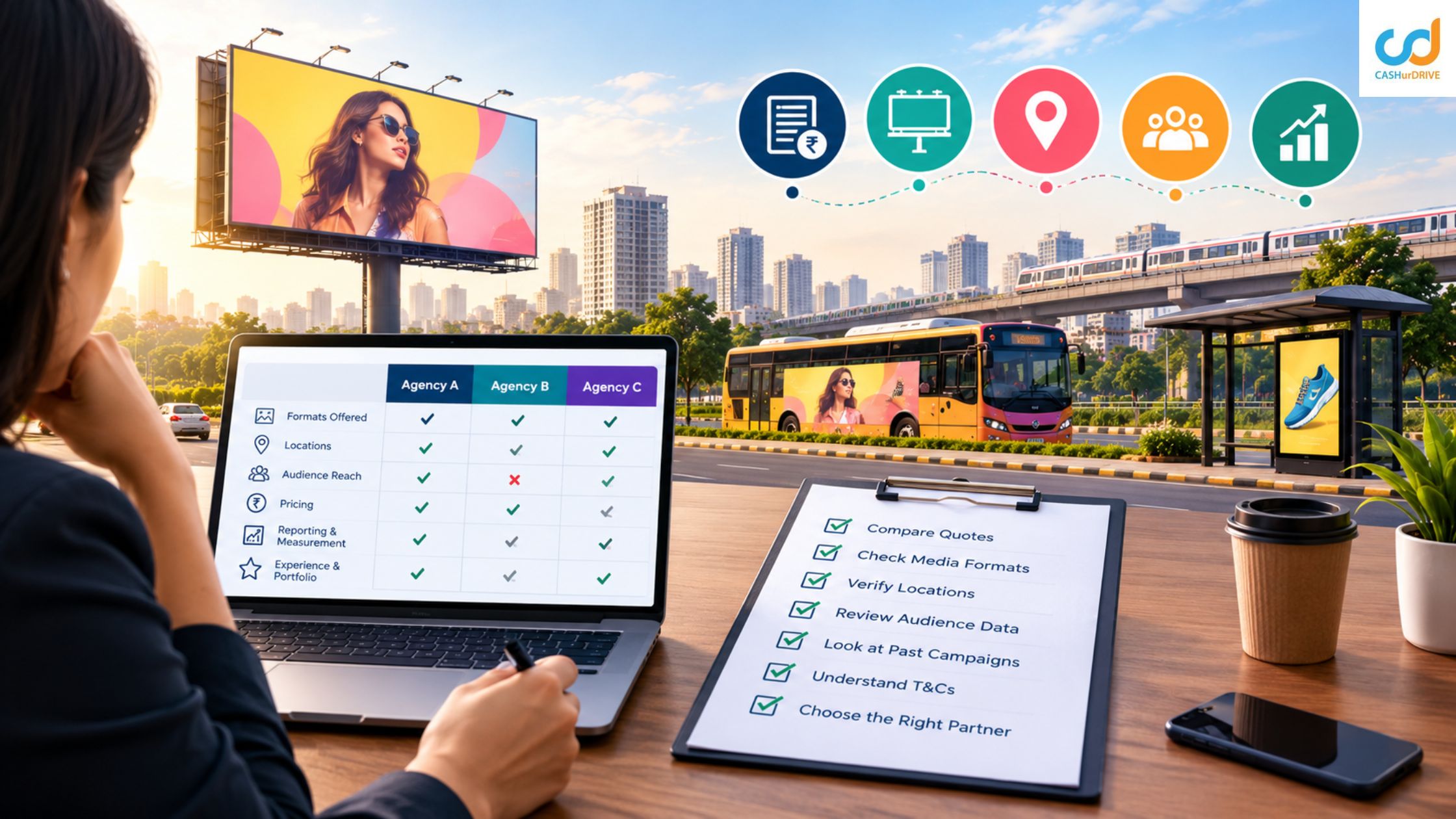
Understanding unipole advertising cost in India requires comparing it against the alternatives – typically the standard hoarding. Brands planning an OOH campaign frequently ask which format offers better value. The answer depends on the site position, not the format name.
Unipoles command a premium because they offer height advantage, independent placement, and – at highway locations – longer sightlines. But a premium wall-mounted hoarding on a busy urban junction may deliver a higher frequency of unique audiences per rupee spent because the audience travels that junction multiple times per week.
The cost differential varies by city. Mumbai highway unipoles typically command the widest premium over equivalent urban hoardings; Delhi shows a narrower gap between its prime and secondary-format rates. However, the impression quality at the highway unipole is meaningfully higher in both markets. Longer viewing time and less visual clutter mean the premium is often justified for brand-building campaigns where message clarity matters.
The useful metric when evaluating unipole advertising cost in India is cost per verified impression, not cost per site. Atlas generates this comparison for any proposed site mix. A brand can therefore evaluate three unipoles against five hoardings on a consistent impression-adjusted cost basis before the plan is approved.
Planning a Unipole Campaign: Steps and Budget
A well-planned unipole campaign follows a specific sequence. Skipping steps typically results in a media plan built on estimated rather than verified data. As a result, the risk of post-campaign underperformance increases significantly.
Step 1: Define the campaign objective and geography
Unipoles are most effective for city-entry awareness, highway corridor dominance, or brand presence in a specific catchment. Before site selection, confirm the primary objective – brand launch, new location announcement, sustained recall – and the target geography.
Step 2: Set a site-level budget, not just a total budget
Divide the campaign budget into a per-site allocation. This prevents the common error of committing a large budget to a small number of high-cost prime sites while leaving the broader geography uncovered. For example, a campaign targeting Delhi NCR and Mumbai might allocate 60% of the budget to prime highway sites and 40% to secondary arterial positions.
Step 3: Shortlist and verify sites
Request a site proposal with verified traffic count methodology and site photographs taken in the current month. Apply the three verification checks covered in the section above – physical site inspection, traffic count methodology review, and Atlas audience composition check – before confirming any site. Reject sites where the traffic count method is undisclosed or where photographs are more than 60 days old.
Step 4: Plan production in advance
Unipole production – printing, transit, and installation – typically requires 5-7 business days after creative approval. Because of this, plan the creative approval timeline backwards from the campaign start date. For a campaign starting on 1 November, artwork should be approved by 22 October to avoid delays.
Step 5: Set attribution benchmarks at briefing
Define what post-campaign measurement will be used – verified impression count, brand lift survey, or footfall uplift. Atlas provides post-campaign attribution reports using the same device-level geofencing used for pre-campaign site verification. Setting the attribution method at the brief stage ensures the measurement is built into the campaign structure from the start.
Frequently Asked Questions
Q1: What is the average unipole advertising cost in India?
Unipole advertising cost in India ranges from ₹30,000 per month for secondary Tier 2 city locations to ₹7,00,000 per month or more for prime highway sites in Mumbai. Delhi NCR prime highway unipoles typically cost ₹2,00,000-₹5,00,000 per month. These are indicative 2025-26 rates and depend on site size, illumination type, and campaign duration. Final pricing is confirmed with the operator based on current availability.
Q2: What size are unipole billboards in India?
Unipole billboards in India range from 30×15 feet for secondary arterial and Tier 2 city placements to 60×20 feet or larger for prime highway positions. Some operators offer double-sided unipoles at 40×20 or 50×20 feet per face. The most common size for commercial campaigns in metro cities is 40×20 feet, which balances cost, print production, and visibility at typical highway speeds.
Q3:What is the difference between a unipole and a hoarding?
A unipole stands on a single large steel pole embedded directly into the ground, allowing placement in highway shoulders, open plots, and ring road positions where wall-mounted hoardings cannot be installed. A traditional hoarding is typically wall-mounted or supported by a frame structure on an existing building or compound wall. Unipoles are generally taller, have longer sightlines, and cost more than equivalent-sized hoardings. However, a prime junction hoarding can deliver higher audience frequency than a distant unipole for localised campaigns.
Q4: How do I verify the audience quality of a unipole site?
Standard OOH proposals provide traffic count estimates, which measure vehicle or pedestrian volume but not audience composition. To verify audience quality, request a device-level geofencing report showing NCCS segment breakdown at the proposed site. CashUrDrive provides this through the Atlas platform before any booking is confirmed. Atlas maps which socioeconomic segments move through the location and at what times, allowing the media plan to be built on verified audience data rather than traffic estimates alone.
Q5: Can unipole campaigns be measured after the campaign ends?
Yes. Post-campaign attribution for unipole advertising can be conducted using device-level geofencing, which tracks the number of unique devices exposed to the campaign location during the booking period. CashUrDrive’s Atlas platform provides a post-campaign impression report using the same geofencing infrastructure used for pre-campaign site verification. This produces a verified impression count rather than a panel-based estimate. Footfall uplift measurement is also available for campaigns targeting retail locations within the unipole’s primary catchment.
Q6: How far in advance should I book a unipole in India?
Prime highway unipoles in Delhi NCR and Mumbai should be booked 4-6 weeks in advance, as inventory at high-demand locations books quickly. Secondary arterial and Tier 2 city unipoles typically have 2-3 weeks of available lead time. Production and installation requires 5-7 business days after creative approval, so the effective creative submission deadline is 7-10 business days before the campaign start date. Operators can sometimes accommodate shorter lead times but this may limit site selection to lower-demand inventory.
Conclusion
Unipole advertising cost in India is determined by a combination of location, site size, illumination, and campaign duration – but the most important variable is audience quality at the specific location. However, a price-per-site comparison is not enough. The right evaluation metric is cost per verified impression against the target audience.
Before booking any unipole, request the traffic count methodology, ask for a physical site inspection or current photograph, and cross-check the audience composition at the proposed site against the campaign’s target NCCS segment. These steps take 2-3 business days and prevent budget being committed to sites that cannot deliver the planned reach.
CashUrDrive operates unipole and large-format OOH inventory across Delhi NCR, Mumbai, Bangalore, and Pune, with pre-campaign site verification through the Atlas audience intelligence platform.
CTA: Get an Atlas-verified site shortlist for your next unipole campaign. CashUrDrive provides location-level audience data and indicative pricing across Delhi NCR, Mumbai, Bangalore, and Pune before any booking is confirmed. Request a media plan at cashurdrive.com.
CashUrDrive Editorial Team
CashUrDrive Marketing Limited – OOH and Transit Media Specialists
AI Disclosure: This article was produced with AI assistance and reviewed by the CashUrDrive editorial team.