Hoarding Advertising in India 2026: Formats & Key Locations
 By Annu
The commuter who passes your hoarding on Monday morning passes it again on Tuesday, Wednesday, Thursday, and Friday. Same location. Same brand. Different headspace each time – but the message lands deeper with every pass. That’s the structural advantage of hoarding advertising over every digital format ever created.
Digital impressions come and go. A well-placed hoarding in Delhi NCR, Mumbai, or Bengaluru builds the kind of brand recall that survives the campaign window by months.
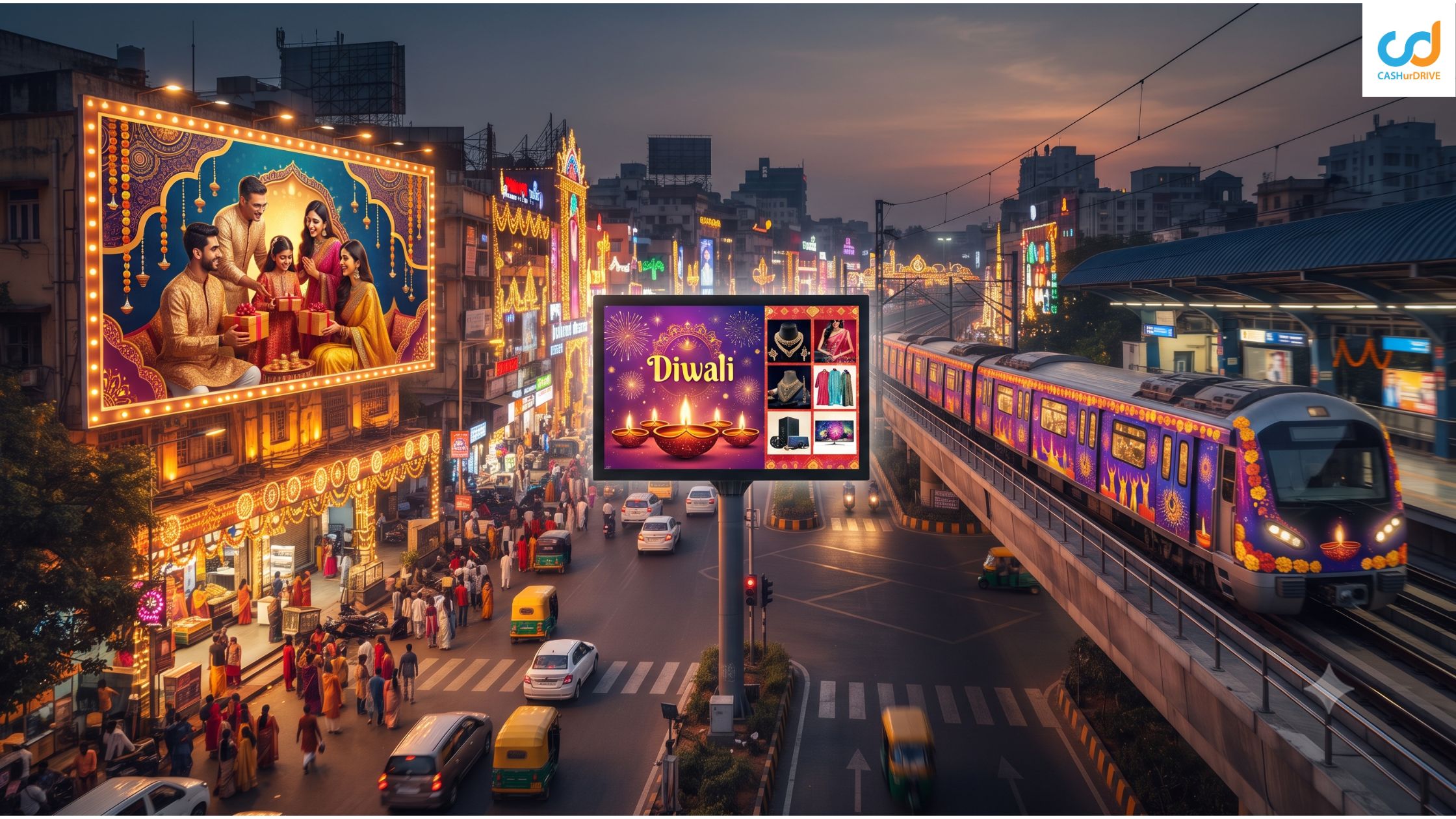
With Navratri on October 11, Dussehra on October 20, and Diwali on November 8, the brands that understand this are confirming their festive inventory right now – not when the festival calendar is public.
Hoarding vs Billboard: Why the Terminology Matters More Than Most Brands Realise
Hoarding advertising is a large-format out-of-home medium that places brand messages on fixed structures – delivering sustained visibility at high-traffic locations across Indian cities through repeated daily impressions on the same audiences who commute past, drive through, or walk by the same corridors.
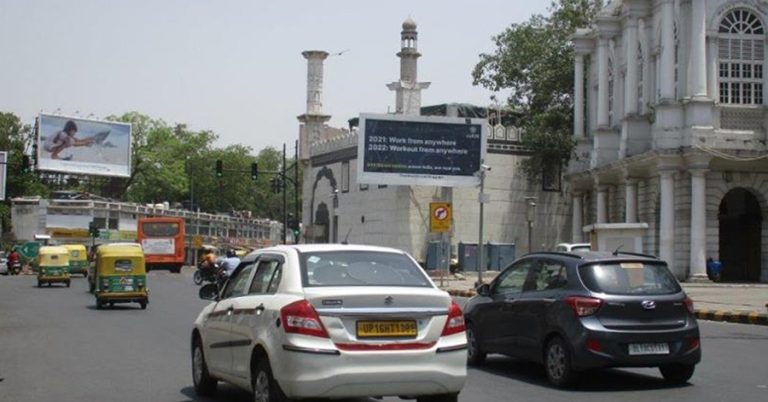
In India, “hoarding” and “billboard” refer to the same thing – a large-format fixed outdoor advertising structure. The terms are used interchangeably by most brands. But within the industry, distinctions matter:
Hoarding: The broadly used term in India. Covers everything from a standard 20×10 ft flex board on a local market wall to a 60×30 ft unipole on a national highway.
Billboard: The American English equivalent. Used by global brands and multinational agencies operating in India. Same format, different vocabulary.
Unipole: Specifically a hoarding mounted on a single large steel pole. The premium large-format structure found on highways, ring roads, and arterial expressways. Higher elevation, longer sight lines, wider audience.
Digital / LED Hoarding: A backlit or fully digital screen at standard hoarding locations. Allows creative rotation, daypart changes, and programmatic buying. The fastest-growing hoarding format in India’s Tier 1 cities.
The reason this matters: when brands brief campaigns using “billboard,” vendors may quote urban hoardings. When they mean “highway unipole,” they’ll get a different rate card. Knowing which format you need before the brief goes out saves the first three conversations.
The Hoarding Format Map: Unipole, Flex, LED and Gantry – Which Structure Delivers What
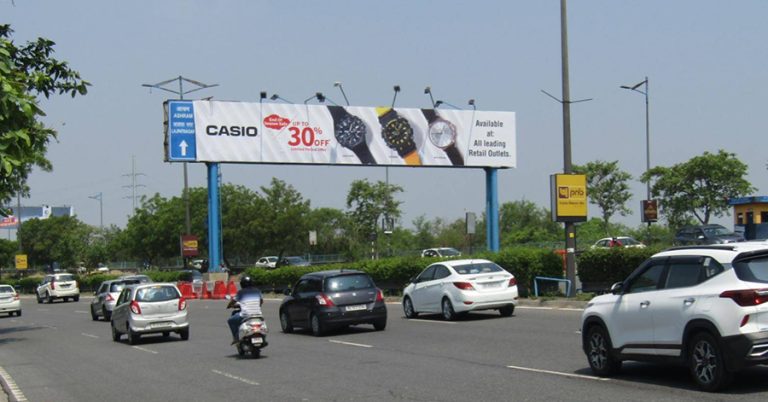
Unipole Structures: Single-Post Hoardings That Dominate Highway and Arterial Road Corridors
The premium large-format hoarding. Mounted on a single steel pole at 20-40 feet above road level, visible from 200-500 metres depending on site. Found on national highways, ring roads, and major arterial junctions in Delhi NCR, Mumbai, and Bengaluru. The longest sight lines and highest daily impressions of any hoarding format. Also the most competitive for festive season inventory.
Flex and Vinyl Hoardings: High-Volume City Coverage at Lower Per-Unit Investment
The workhorse of hoarding advertising in India. Standard sizes typically 20×10 ft or 30×20 ft. Placed on market walls, building facades, rooftop structures, and local junctions. Lower per-unit cost allows brands to cover more locations within budget – building frequency across a wider geographic area. Effective for FMCG, D2C, and real estate brands targeting neighbourhood-level visibility.
LED and Digital Hoardings: Dynamic Inventory That Commands Premium Rates at Premium Locations
Fully backlit or digital screen panels at premium locations – major traffic junctions, metro corridors, airport approach roads, and commercial hubs. Allows creative rotation, daypart targeting, and real-time creative changes. Premium format requiring premium lead time. Festive season digital hoarding slots at locations like Aerocity Delhi, Bandra-Kurla Complex Mumbai, and UB City Bengaluru are among the most contested OOH inventory in India.
Gantries and Bridge Panels: Above-the-Road Formats That Command Full Arterial Attention
Gantries span the full width of a road or flyover – brand creative hangs above traffic and is visible to every vehicle in every lane from a long approach distance. Found at major arterial intersections and highway toll zones. Highest recall per individual site because sight lines are unobstructed and the audience faces forward while approaching.
How Premium Hoarding Locations Are Evaluated – and Why Most Brands Get This Wrong
Most brands book hoarding locations by asking one question: how much traffic does this road get?
That’s the wrong question. Or rather, it’s only the first question.
A high-traffic location with a poor sight line – obscured by a tree, facing away from the direction of travel, or positioned just past a turn – delivers far fewer effective impressions than a lower-traffic location with a clear forward-facing view.
The five factors that determine hoarding location value:
- Sight line and approach angle: How many seconds does a driver or pedestrian have an unobstructed view of the creative? A forward-facing hoarding on a straight road outperforms one on a bend where it comes into view for only 3–4 seconds.
- Elevation: Higher is generally better. Hoardings positioned above eye level from seated drivers are more visible and less likely to be obscured by other vehicles or street furniture.
- Obstruction risk: Trees that seem manageable in December become full canopy by June. Always evaluate a site during peak foliage season, not in winter.
- Proximity to purchase: A hoarding within 2km of a retail outlet, mall cluster, or product category purchase environment converts brand recall into in-store behaviour faster.
- Audience composition, not just count: A road carrying 100,000 vehicles per day that skews commercial transport doesn’t deliver the same quality for an FMCG brand as one with 40,000 daily commuter cars. Traffic volume and audience profile are two different metrics.
CashUrDrive’s Atlas platform verifies the actual audience composition of specific hoarding locations before campaign booking – using device-level geofencing to confirm who actually passes the site, not just estimated traffic counts.
Want to verify the audience at a specific hoarding location before committing to the booking? Atlas maps the real consumer profile at individual OOH sites – not just footfall estimates. Get a free Atlas location analysis → /atlas
Why Navratri and Diwali Hoarding Inventory Commits Months Before the Festival Calendar Does
Hoarding advertising works through repetition. A campaign that runs for 30 days builds the frequency that creates recall. A campaign that runs for 60 days builds the brand presence that changes purchase behaviour.
This means the most effective festive hoarding campaigns don’t start at Navratri. They start before it – so the audience has already encountered the brand multiple times before the shopping decisions begin.
The 2026 festive booking timeline:
Navratri: October 11-19: For a campaign to be live for Navratri, installation needs to happen in late September. That means site confirmation in August.
Dussehra: October 20: Brands targeting market corridors and commercial hubs want maximum frequency in the weeks leading up to this date. October inventory confirmed in August.
Diwali Week: November 3-8: The most competitive OOH booking period of the year. Unipole sites on NH48 Delhi-Gurgaon, Western Express Highway Mumbai, and Outer Ring Road Bengaluru confirm months before November. For effective Diwali coverage, campaigns need 3–4 weeks of pre-Diwali frequency – which means a campaign launch by mid-October, confirmed in August.
What happens if you book in October: you get what’s still available after brands that planned in August have taken their preferred sites. Secondary locations. Lower-traffic routes.
The best Navratri-Diwali hoarding inventory in Delhi NCR and Mumbai doesn’t appear on availability sheets in October. It’s already gone.
▌ EXPERT INSIGHT – Campaign Planning, CashUrDrive OOH
Hoarding permissions in India operate through municipal bodies – NDMC and SDMC for Delhi, MCGM for Mumbai, BBMP for Bengaluru. Each authority has its own approval process for new installations and campaign renewals. For existing registered hoarding structures, the booking cycle is typically 30/45/90-day slots managed by the media owner.
During the festive season, the constraint isn’t just inventory availability – it’s also production capacity. Vinyl printing and installation for a multi-city hoarding campaign covering 50+ sites requires coordination across multiple vendors and depots. Brands that confirm in August get the production window they need. Brands that confirm in October are competing for printing slots alongside everyone else who waited.
Hoarding Advertising Cost Structure in India: What Determines the Rate Before You See a Single Quote

Hoarding advertising in India is priced by format, location tier, city, campaign duration, and whether the site is static or digital.
| Format | Rate Basis | Indicative Rate |
| Standard Flex Hoarding (20×10 ft) | Per site / per month | INR 30,000 to INR 80,000 (dependent on city tier and location) |
| Large Flex Hoarding (30×20 ft+) | Per site / per month | INR 80,000 to INR 200,000+ (dependent on prime commercial visibility) |
| Unipole (Highway / Arterial Road) | Per site / per month | INR 150,000 to INR 400,000+ (higher range for expressways like Delhi-Gurgaon NH48) |
| LED / Digital Hoarding | Per time slot / per week | INR 50,000 to INR 200,000+ (depending on rotation frequency and high-traffic junctions) |
| Gantry / Bridge Panel | Per site / per month | INR 250,000 to INR 600,000+ (due to full-road span and high frontal impact) |
Note: All pricing listed above represents estimated market approximations for reference purposes, as official rates require management review, seasonal festive adjustments, and city-specific vendor confirmations.
What drives the rate:
- Location tier: A unipole on NH48 (Delhi-Gurgaon) carries a significantly higher rate than a flex hoarding on a residential sector road.
- Format size: Larger structures command higher rates for both media and production.
- City: Mumbai and Delhi NCR premium site rates are higher than equivalent locations in Bengaluru, Hyderabad, or Pune.
- Digital vs static: LED hoarding slots are priced by time and rotate between multiple advertisers. Static flex hoardings give exclusive brand presence for the campaign duration.
- Festive premium: Navratri-Diwali inventory typically carries a seasonal premium above standard monthly rates.
Which Brand Categories Win on India’s Hoarding Inventory – and Which Don’t
Hoarding advertising is right for brands building real-world presence at scale. Here’s who gets the strongest returns:
- Real estate developers: The single most consistent category in Indian hoarding advertising. Project launches, possession announcements, and festive offers on hoardings near project sites and commuter corridors drive awareness and inquiry volumes. The closer the hoarding to the project, the more directly it converts.
- FMCG and consumer goods: Festive season hoarding campaigns near retail clusters and market corridors build the brand recall that drives in-store purchase decisions during the highest consumption period of the year.
- Automobile brands: Highway unipoles and arterial road hoardings reach drivers in the context of their product consideration. A consumer in their car, driving past a billboard for a new model, is in the most relevant mental environment available.
- D2C and new-market entrants: Hoarding advertising creates the “I’ve seen them everywhere” effect that digital-only brands take months to achieve through digital spend alone. A 30-day hoarding burst across 20 sites in a target city can shift brand familiarity faster than most digital campaigns.
- Banking and financial services: Trust is built through physical presence. A brand whose name appears on hoardings across a city feels more established and more secure than one that exists only online.
- Retail chains and QSR brands: Near-site hoarding advertising within 2km of the outlet drives foot traffic in ways that digital ads for the same location cannot replicate.
Hoarding Advertising FAQs: Everything Brand Managers Need to Know
Q1. What is the difference between a hoarding and a billboard in India?
In India, “hoarding” and “billboard” refer to the same large-format fixed outdoor advertising structure and are used interchangeably. Within the industry, format distinctions exist: a standard hoarding is typically a flex or vinyl board on a wall or frame; a unipole is a hoarding mounted on a single large steel pole, typically on highways; a gantry spans above the road; and a digital or LED hoarding uses backlit screens. The keyword “hoarding” is more commonly used in Indian search and everyday usage, while “billboard” is the American English equivalent.
Q2. How far in advance should hoarding advertising be booked for Navratri and Diwali?
For effective festive coverage, hoarding inventory should be confirmed 6-8 weeks before the campaign needs to go live. Since festive campaigns are most effective when building frequency for 3-4 weeks before the peak shopping period, brands aiming for Diwali week (November 3-8) exposure should confirm sites in August. Premium locations – highway unipoles, junction hoardings near major markets, and LED digital sites – book fastest. August is the planning window. October is too late for the best inventory.
Q3. What size hoardings are most effective for festive campaigns in India?
For maximum visibility and recall, unipole structures (40×20 ft to 60×30 ft) on high-traffic arterial roads and highways deliver the strongest impressions per site. For volume campaigns covering multiple neighbourhoods and market zones, standard flex hoardings (20×10 ft to 30×20 ft) across a larger number of sites deliver better geographic saturation within budget. Digital LED hoardings at premium junctions are ideal for brands needing creative flexibility – rotating offers or creatives throughout the festive period without reprinting.
Q4. How is hoarding advertising priced in India?
Hoarding advertising is priced by format, location tier, city, and campaign duration. Standard static hoardings are typically sold on a per-site per-month basis. Digital LED hoardings are sold by time slot and rotate between multiple advertisers. Premium junction locations and highway unipoles carry significantly higher rates than secondary-zone hoardings. Festive season inventory carries a premium above standard monthly rates. For current pricing, contact CashUrDrive directly – rates vary by site and are not standardised across the industry.
Q5. Can hoarding advertising be measured for campaign effectiveness?
Traditional hoarding advertising has relied on estimated traffic count data and manual reach calculations. CashUrDrive’s Atlas platform upgrades this with device-level geofencing: by placing a virtual boundary around a hoarding location, Atlas identifies which consumer profiles are actually passing the site and tracks downstream behaviour – including whether those consumers subsequently visit retail locations or search for the brand online. This converts hoarding advertising from an awareness format with assumed reach into a measurable touchpoint with verified audience data.
Hoarding Advertising in 2026: India’s Highest-Recall OOH Format Still Runs on an August Timeline
A hoarding is the one OOH format that doesn’t need permission from an algorithm, a broadband connection, or a screen unlock to deliver its impression. It’s there every morning. Every commute. Every week of a campaign.
That consistency is what makes festive season hoarding advertising in India the highest-recall large-format OOH format available. And it’s what makes August the critical planning window – not October, when the best sites are already committed.
Don’t wait for the festival calendar to confirm what OOH planners already know.
Get a hoarding media plan for Delhi NCR, Mumbai, or Bengaluru with verified audience reach data from Atlas → /atlas
Author: CashUrDrive Editorial Team
This article was produced with AI assistance and reviewed by the CashUrDrive editorial team.