Karwa Chauth Advertising: OOH Campaign Opportunities for Jewellery, Fashion and Beauty Brands
 By Annu
Karwa Chauth advertising is an OOH campaign strategy. It places brand messages on shopping corridors and transit routes. The campaign runs 10-14 days before the festival. Also, Karwa Chauth is India’s biggest women-centric retail event. Both Delhi-NCR and adjoining states see high buying activity.
QUICK ANSWER
Karwa Chauth advertising targets three verticals: jewellery, fashion, and beauty. OOH intercepts shoppers on buying routes. That means markets, malls, and transit corridors. It doesn’t depend on clicks or algorithms. This guide covers which formats perform best. Specifically, it shows how Atlas picks sites by verified audience density.
Karwa Chauth 2026 falls on 20 October. The buying window is open now. Book OOH inventory with audience data. You’ll reach the right buyers. Otherwise, you take what’s left.
Why Karwa Chauth Is a High-Value Advertising Window
Consumer spending on jewellery, fashion, and beauty spikes in this window. Spending on these categories accelerates sharply in the 10-14 days before the festival. Most buyers don’t impulse purchase. Instead, they research, compare, and visit stores. That research phase is where OOH earns its place. It also keeps brands visible on the route to purchase.
Talon OOH’s 2026 Trust Report puts consumer trust in OOH at 58%. That trust gap widens in high-involvement buys like festival jewellery. Meanwhile, AdQuick’s 2026 data shows a 33% drop in social ad CTR. Fashion verticals take the biggest hit. In fact, these categories lean on Karwa Chauth for a large share of Q4 revenue.
OOH doesn’t use an algorithm. It can’t be blocked either. As a result, a Karol Bagh hoarding reaches every shopper on that street. No targeting filters them out. That’s Karwa Chauth advertising at its most direct.
Which Brands Should Lead With Karwa Chauth OOH Advertising
Three advertiser categories see the strongest return from Karwa Chauth advertising in Delhi-NCR.
Jewellery Brands
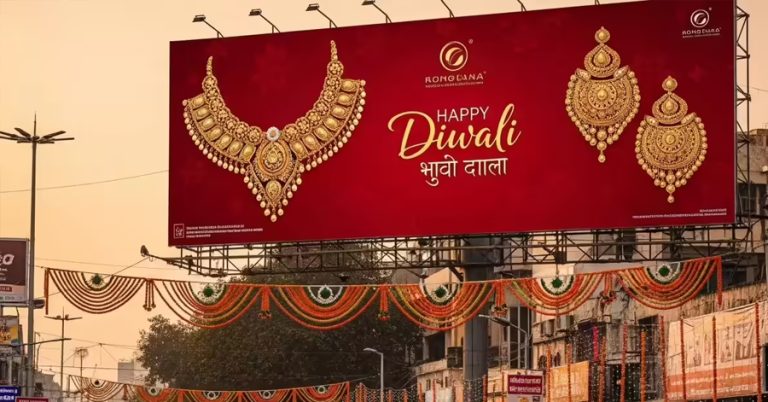
Gold, diamond, and bridal campaigns work best near traditional markets. Hoardings near Karol Bagh, Chandni Chowk, and Lajpat Nagar deliver 8-12 impressions per route per day. That figure comes from CashUrDrive transit planning data. These sites also put brands within walking distance of a purchase decision. Buyers here are already in-market.
Fashion and Ethnic Wear Brands
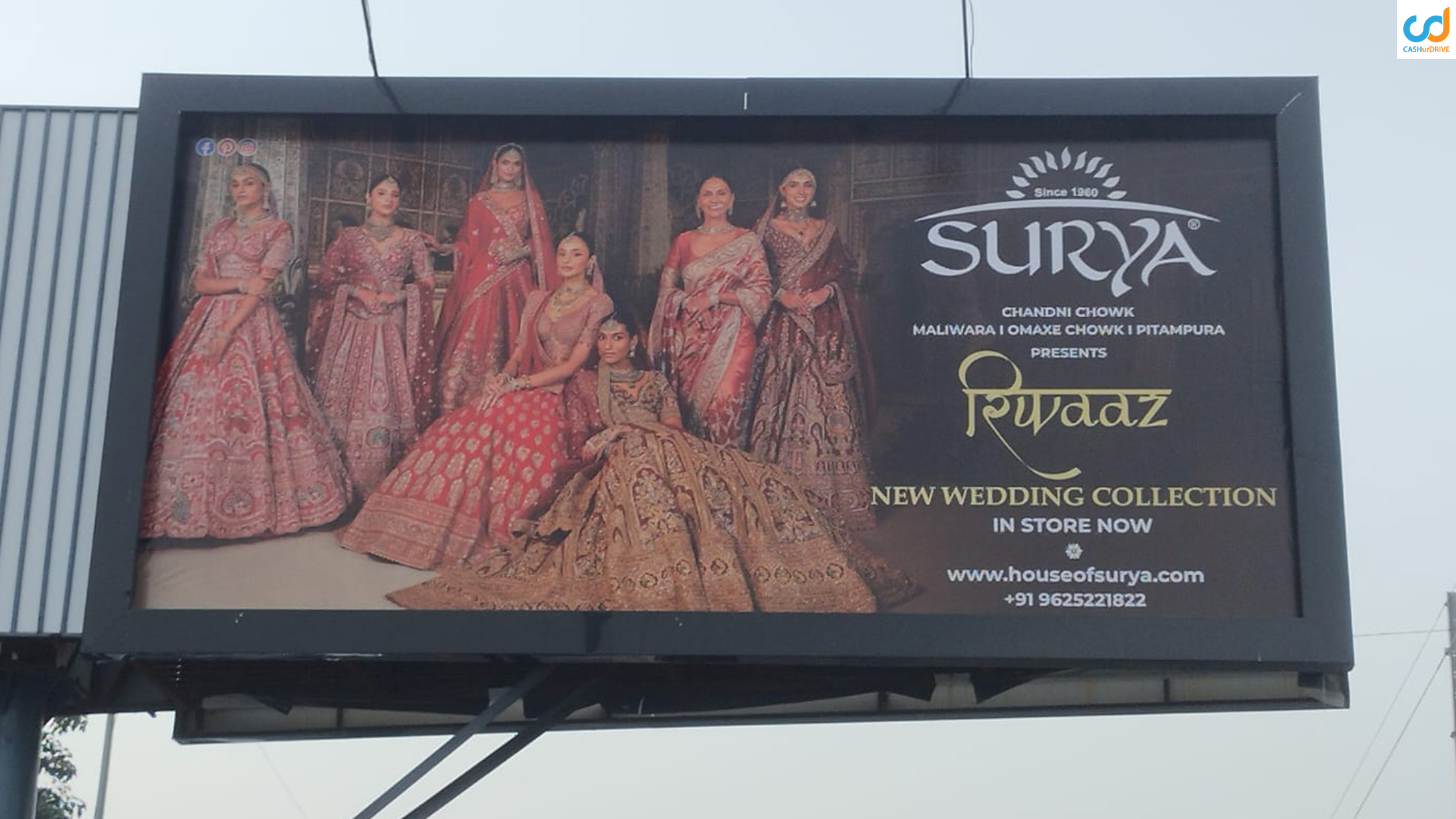
Saree and lehenga brands compete in the same window as jewellery. Also, D2C ethnic fashion labels target the same Karwa Chauth buyer. Mall media at DLF Promenade and Select Citywalk reaches both. The consumer is already browsing inside these venues. She’s also comparing categories mid-visit.
Beauty and Personal Care Brands
Pre-festival beauty routines drive purchases 7-10 days out. It includes salon appointments, cosmetics top-ups, and skincare. Cab and auto ads reach this audience in South Delhi, Gurgaon, and Noida. These placements hit shoppers mid-commute. Average daily in-transit exposure also runs 90 minutes per rider, based on CashUrDrive route data.
OOH Formats for Karwa Chauth Advertising
Not every OOH format performs equally in the festival window. Here’s how each one contributes.
Hoardings and Unipoles Near Retail Markets
Large-format hoardings near Lajpat Nagar and Ajmal Khan Road deliver 10-12 days of steady exposure. Chandni Chowk approach roads perform equally well. Both are within walking distance of purchase decisions. For jewellery and fashion brands, these are the priority sites in any Karwa Chauth plan.
Mall Advertising
Atrium panels, pillar branding, and in-mall digital screens reach fashion and beauty buyers. These consumers are already in the consideration stage. Also, mall advertsing in Delhi-NCR dwell time averages 60-90 minutes per visit. That delivers multiple impressions across a single shopping trip. Purchase decisions happen inside this exact environment.
Metro Advertising
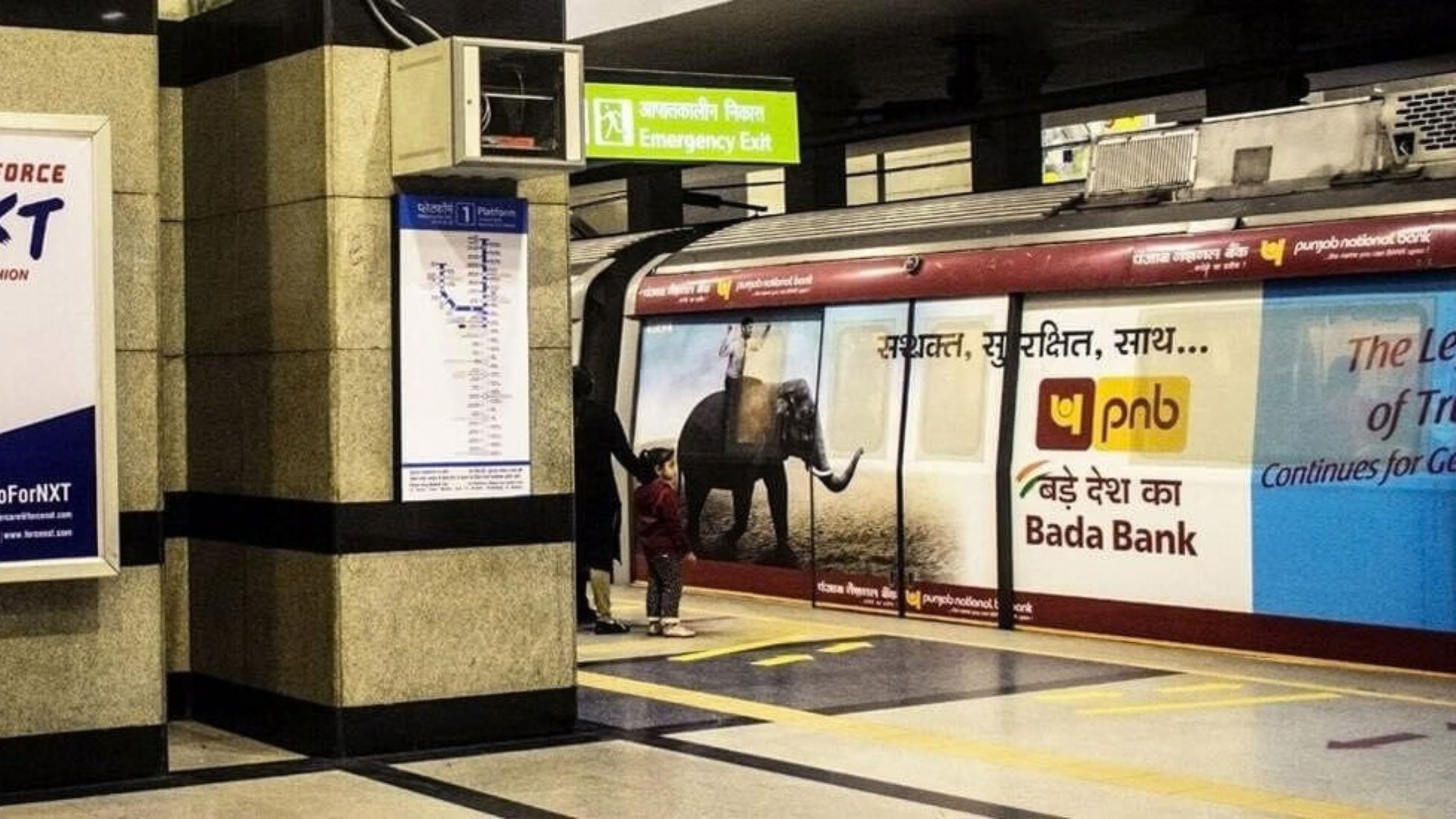
Delhi Metro carries 5.5 million commuters daily across 254 stations, according to DMRC. The Yellow Line connects Huda City Centre to Kashmere Gate. Together with the Blue Line through Noida, it covers the highest-density residential and retail zones. Both corridors are a priority for NCCS A and B women.
DOOH Screens
Digital OOH panels let brands run countdown creative. They switch messages by time of day and update offers in real time. For beauty brands with time-sensitive promos, DOOH carries genuine urgency. No other format can match that. A static vinyl can’t change once it goes to print.
Cab and Auto Advertising
Cab and auto-rickshaw wraps reach festival shoppers mid-commute. This covers South Delhi, Gurgaon, and Noida. Frequency on high-traffic routes also reaches 8-10 impressions per person per day. That’s based on CashUrDrive fleet data.
Where to Place Karwa Chauth Advertising in Delhi-NCR
Karwa Chauth shoppers cluster around four location types in Delhi-NCR.
Traditional jewellery markets
Karol Bagh, Chandni Chowk, and Lajpat Nagar are non-negotiable for jewellery brands. Hoardings on approach roads deliver high frequency to buyers who are actively in-market. These zones hold the highest density of purchase-ready consumers in any festival window.
Premium malls
DLF Promenade, Select Citywalk, and Ambience Gurgaon attract NCCS A fashion and beauty buyers. These are the key venues for high-value festival shoppers. Mall media here also outperforms market-proximity hoardings for this segment. It reaches consumers mid-browse, when category consideration peaks.
Affluent residential corridors
South Delhi – Greater Kailash, Defence Colony, Hauz Khas – holds the highest density of Karwa Chauth’s core demographic. Golf Course Road in Gurgaon is the second key zone. Hyperlocal hoardings and transit ads here build brand salience in the 7 days before the festival.
Metro station zones
Huda City Centre, Rajiv Chowk, and South Extension are convergence points for festival shoppers. They also deliver the most cost-efficient reach per qualified impression in this geography.
How DOOH Adds Urgency to Festival Creative
Static hoardings build awareness across the full campaign window. DOOH, however, closes the purchase decision in the final 72 hours. Both formats matter – but they do different jobs.
A DOOH screen runs countdown creative: “3 days to Karwa Chauth – visit us at Select Citywalk.” Vinyl can’t do that. It fixes the message at print time. DOOH adjusts the message daily. Fourteen days out, the creative shows the collection. Three days out, it shifts to urgency.
DOOH runs at 1.5x to 2x the cost of comparable static sites. That figure comes from CashUrDrive market data. For a 10-day campaign, that premium pays for itself. It also eliminates vinyl reprinting costs between creative phases. Time-responsive creative delivers measurable footfall uplift too. Static formats can’t demonstrate that independently.
CashUrDrive operates DOOH inventory across key Delhi-NCR retail and transit corridors. Atlas geo-triggers rotate creative by time of day. A beauty brand’s morning slot targets the commute audience. The evening slot, meanwhile, targets mall visitors during the pre-festival shopping peak.
Using Audience Intelligence for Karwa Chauth Advertising
Karwa Chauth advertising isn’t a broadcast play. Women aged 22-45, NCCS A and B, are the core audience. Buying intent peaks across a tight 10-day window. Precision, specifically in site selection, separates strong campaigns from wasted spend.
How Atlas Maps the Festival Audience
Atlas, CashUrDrive’s audience intelligence platform, maps this audience before you write the campaign brief. Device-level geofencing identifies which OOH locations carry the highest density of qualified shoppers. Specifically, it surfaces women whose movement data shows visits to jewellery stores and premium malls. That data covers the 60 days before the festival.
RWI (Real-World Intelligence) scoring then layers behavioural signals onto the NCCS profile. It flags sites where audience density and quality both peak at the same time.
For a jewellery brand, this changes the brief entirely. A Karol Bagh hoarding isn’t chosen just because it’s near a market. Atlas confirms the audience first. The site must carry NCCS A/B women at 7-9 PM – the peak festive shopping window. CashUrDrive verifies the audience density index before any booking is placed.
That’s audience-first Karwa Chauth advertising. You know the site cost and audience value before CashUrDrive places any booking.
CashUrDrive Operational Insight
In the 2025 Karwa Chauth window, Atlas identified that cab-wrap inventory south of the Ring Road specifically routes connecting Saket, Greater Kailash, and Vasant Kunj – carried a 40% higher NCCS A female audience density than comparable inventory in central Delhi corridors. Brands that shifted transit budget to these corridors saw category-leading impression-to-footfall ratios in nearby retail zones during the campaign period.
– CashUrDrive Atlas, Karwa Chauth 2025 Campaign Intelligence Report
A Short Karwa Chauth Advertising Campaign Checklist
Late bookings cost more and deliver fewer options. Here’s a working timeline from brief to campaign live.
Brief your agency (21+ days out): Share the audience profile, city geographies, and budget range. Atlas then runs a pre-campaign location audit with verified audience density per site.
Lock the site list (14-18 days out): Confirm location recommendations with Atlas data. Then tie the creative brief to those approved sites.
Produce the creative (10-14 days out): Static vinyl takes 7-10 working days to produce. DOOH content uploads in parallel.
Go live (7-10 days out): CashUrDrive activates all formats on schedule. Confirm the DOOH rotation timing. Monitoring begins across all sites from day one.
Review results (within 7 days of close): Atlas delivers verified impressions per site and audience profile match. It also reports footfall lift in proximity retail during the campaign period.
Frequently Asked Questions
Q1: When should brands book Karwa Chauth advertising?
Book Karwa Chauth advertising at least 21 days before the festival. Prime OOH sites near Karol Bagh, Lajpat Nagar, and key malls sell out fast. They’re typically gone 2-3 weeks before the festival date. Early booking secures the best locations. It also allows 7-10 days for vinyl production and pre-campaign Atlas verification.
Q2: Which OOH formats work best for jewellery brands during Karwa Chauth?
Jewellery brands get the strongest results from large-format hoardings near traditional markets. Sites within 500 metres of Karol Bagh, Chandni Chowk, and Lajpat Nagar are the priority. These sites deliver 8-12 impressions per route per day, based on CashUrDrive route data. Also, pair market-proximity hoardings with metro panels on the Yellow and Blue Lines. That combination creates frequency for both in-market shoppers and daily commuters.
Q3: Is Karwa Chauth advertising only effective in Delhi-NCR?
Karwa Chauth advertising delivers the highest ROI in Delhi-NCR. However, it also generates strong results in Punjab, Haryana, Rajasthan, and Western UP. Key cities include Chandigarh, Jaipur, and Lucknow. For brands with national retail presence, a Delhi-NCR OOH campaign anchors the festive window. Regional activations in Tier 1 city malls and transit corridors then extend reach. They cover the festival’s full geographic footprint.
Q4: What does a Karwa Chauth advertising campaign cost?
A Karwa Chauth advertising campaign covering 5-7 hoarding sites in Delhi-NCR costs ₹4-8 lakh. That covers a 10-day campaign period. The cost varies by format size, illumination, and location. Adding metro advertising or mall media typically adds ₹2-5 lakh to the campaign total. CashUrDrive provides Atlas-verified cost breakdowns before confirming any booking.
Q5: Can beauty brands benefit from Karwa Chauth advertising?
Beauty and personal care brands see strong results from Karwa Chauth transit advertising. Cab wraps and auto-rickshaw advertising in South Delhi, Gurgaon, and Noida are the priority formats. These formats reach working women during their daily commute. The key window is the 7-10 days before the festival. That’s when pre-Karwa Chauth beauty appointments and cosmetics purchases peak. Frequency on key commuter routes reaches 8-10 impressions per person per day, based on CashUrDrive fleet data.
Q6: How does CashUrDrive measure Karwa Chauth advertising results?
CashUrDrive measures Karwa Chauth advertising through Atlas post-campaign reports. Reports cover verified impressions per site and audience profile match against the campaign brief. They also show footfall lift in proximity retail during the campaign period. Atlas uses device-level geofencing to attribute in-store visits to specific OOH exposures. That gives brands a clear link between outdoor spend and festive retail performance.
Conclusion
Karwa Chauth advertising is time-bound. The geography is concentrated and the audience is defined. Brands that plan 3-4 weeks out outperform those that book on availability alone. The difference is using verified audience data before the site list is agreed.
CashUrDrive operates OOH and transit inventory across Delhi-NCR’s primary festival markets. Atlas maps exactly where jewellery, fashion, and beauty buyers are in-market during the festival window. The format and the creative matter, but site selection is what separates strong campaigns. Knowing where your buyer is, before the brief is written, is the real advantage.
CTA: Get an Atlas-verified Karwa Chauth media plan for your brand’s category and geography. CashUrDrive confirms audience density per site before placing any booking. Request your campaign brief review from CashUrDrive today.
Author: CashUrDrive Editorial Team | CashUrDrive Marketing Limited
This article was produced with AI assistance and reviewed by the CashUrDrive editorial team.