Festive Advertising 2026: A Complete Guide to OOH, DOOH and Transit Media
 By Annu
India’s out-of-home market added ₹185 crore in 2025. However, almost all of it landed in one quarter.
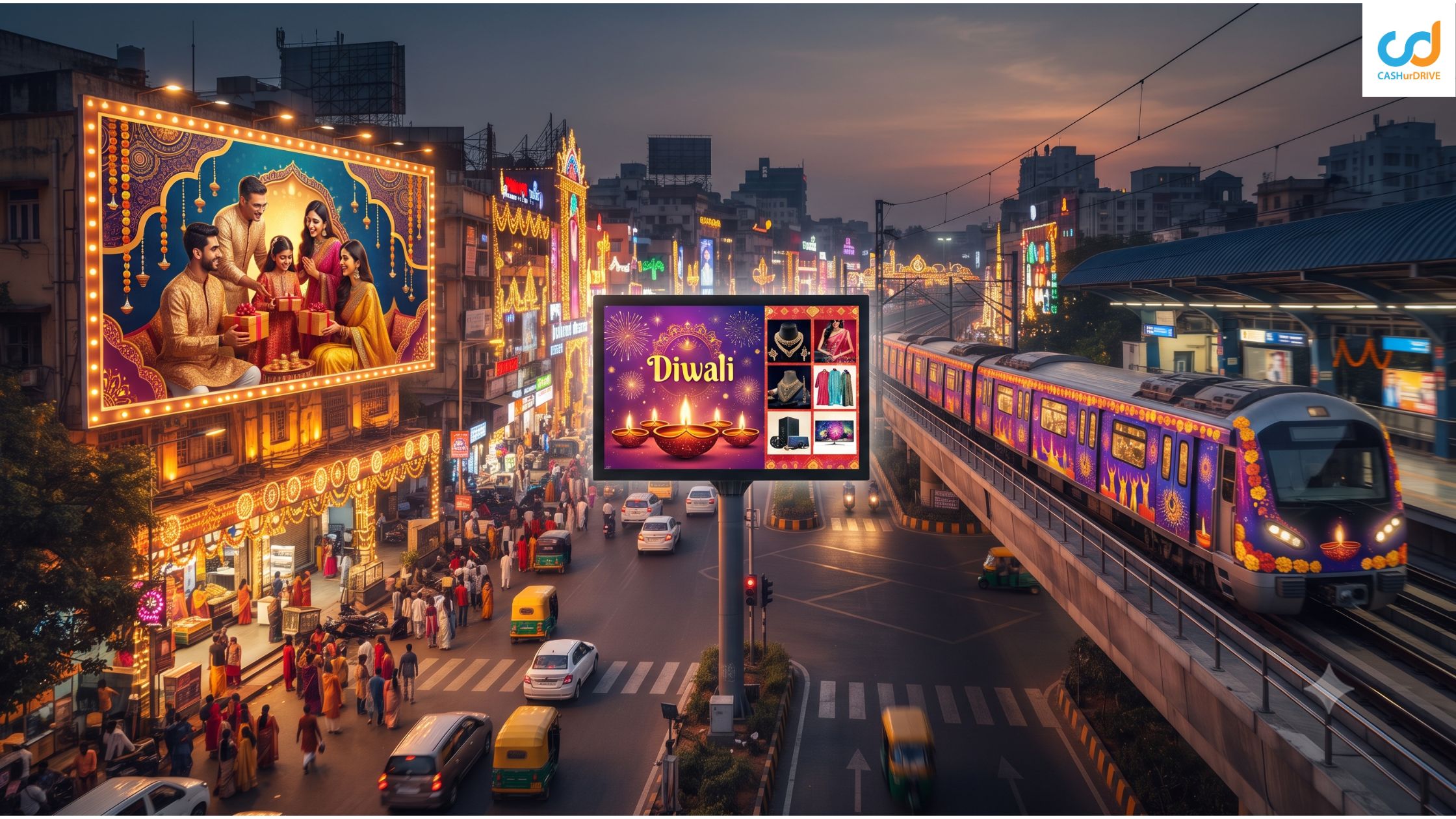
Festive advertising is seasonal brand marketing timed to India’s festival calendar. It runs from September to December. In this window, OOH, DOOH and transit media carry a far bigger share of yearly ad spend.
In 2026 the window opens with Ganesh Chaturthi on 14 September. Then it closes for the new year. Diwali, meanwhile, falls on Sunday 8 November. Brands face three choices: which festivals to buy, which formats to back, and when to book.
This guide covers all three. It also uses figures from the Pitch Madison Advertising Report 2026, or PMAR. It also draws on the World Out of Home Organization. You will see where festive money moves by quarter. Next, you will see how commuter habits shift. Finally, you will see how to pick formats, and what a Sunday Diwali changes.
What festive advertising means for outdoor media in 2026
Festive advertising covers every campaign run against a named festival. The window runs from September to December. But it works as one long season. Therefore, it is not a set of separate events. That is because the crowd never fully returns to its normal routine until January.
For outdoor media, the season carries real weight. In fact, PMAR 2026 calls OOH the “traditional survivor”. It was the only old medium to grow in 2025. Meanwhile, print, TV and radio all lost ground. Still, OOH held its share. Overall, OOH revenue reached ₹4,835 crore. That is up 4% from ₹4,650 crore in 2024.
However, that growth is not spread evenly. As a result, brands that treat OOH advertising as one yearly line item miss the pattern.
The 2026 festive window at a glance
| Festival | 2026 date |
| Ganesh Chaturthi | 14 September |
| Anant Chaturdashi (Visarjan) | 25 September |
| Shardiya Navratri | 11 to 19 October |
| Durga Puja | 16 to 20 October |
| Dussehra / Vijayadashami | 20 October |
| Karwa Chauth | 29 October |
| Dhanteras | 6 November |
| Diwali / Lakshmi Puja | 8 November (Sunday) |
| Chhath Puja | 15 November |
| Wedding season | Late November onward |
| Christmas and New Year | 25 December onward |
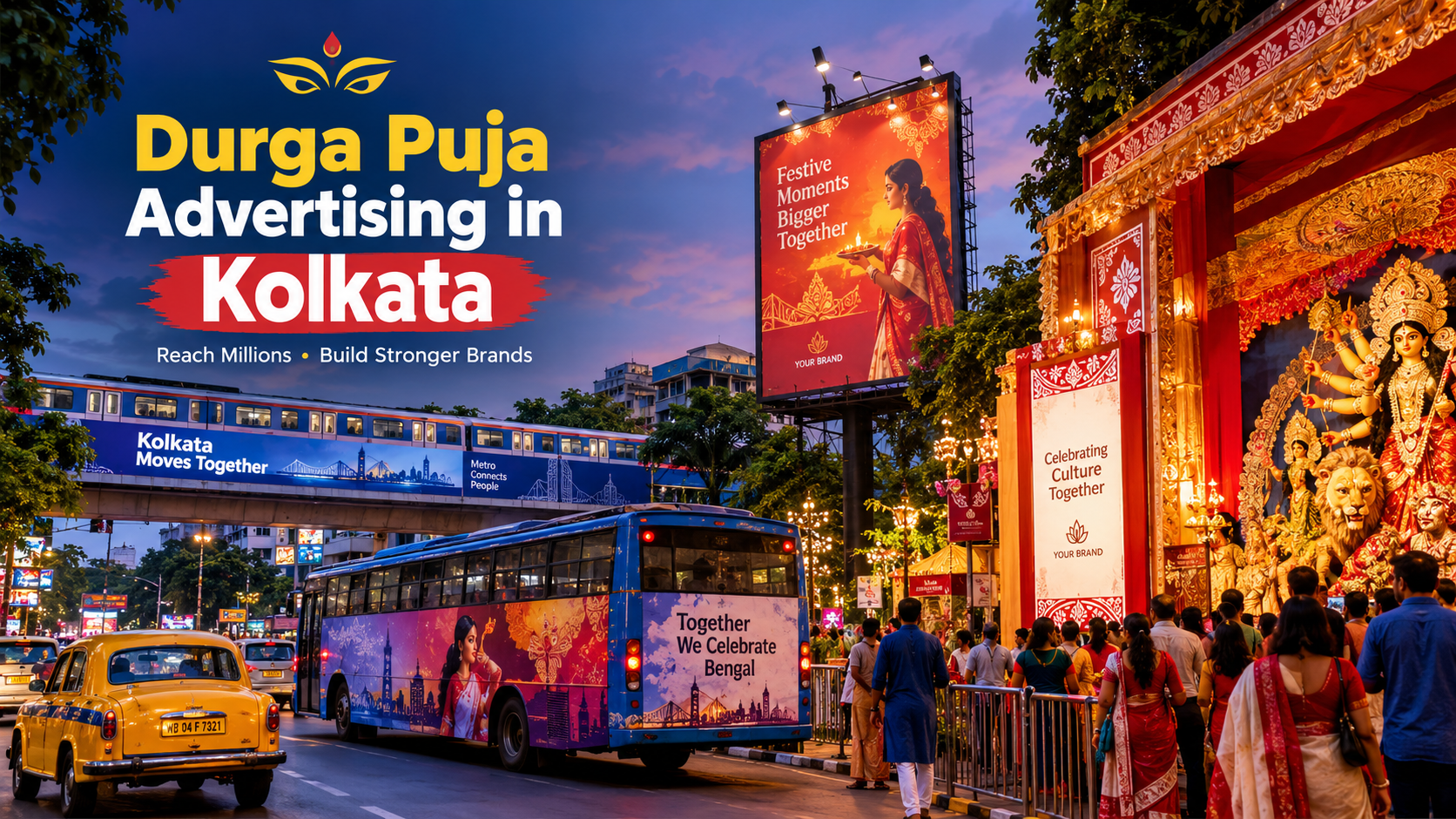
Dates follow the panchang. They also vary by region. For example, Ganesh Chaturthi leads in Maharashtra. Similarly, Durga Puja leads in West Bengal. Navratri leads in Gujarat. Chhath leads across Bihar, east Uttar Pradesh and Delhi’s migrant belt.
Still, the season does not end at Diwali. Furthermore, the wedding season and the Christmas run keep retail, jewellery and travel demand strong into December.
Where the festive money actually moves
PMAR 2026 splits OOH revenue by quarter. The pattern is stark.
India’s OOH market added ₹185 crore in 2025. In fact, ₹186 crore of that came from Q3 alone. Q3 rose 18% year-on-year. Specifically, it went from ₹1,023 crore to ₹1,209 crore. However, Q1 dipped slightly. Q2 was flat. In short, Q3 gave 100% of the year’s growth.
However, Q4 tells a different story. At ₹1,354 crore, it was the biggest quarter. But it barely grew over 2024. PMAR calls it the “revenue anchor”. In other words, it is a steady, high-volume quarter. Therefore, it holds the channel up. Still, it does not expand.
The takeaway is direct. Q3 covers the build-up. That means Ganesh Chaturthi, the Navratri run, and Dussehra. There, the market is growing. Good sites are also still open. Then comes Q4, and with it Diwali. Of course, Diwali is the single biggest cluster of festive spend in India. But every brand type arrives at once. All of them chase space that is not growing. Brands that compete only in the Diwali window therefore bid hardest for the tightest stock of the year.
The sector data backs this up. For example, Real Estate raised its OOH spend by roughly 20% in 2025. It took close to a quarter of the channel’s revenue. BFSI, auto and retail also added weight.
How festive audience movement changes
Festive planning fails when it assumes the crowd sits where it sat in August.
Three shifts matter. First of all, office route traffic thins. This is because people take leave, and hybrid schedules loosen. That weakens the weekday routes behind most yearly transit buys. Next, the market, mall and temple zones get much busier. They also peak outside standard rush hours. Finally, many city workers travel home. That moves crowds out of Delhi NCR, Mumbai and Bengaluru. As a result, smaller towns gain them for a week or more.
Route-level planning therefore matters more here. For example, take a cab fleet through Karol Bagh and Lajpat Nagar before Diwali. It reaches shoppers. However, the same fleet on a Gurugram office circuit reaches far fewer. That is the real case for transit media advertising in this season. The media moves with the crowd, instead of waiting for it.
Choosing between OOH, DOOH and Transit
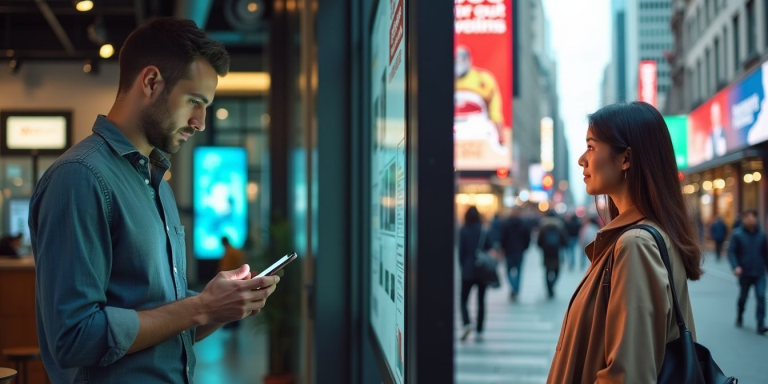
[IMAGE: Split visual showing a large-format hoarding, a digital screen and a wrapped bus in an Indian metro]
Overall, format choice follows the goal, not the budget.
Large-format hoardings and unipoles carry mass reach. They also carry landmark trust. So they work when a brand needs city-wide presence behind one message.
DOOH advertising works when the message must change. For example, screens can shift creative for Dhanteras, Diwali night and the sales that follow. They also carry offer-led urgency. A printed hoarding cannot. In addition, screen buying can be weighted toward evening shopping hours.
Transit formats deliver frequency instead. For example, cab wraps, bus branding, auto hoods and metro sites work along a route. So the same rider sees the same brand again and again. That repeat view builds recall in a crowded season.
Booking and lead times
Cost varies by city, format, lighting, site quality and length of run. Therefore, there is no single rate card. Also, festive premiums apply on the best sites.
But lead time is the harder limit. For example, premium hoardings and metro sites in Delhi NCR and Mumbai clear months before Diwali. Then print and install add more time. In addition, CashUrDrive runs its own 3M-approved print and stitching unit. It has over one lakh square feet of daily capacity. That is what makes a late-September brief for a pan-India job possible.
Get a Free Festival OOH Media Plan for your brand, with formats, routes and city-level cover mapped for the 2026 season.
Diwali falls on a Sunday in 2026
[IMAGE: Weekend shopping crowd outside an illuminated retail market on Diwali weekend]
Diwali 2026 falls on Sunday 8 November. Dhanteras lands on Friday 6 November. The core buying run therefore sits across one Friday-to-Sunday weekend.
As a result, this changes how the final week should be weighted. Weekday office route sites work less well on those three days. That is because the commute that justifies them does not happen. Instead, market roads, malls, retail zones and family travel routes carry far more people.
Brands should therefore weight the closing week toward shopping districts. Leisure routes also matter. Then hold office route cover for the earlier build-up, where it still performs. In short, a campaign planned on last year’s weekday pattern will spend the three best days facing empty desks.
Measuring a festive campaign, not just buying one
[IMAGE: Campaign dashboard showing site-level audience and exposure data]
Measurement is where festive OOH campaigns most often fall down.
The World Out of Home Organization sets the global standard here. It published version 2.0 of its Global OOH Audience Measurement Guidelines in June 2026. The guidelines draw on bodies across 28 markets. They also run past 160 pages. For example, it records India’s RoadStar system. RoadStar now tracks 300,000 sites across 2,300 cities. It also uses one steady data stream. In short, Indian OOH data has moved past footfall counts.
Similarly, CashUrDrive’s Atlas platform works at campaign level. First of all, Atlas scores sites by crowd quality and share of voice. Then it geofences each live site and route. That captures unnamed device signals while the campaign runs. Finally, it matches those signals to digital IDs. The shopper who passed a hoarding in Diwali week can therefore be reached again in the sales that follow.
Frequently Asked Questions
Q1. What is festive advertising?
Festive advertising is seasonal brand marketing timed to India’s festival calendar. It runs from September to December. In short, it packs a large share of yearly media spend into about fourteen weeks. For outdoor media, the season decides the year. For example, the Pitch Madison Advertising Report 2026 found that Q3 2025 gave 100% of OOH revenue growth. Specifically, Q3 rose 18% to ₹1,209 crore.
Q2. When does the 2026 festive advertising season start and end?
The 2026 festive advertising season opens with Ganesh Chaturthi on 14 September. Then it runs to the new year. In addition, key dates include Navratri from 11 to 19 October, Dussehra on 20 October, and Dhanteras on 6 November. Diwali falls on Sunday 8 November. Chhath Puja follows on 15 November. Finally, wedding season and Christmas hold demand into December.
Q3. Which is better for festive campaigns: OOH, DOOH or transit media?
No single format wins, because the choice follows the goal. For example, static OOH gives mass reach and landmark presence. DOOH lets creative change across Dhanteras, Diwali and the sales that follow. Instead of reach, transit media builds frequency along commuter routes. Overall, the strongest festive plans combine all three. In addition, CashUrDrive runs billboard, DOOH, cab, bus, auto and metro formats across 45+ Indian cities.
Q4. How far in advance should brands book festive OOH inventory?
Brands should book premium festive OOH sites two to three months ahead. In Delhi NCR and Mumbai, however, hoardings, metro sites and busy corridors clear well before Diwali. For example, the Pitch Madison Advertising Report 2026 names Q4 as OOH’s biggest quarter at ₹1,354 crore. But that demand is squeezed into a few weeks. Print and install also add lead time.
Q5. How is festive OOH advertising measured?
Festive OOH advertising is measured through audience data, rather than site counts. For example, the World Out of Home Organization set the standard. Its Global OOH Audience Measurement Guidelines 2.0 came out in June 2026. Furthermore, it draws on bodies across 28 markets. In India, CashUrDrive’s Atlas platform geofences live sites. Brands can therefore check who was reached, then retarget them later.
Conclusion
Festive advertising in 2026 rewards brands that plan against the quarter. The festival alone is not enough. For example, PMAR 2026 shows growth packing into Q3. Meanwhile Q4 carries the biggest and most fought-over revenue base. In other words, the Ganesh-to-Navratri build offers more open space than the Diwali crush. Then add a Sunday Diwali. Add a crowd that moves mid-season. Finally, add lead times that close months ahead. As a result, the case for early route-level planning is clear.
CashUrDrive plans, prints, installs and measures festive campaigns. Formats include billboard, DOOH, cab, bus, auto and metro, across 45+ Indian cities. Get a Free Festival OOH Media Plan for your brand, with formats, routes and city-level cover mapped for the 2026 season.
Author: CashUrDrive Editorial Team
AI Disclosure: This article was produced with AI assistance and reviewed by the CashUrDrive editorial team.