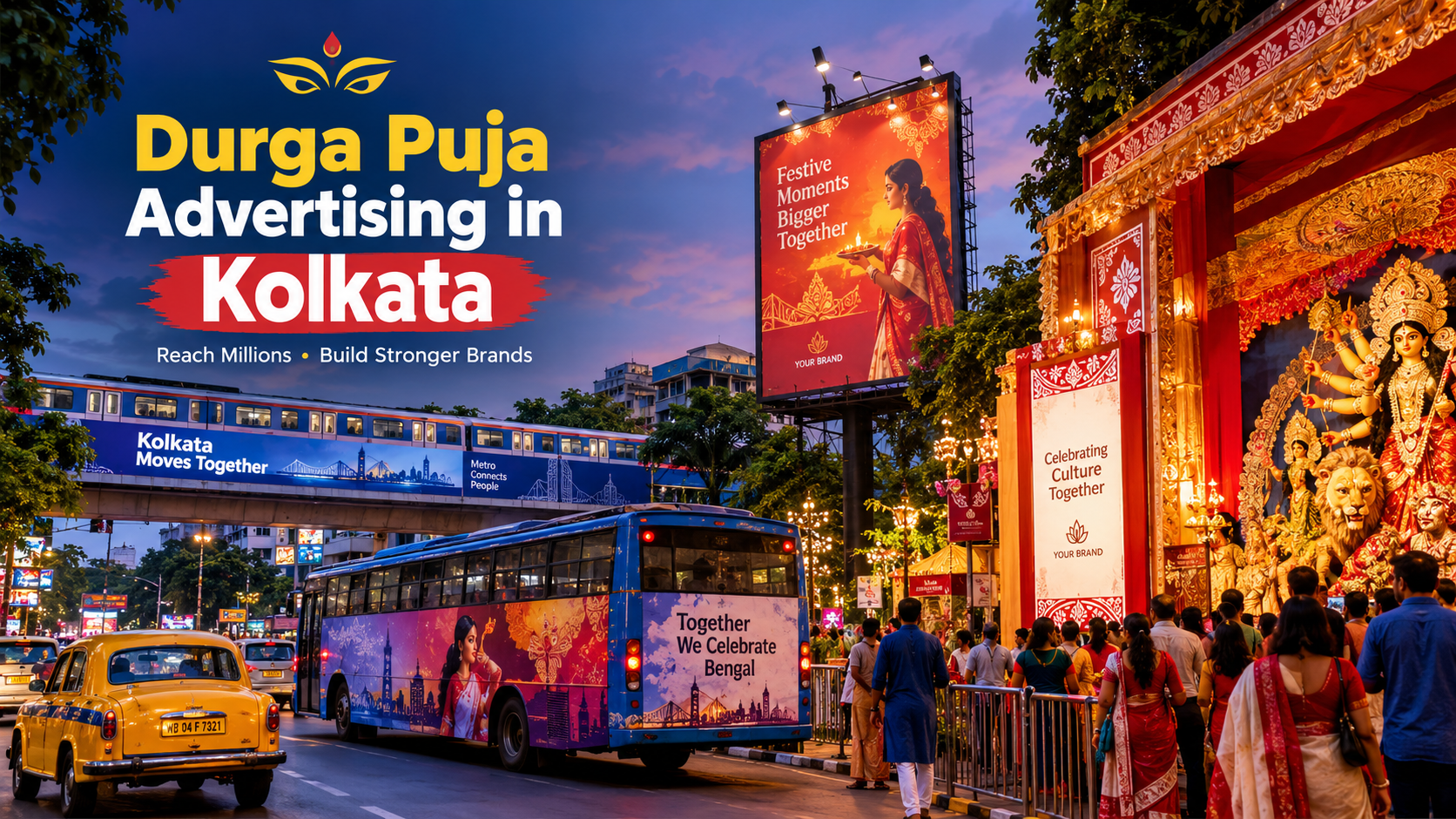
Durga Puja Advertising in Kolkata: OOH Locations, Formats & Campaign Planning
 By Annu
Durga Puja advertising in Kolkata is outdoor media placed during India’s largest street festival, when the city draws 4 to 5 million daily visitors across 3,000 pandal routes.
No other festival in India turns a city into a media channel at this scale.
Kolkata’s entire road network reorganises around pandal clusters for 10 days. Brands that book outdoor media on these routes reach an audience that is already moving through the city.
Still, many national brands underestimate the Kolkata Puja window.
Indeed, Durga Puja delivers audience density that no other October event in India matches.
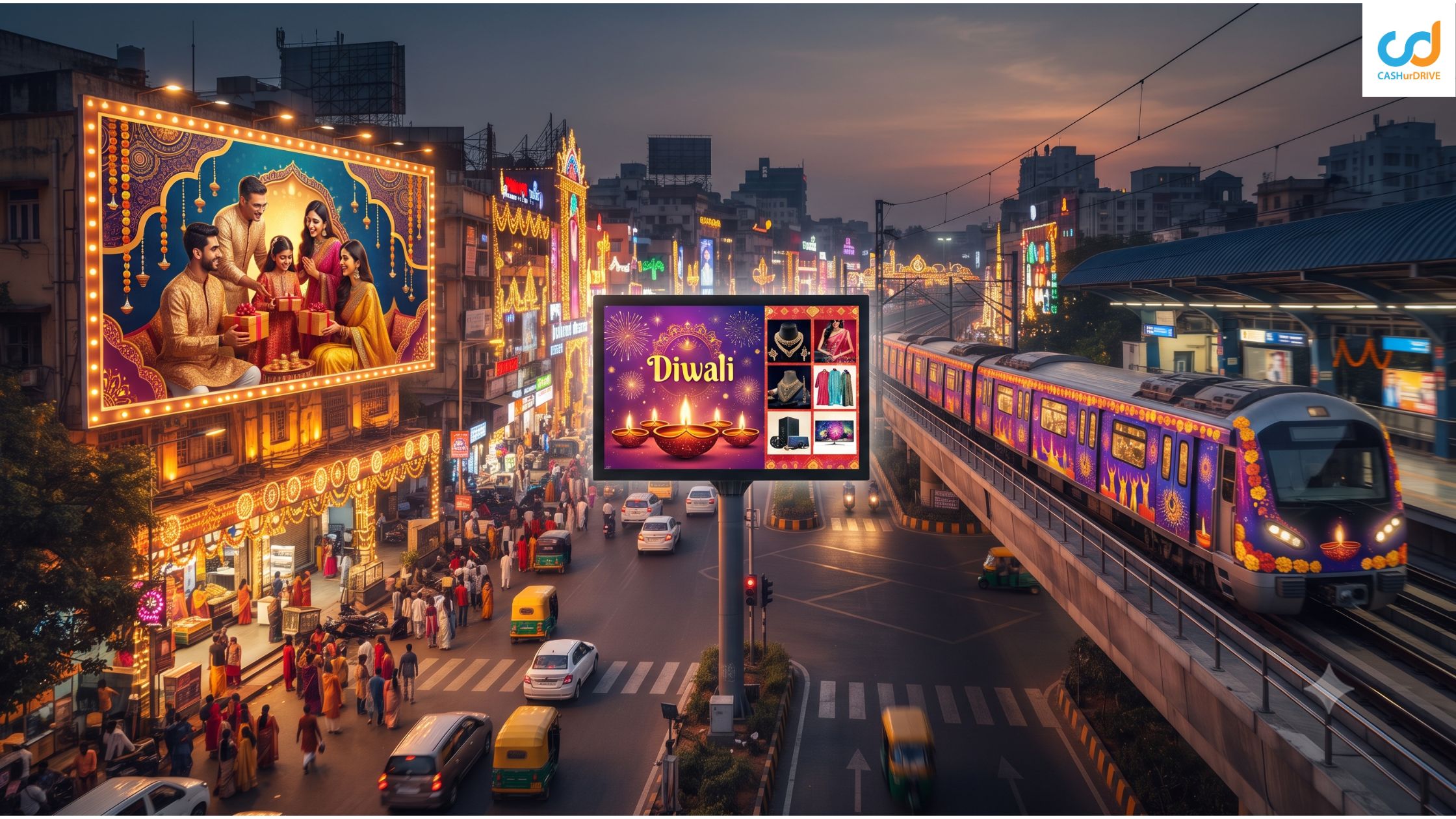
Durga Puja advertising covers hoardings, pandal sponsorships, metro branding, and transit wraps across the five-day peak from Shashthi to Vijaya Dashami.
This guide covers the top Kolkata OOH locations, formats that work in the Puja window, and how to plan a campaign before inventory sells out.
What Makes Durga Puja a Distinct Advertising Window
Durga Puja OOH advertising operates differently from any other festive campaign in India. The audience is not in a mall or a stadium. It is on the street.
Kolkata has over 3,000 registered pandals. The five largest alone draw over 500,000 visitors across the five-day peak.
Pandal-hopping is a cultural tradition. Families plan routes across the city. They travel through residential zones, market streets, and transit hubs.
However, most OOH buyers plan a Puja campaign the same way they plan any hoarding campaign.
Indeed, location and route matter more here than format.
According to Talon OOH’s 2026 trust research, 58% of consumers trust outdoor ads. In a festival environment with very high footfall, this trust is even more valuable. Brand messages placed on pandal routes reach buyers in a relaxed, attentive mindset.
Also, Durga Puja is not only a Kolkata festival. Bengal diaspora audiences across Mumbai, Delhi, and Bangalore celebrate it.
Still, Kolkata is where the scale is unmatched. Brands targeting West Bengal, Eastern India, or the Bengali consumer segment plan Kolkata-first.
Top OOH Locations for Durga Puja Advertising in Kolkata
Premium Pandal Approach Routes
The highest-impact OOH sites in Kolkata during Puja are on pandal approach roads. These are not always the widest junctions. They are the routes that pandal-hopping traffic uses most.
Ballygunge and Rashbehari Avenue carry the highest footfall toward South Kolkata’s biggest pandals. Sreebhumi, Ekdalia Evergreen, and 66 Palli draw visitors from across the city to this corridor.
Hazra More and Gariahat crossing are the two most media-competitive junctions in South Kolkata during Puja. Hoardings here face audiences waiting at signals for 90 seconds or more.
In North Kolkata, Bagbazar and Shyambazar five-point crossing cover access to some of the oldest and most attended pandals. Mohammed Ali Park draws Central Kolkata visitors from the Esplanade side.
Consequently, a well-planned Puja OOH campaign covers South, North, and Central Kolkata across these three corridor clusters.
Transit Corridors and Metro Stations
Kolkata Metro carries over 700,000 daily commuters. During Durga Puja, this number rises as residents use metro to avoid road congestion in pandal zones.
Metro stations that carry the most Puja-relevant traffic are Park Street, Esplanade, Rabindra Sarani, Shyambazar, and Dum Dum. These stations sit on or near the main pandal approach corridors.
Park Street station is also the entry point for the Central Kolkata Puja belt. Indeed, metro station branding here reaches the premium urban audience the festival concentrates.
Also, bus routes through Ballygunge and Shyambazar carry large volumes of pandal-hoppers who travel in groups. Bus wraps on these routes get multiple impressions per journey.
CashUrDrive operates transit media advertising across metro stations, bus networks, and cab fleets in Kolkata. Brands can therefore book a single campaign covering all three modes.
OOH Formats That Work During Durga Puja
Pandal Branding and Sponsorships
Durga Puja pandal advertising gives brands direct placement inside or at the entrance of a pandal. Entry gate branding, LED screens within the pandal enclosure, and event naming rights are all available.
The audience inside a pandal is stationary. They queue for 15 to 45 minutes in many large pandals during the peak evenings. This dwell time makes pandal branding uniquely effective.
However, pandal sponsorships require early booking. Most large pandal committees confirm their commercial partners 3 to 4 months before Shashthi.
Furthermore, the association between a brand and a well-known pandal carries social media amplification beyond the festival itself.
For example, a brand that sponsors Sreebhumi gets its name mentioned across the millions of social posts and news articles covering that pandal every year.
Hoardings and Unipoles
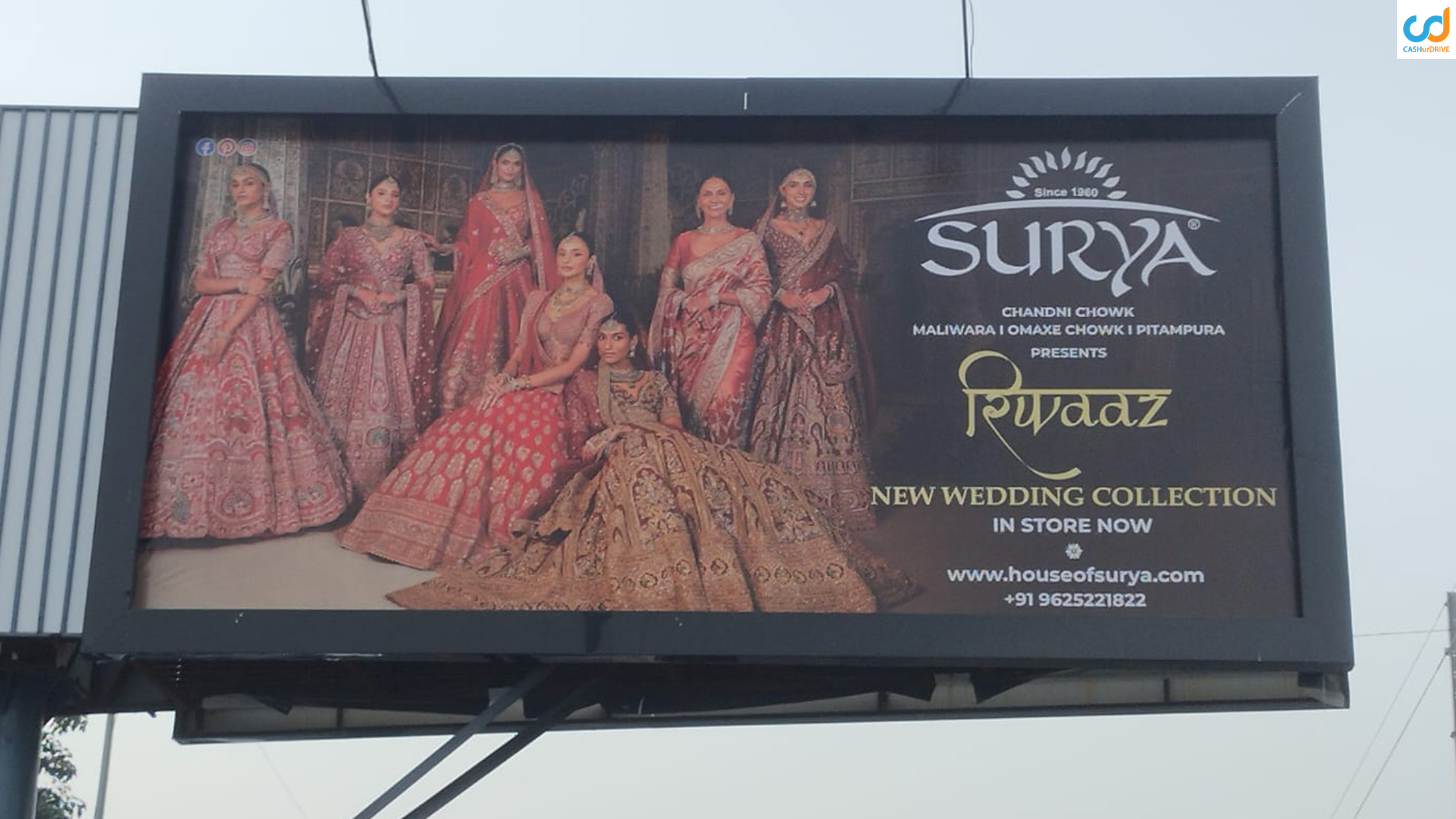
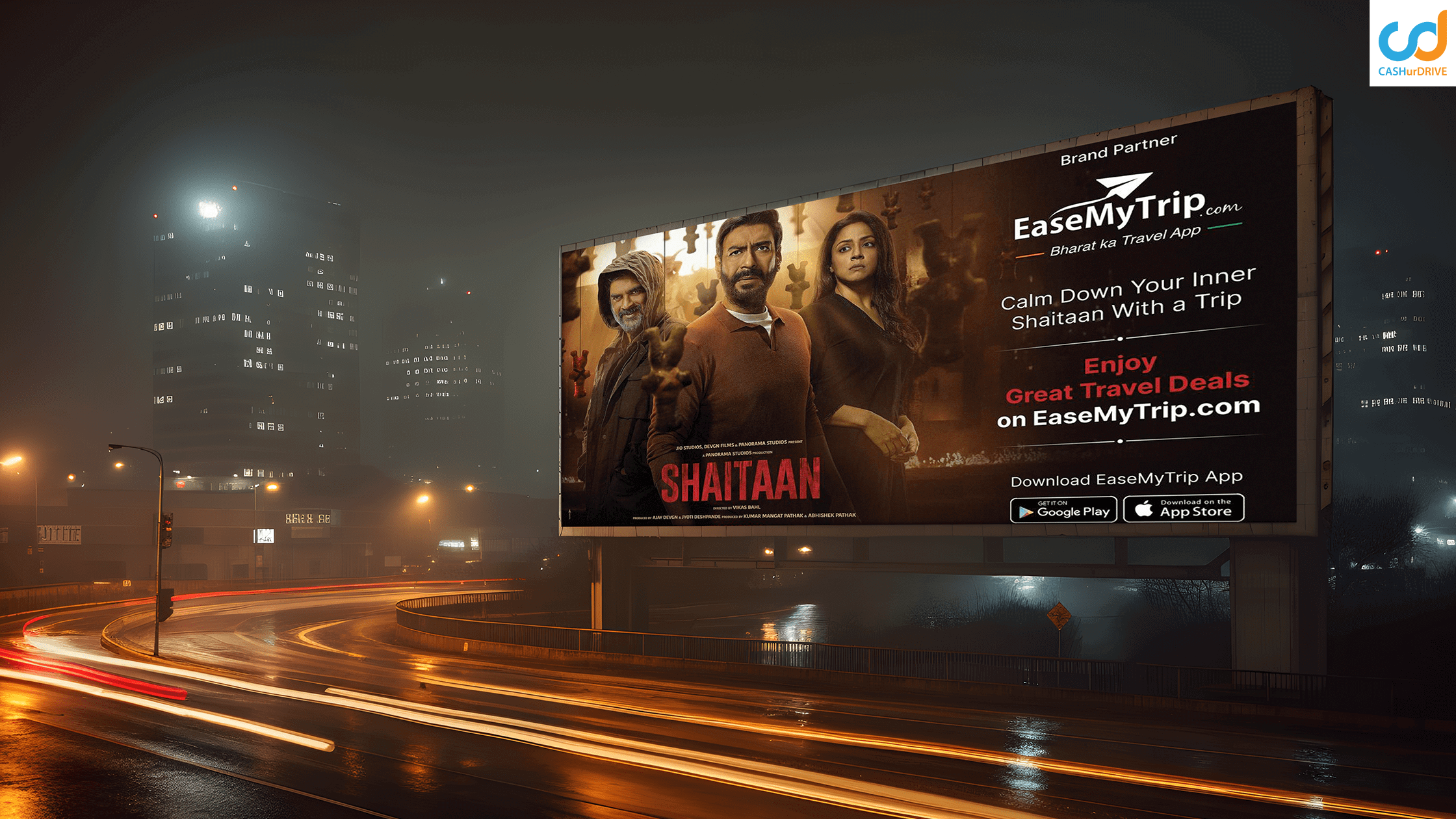
Large-format hoardings on pandal approach roads are the highest-reach format for the Puja window. They build brand presence across the full 10-day festival period.
Kolkata outdoor advertising during Puja concentrates on a set of key junctions. Ultadanga, Gariahat, Hazra More, Rashbehari, Naktala Udayan, and Park Circus are the most competed-for sites.
Similarly, unipole sites along EM Bypass reach vehicles travelling between South Kolkata and Salt Lake during the festival.
Brands should book these sites in August. Indeed, premium Puja locations in South Kolkata are fully booked 6 to 8 weeks before Shashthi.
CashUrDrive’s OOH advertising inventory across Kolkata covers these key Puja junctions. All sites are verified for audience footfall data through the Atlas platform.
DOOH and Digital Screens
Digital OOH screens near pandal zones allow dynamic content during the festival. Brands can update offers, greetings, or event-specific messaging across the Puja period.
For example, a countdown to Vijaya Dashami can run live on DOOH screens in Esplanade and Park Street from Saptami onward.
Additionally, DOOH advertising at transit hubs and mall approaches near pandal clusters reaches audiences across multiple touchpoints on the same day.
Campaign Planning for the Durga Puja Window
Puja advertising requires a different planning approach from standard festive campaigns. The audience is mobile, route-driven, and not in a retail environment during most of the festival.
Brands should plan around three distinct moments in the Puja window.
The pre-Puja build (10 to 5 days before Shashthi) is for brand awareness. Hoardings and transit ads run across the city. This builds recognition before the festival begins.
The peak Puja period (Shashthi to Navami) is for visibility at pandal approach routes and metro stations. Footfall is at its highest. Frequency on pandal corridors is the primary goal.
Then, Vijaya Dashami and the post-Puja window (2 days after) carry the purchase-intent audience. This is when jewellery, electronics, and fashion brand OOH near retail zones pays off.
According to AdQuick’s 2026 data, social ad CPC rises up to 20% in festival seasons. However, outdoor media costs are fixed at booking. Brands consequently avoid the digital price spike by committing to outdoor early.
Plan your Puja campaign 6 to 8 weeks before Shashthi. See citywide OOH campaign planning for the full scheduling framework.
How Atlas Strengthens Durga Puja Campaign Planning
Pandal-hopping audiences are some of the most mobile audiences in the Indian festive calendar. Atlas tracks their movement through device-level geofencing.
This means CashUrDrive can show which OOH sites on a Puja route carry the highest concentration of a brand’s target NCCS profile. Brands do not just buy a junction. They buy the audience profile verified at that junction.
For example, a jewellery brand targeting NCCS A/B households gets sites confirmed by Atlas before booking. This is very useful in Kolkata where a 1-kilometre distance between two sites can mean a very different audience composition.
Furthermore, Atlas enables post-campaign footfall tracking. Brands can measure whether Puja campaign audiences visited stores in the post-Vijaya Dashami retail period.
This is very useful for categories like jewellery and electronics where the Puja campaign builds intent and the purchase happens in the week after.
According to Billups’ 2026 report, pre-campaign audience verification lifts site match rates by 23%. Atlas uses the same method across all Kolkata OOH sites.
Consequently, festive campaigns planned through Atlas deliver verified audience reach rather than assumed footfall.
Request a free Atlas audience map for your Durga Puja OOH campaign. See CashUrDrive’s outdoor advertising services to plan your festive brief before Kolkata inventory sells out.
Frequently Asked Questions
Q1: What are the best OOH formats for Durga Puja advertising in Kolkata?
The best formats for Durga Puja advertising in Kolkata are large-format hoardings on pandal approach roads, metro station branding at Park Street and Esplanade, and pandal entry gate sponsorships at major community pandals. Brands should also use transit wraps on bus routes serving pandal-hopping corridors. Also, DOOH screens at high-footfall junctions near pandal clusters add dynamic festive messaging.
Q2: When should brands book OOH media for Durga Puja?
Brands should book Durga Puja OOH media 6 to 8 weeks before Shashthi. Premium sites in South Kolkata, particularly at Ballygunge, Rashbehari, and Gariahat, are often fully booked 10 weeks in advance. Additionally, pandal sponsorships at the largest pandals close 3 to 4 months before the festival. Brands that book in August secure the best sites for an October Puja.
Q3: What is Durga Puja OOH advertising and how does it differ from other festive OOH?
Durga Puja OOH advertising places brand messages on pandal approach routes, transit networks, and street-level media across Kolkata during the 10-day Puja festival. Unlike Diwali or Navratri campaigns that run nationally, Durga Puja OOH advertising is concentrated in Kolkata with very high local audience density. The audience is mobile and route-driven, so location and corridor selection matter more than format size alone.
Q4: How much does Durga Puja outdoor advertising cost in Kolkata?
Durga Puja outdoor advertising costs in Kolkata vary by format and location. A large-format hoarding at a premium junction like Gariahat or Hazra More costs approximately Rs 1.5 to 4 lakh per month. Metro station branding ranges from Rs 80,000 to 2 lakh per station per month. Bus wrap advertising starts from Rs 6,000 per vehicle per month. CashUrDrive provides media cost estimates through its Atlas planning platform based on verified site footfall.
Q5: Which brands advertise during Durga Puja in Kolkata outdoor media?
Kolkata outdoor advertising during Durga Puja is used by jewellery brands, fashion retail, FMCG, fintech, and consumer electronics companies. Jewellery brands are the largest category because gold and silver buying peaks around Vijaya Dashami. Fashion and apparel brands target the festive gifting audience across the five-day peak. Also, fintech and financial services brands use the festival window to reach high-NCCS urban Kolkata consumers.
Q6: How do brands measure OOH ROI during Durga Puja?
Brands can measure Durga Puja OOH campaign ROI through footfall attribution using Atlas geofencing data. Atlas tracks whether audiences exposed to the campaign on pandal routes visited brand stores in the Vijaya Dashami and post-Puja retail window. Additionally, DOOH screen impression data provides real-time delivery confirmation against booked impressions. Post-campaign reporting through Atlas shows audience reach by NCCS segment, zone, and format.
Conclusion
Durga Puja advertising in Kolkata operates at a scale and intensity that no other Indian festival replicates at the city level.
Brands that plan early secure the pandal approach routes and metro stations that carry the highest audience density during the festival.
Also, the Puja window gives brands three distinct planning moments: the pre-Puja build, the peak festival period, and the post-Vijaya Dashami retail window.
Atlas maps audience movement across all three phases. Brands consequently plan each phase against verified audience data, not assumed footfall.
CashUrDrive operates OOH, DOOH, transit, and metro sites across Kolkata. Every site is backed by Atlas audience intelligence. Your Puja campaign is then planned against real pandal-route movement, not map coordinates alone.
Author: CashUrDrive Editorial Team
Role: OOH Media Intelligence & Content
AI Disclosure: This article was produced with AI assistance and reviewed by the CashUrDrive editorial team.