Diwali Advertising Ideas 2026: OOH, DOOH & Transit Campaigns for Brands
 By Annu
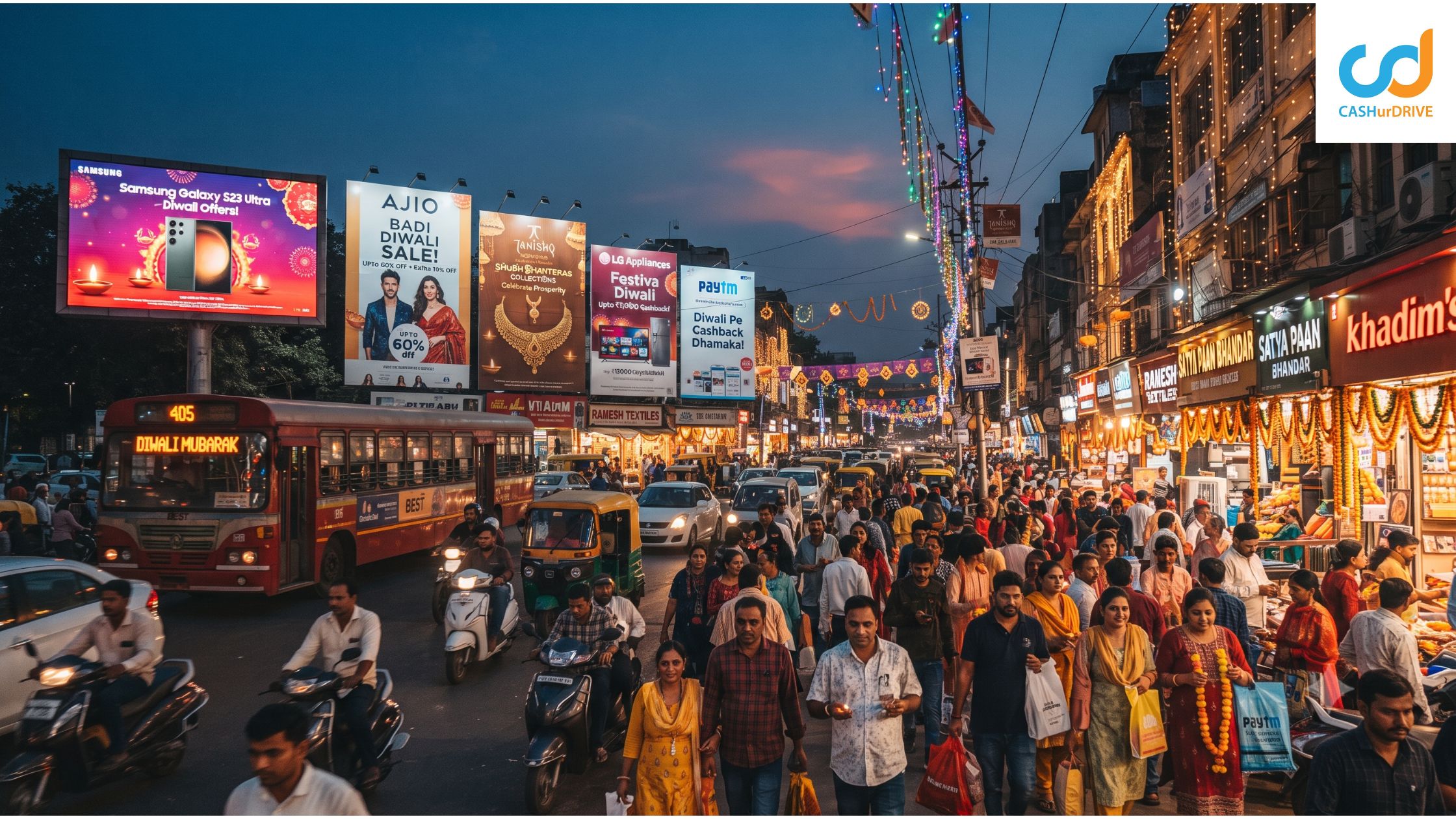
Diwali is the largest ad window of the year in India. It is also the most busy. Premium sites in Delhi, Mumbai and metro stations commit months in advance. Brands that wait for October are often working with what remains.
The 2026 Diwali festival has five days. It runs from Dhanteras on 6 November to Bhai Dooj on 10 November. Main Diwali and Lakshmi Puja fall on Sunday, 8 November. This guide covers practical ideas, format options and a planning timeline. It focuses on OOH, DOOH and transit campaigns across India.
Diwali as an Advertising Window: What Makes It Different
Diwali is the one Indian festival that is truly pan-India. Ganesh Chaturthi is focused in Maharashtra. Navratri, however, is strongest in Gujarat. Diwali, for example, runs across all major cities. These include Delhi, Mumbai, Bengaluru, Hyderabad, Chennai, Kolkata, Pune and Ahmedabad.
This scale changes the ad chance. So a Diwali campaign can run across six or seven markets. That is far more than any other festival window.
Three things make Diwali advertising distinct:
- First, consumer spending peaks: Jewellery, electronics, clothing, home goods and gifts all see their highest purchase volumes of the year. Brands in these categories have the most to gain from high-reach festive placements.
- Also, Dhanteras is a campaign moment in itself: The first day (6 November 2026) is the single biggest purchase day for gold and electronics in India. As a result, it warrants a separate planning and booking decision.
- Finally, market zone footfall peaks sharply: Physical retail markets see their highest footfall in the week before Diwali. Specifically, approach-road and in-zone ads reach an audience in active buying mode.
Where Diwali Audiences Concentrate
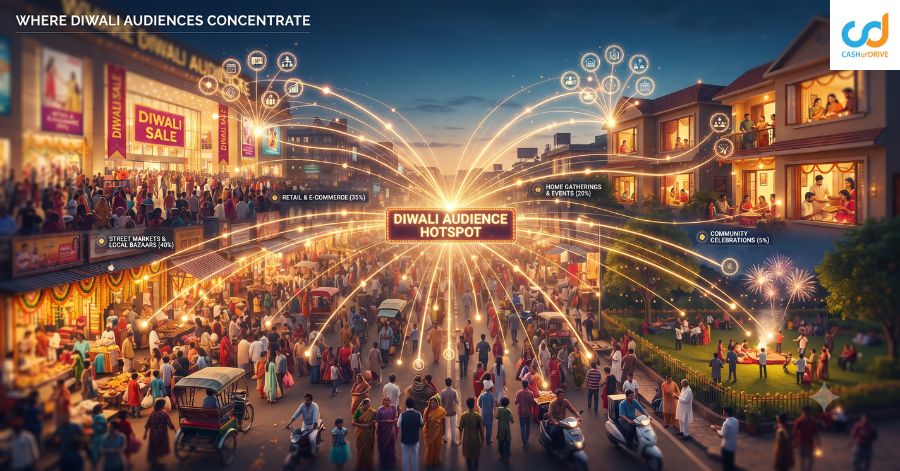
Diwali audience movement has two distinct patterns. Each also needs a different format response.
The first is market zone focus. In the week before Diwali, major retail markets see very high footfall. Shoppers buy gifts, clothes, sweets and decorations. In Delhi, key zones include Chandni Chowk, Sadar Bazaar and Lajpat Nagar. Karol Bagh and South Extension are also active. Mumbai’s main zones are Crawford Market, Zaveri Bazaar and Dadar. Commercial Street and Brigade Road serve the same role in Bengaluru.
The second is transit volume. Delhi Metro ridership rises sharply during the festive season. Consumers use the metro to reach markets and avoid road congestion. Consequently, metro stations near major market zones become high-value ad points. Auto and bus traffic on routes serving these markets also increases.
Knowing which pattern applies determines which format to use first. Is the target a market zone shopper or a transit commuter? For example, a jewellery brand targets market zone shoppers. A fintech brand, however, targets the transit commuter.
7 Advertising Ideas for the Diwali Window
1. Market Zone Hoardings and DOOH on Approach Roads
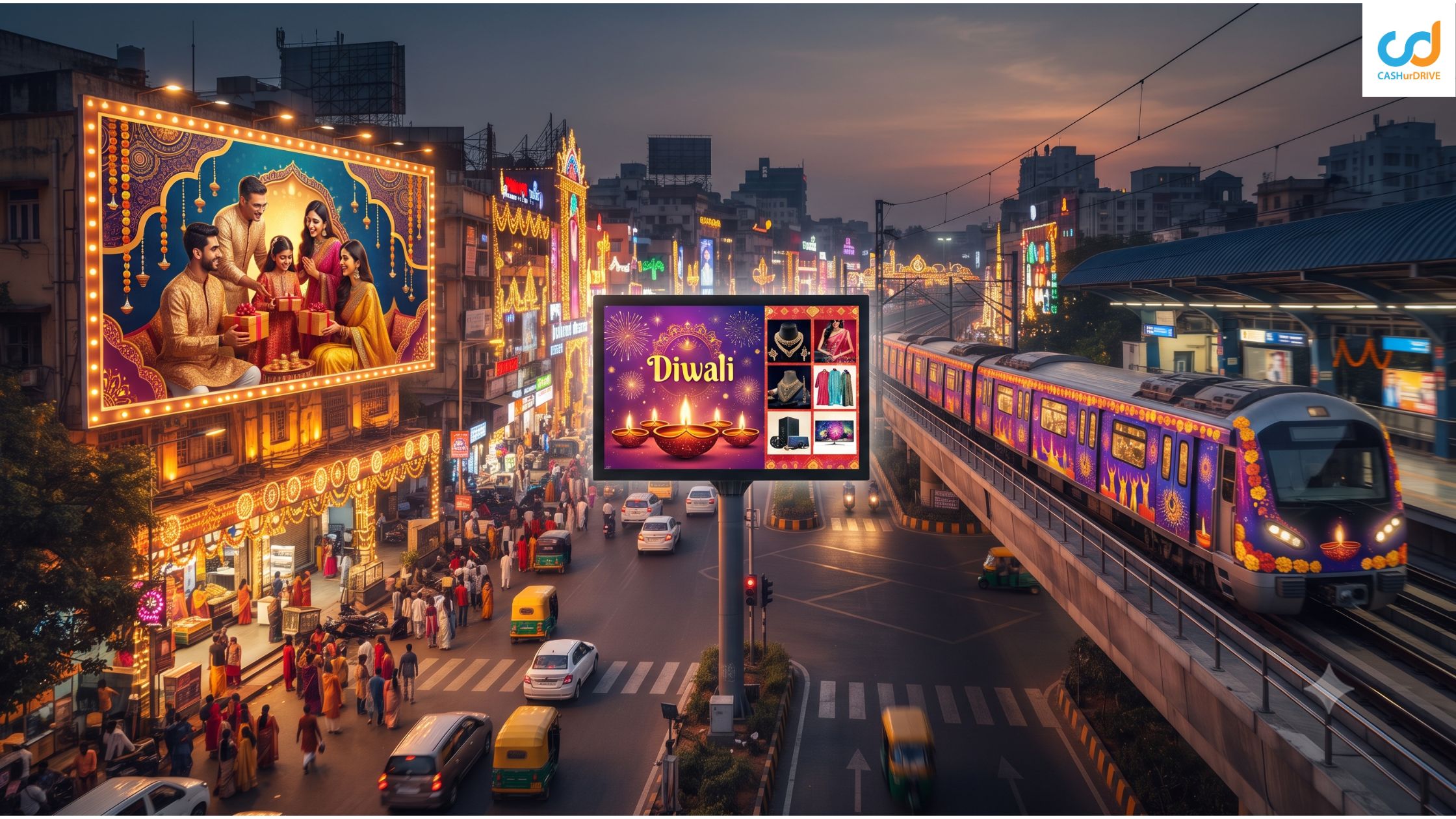
Place hoardings and DOOH screens on the approach roads to major Diwali markets. These corridors carry peak consumer traffic in the shopping week. In Delhi, for example, this means roads into Chandni Chowk, Lajpat Nagar and Karol Bagh. DOOH screens can carry festive creative that changes by time of day. So the same site serves morning shoppers and evening visitors differently.
Best for: FMCG, jewellery, apparel, gifting brands, consumer electronics.
2. Plan a Separate Dhanteras-Day Campaign
Dhanteras falls on 6 November 2026. It is the biggest purchase day for gold and electronics in India. It is distinct from general Diwali footfall. As a result, it warrants its own ads on approach roads and transit routes near jewellery and electronics markets. Brands in these categories should treat Dhanteras as a standalone moment. Do not bundle it into a general Diwali buy.
Best for: Jewellery, electronics, fintech, digital payment brands.
3. Run Transit Campaigns Through the Shopping Week
The week from 1 to 8 November is the core Diwali shopping window. Auto-rickshaws and buses on routes serving retail markets carry high daily volumes during this period. So a transit campaign started on 1 November reaches the shopping audience at its most active. Match the fleet to the permit zones of the target market area. Alternatively, match it to the bus routes serving the same zone.
See CashUrDrive’s Diwali OOH advertising formats for fleet and route planning. Best for: FMCG, food delivery, QSR, retail brands.
4. Use Metro Branding to Reach the Festive Commuter
Delhi Metro ridership rises during the Diwali season. Metro station branding reaches the door of the most active Diwali markets. Key stations include Chandni Chowk, Chawri Bazaar, Rajiv Chowk, Karol Bagh and Lajpat Nagar. For metro advertising formats and station options, plan this element first. Lead times are longer than for bus or auto. So start the DMRC process as early as August.
Best for: Jewellery, apparel, consumer electronics, fintech, premium brands.
5. Run a Progressive DOOH Campaign Across the Five Days
DOOH advertising screens at key junctions allow live creative updates. As a result, a brand can run a new creative on each of the five festival days. These are Dhanteras, Choti Diwali, main Diwali, Govardhan Puja and Bhai Dooj. Each links to that day’s mood or gifting theme. The sites stay the same, but the message stays current.
Best for: Consumer electronics, fintech, FMCG, lifestyle brands.
6. Reach the Local Audience With Wall Branding
Diwali also brings home decoration, family visits and local community events. This creates a sustained local ad window alongside the market zone activity. Furthermore, wall branding in local areas near colonies gives brands low-cost presence from early November. In addition, it reaches an audience that does not travel to major markets.
Best for: Local retailers, FMCG, food brands, home goods, real estate.
7. Build a Festive Advertising Chain From Market to Home
Instead of advertising at one location, plan a connected chain. Put hoardings and DOOH on market approach roads. Run autos and buses from local areas to markets. Also add metro station branding near the key market zones. This puts the brand in front of the same shopper at three points. Specifically, they see it before leaving home, in transit, and at the market.
Best for: FMCG, jewellery, electronics, retail chains with multiple touchpoints.
Matching Format to Campaign Objective
Diwali campaigns rarely work with one format alone. Instead, each audience group needs a different approach. The market shopper, the transit commuter and the local resident are all distinct. So OOH, DOOH, transit and metro each play a different role.
| Format | Best Location | Best Use Case | Main Advantage | Planning Note |
| Auto-Rickshaw | Local market zones; local catchments | Hyperlocal reach near retail | Covers lanes beyond buses | Zone must match target market |
| DTC / BEST Bus | Market corridors; retail routes | City-wide festive coverage | High-frequency moving visibility | Route selection by market zone |
| Metro Branding | Stations near markets; premium commuter lines | SEC A/B festive audience | Captive dwell time at stations | Separate DMRC approval process |
| Hoarding / DOOH | Market approach roads; premium junctions | Sustained festive presence | Dynamic creative for DOOH | Premium sites commit by September |
| Wall Branding | Local areas; market lanes | Neighbourhood-level reach | Low cost, long reach | Property/authority approval needed |
For instance, metro branding and market approach hoardings serve different audiences. Plan them in parallel, not as alternatives.
Planning a Diwali OOH, DOOH or transit campaign? Get a Free Festival OOH Media Plan →
Diwali Advertising Locations: Delhi, Mumbai and Bengaluru
Delhi NCR – India’s Largest Diwali Advertising Market
Delhi is the primary Diwali OOH market by volume and spend. Key zones for campaign planning:
- Chandni Chowk and Sadar Bazaar: India’s largest retail markets. Approach roads and transit routes serve enormous daily footfall in the shopping week. Metro branding at Chandni Chowk and Chawri Bazaar stations captures both surface and metro audiences.
- Karol Bagh and Ajmal Khan Road: A major retail corridor for clothing, footwear and electronics. High auto and DTC bus traffic on approach routes. Suitable for transit and outdoor formats alike.
- Lajpat Nagar and South Extension: South Delhi’s primary festive shopping zones. High-SEC audience, strong metro access via Lajpat Nagar station. Good for premium brand reach.
- Connaught Place and Rajiv Chowk: Central Delhi’s retail hub sees very high festive footfall. Metro station branding here reaches a broad cross-section of the city.
Mumbai and Bengaluru
In Mumbai, Crawford Market, Zaveri Bazaar and Dadar are the primary Diwali retail zones. Zaveri Bazaar is the focal point for gold buying on Dhanteras. BEST buses on routes serving these areas cover the key audience. Mumbai Metro Line 1 also serves the western and eastern suburbs. This gives broader festive coverage.
In Bengaluru, Commercial Street, Brigade Road and M.G. Roads are the main festive retail corridors. Auto-rickshaws and BMTC buses on routes serving these areas carry the festive shopping audience. Also, Bengaluru’s Namma Metro network serves several key retail catchments. DOOH in retail zones is especially active during the festive season.
Hyderabad, Chennai, Pune and Ahmedabad also have active Diwali retail markets. For multi-city campaigns, however, each city should be planned through local inventory with its own format mix.
Build the Campaign Backwards From 8 November
Diwali 2026 falls on 8 November. So plan from that date outward. The earlier you start, the more site choice you have.
- First, three months before – Early August: Fix the city list and format mix. Start talks on metro branding – DMRC approvals take the most time.
- Then, 6-8 weeks before – Mid-September: Confirm hoarding and DOOH site bookings. Also lock the auto and bus fleet. Initiate the creative brief.
- Next, 4-6 weeks before – Early October: Confirm all bookings. Complete creative production. Submit artwork specs to operators.
- After that, 2-3 weeks before – Late October: Install hoardings and DOOH. Wrap autos and buses. Confirm metro branding is live.
- Finally, 1-8 November – Campaign runs: Monitor all sites. Dhanteras (6 Nov) and main Diwali (8 Nov) are the peak days. Confirm proof of display on both.
Note that premium Diwali sites in Delhi and Mumbai often commit by September. Start the booking talk in August.
What Goes Into the Diwali Campaign Budget
Diwali ad costs vary. No set rate applies across formats, cities or site types. Instead, cost depends on several key factors:
Format: Auto, bus, metro, hoarding, DOOH and wall branding all have different cost types. In addition, metro branding needs DMRC’s commercial approval, which has its own fee.
Location: Market approach roads, metro stations near retail hubs and premium junctions cost more. Local spots, however, are lower.
City: Delhi, Mumbai and Bengaluru are priced separately. So multi-city plans need per-city quotes.
Festive premium: Most operators apply a rate increase during the Diwali window. As a result, premium sites near market zones carry higher festive rates.
Production: Print, install, removal and DOOH creative uploads are typically on top of the media rate.
For current rates across formats and cities, contact CashUrDrive for an indicative media plan.
Brand Categories With the Strongest Diwali Relevance
Diwali drives the highest consumer spend of the year across several categories. For each, the right format follows from where the purchase decision is made:
Jewellery and gold: Dhanteras is the peak purchase day. Market approach hoardings and Zaveri Bazaar nearby ads reach the right audience. Metro branding near jewellery market stations does the same. So plan Dhanteras placements before the general Diwali campaign.
Consumer electronics: Electronics gifting peaks on Dhanteras and in the shopping week. Similarly, DOOH in retail zones and metro branding near electronics markets work well. Moreover, bus routes on these corridors also serve this category.
FMCG, food and gifting: Sweets, snacks and packaged gifts see the highest volumes of the year. As a result, transit and local wall branding serve this category well alongside market zone formats.
Apparel and fashion: New clothes are a Diwali tradition. Corridor hoardings near apparel markets reach the audience at peak buying time. In addition, transit formats on routes to shopping zones do the same.
Fintech and digital payments: Festive payments spike during the Diwali shopping week. For these brands, DOOH in retail zones and QR-linked outdoor formats work best. Metro branding also reaches the digitally active urban audience at the point of spend.
Real estate: Diwali is seen as an auspicious time to buy property. For this reason, hoardings near project sites support project reach. Transit on arterial routes does the same during a period of strong buying mood.
Pre-Launch Campaign Checklist
- Festival window confirmed: Dhanteras (6 Nov), main Diwali (8 Nov) and any day-specific elements noted separately.
- Cities and zones confirmed: Target market zones, local catchments and metro corridors defined.
- Metro branding started: DMRC approval process initiated at least 3 months out if metro is part of the plan.
- Also, site bookings confirmed: Hoarding, DOOH, auto and bus inventory locked with operators.
- Creative production complete: All artwork at correct specs and submitted to operators.
- Then, installs confirmed: All sites live-checked before the campaign window opens.
- Finally, proof of display set up: Execution photos confirmed for Dhanteras and main Diwali separately.
Frequently Asked Questions
Dates, Cities and Planning
Q1. When is Diwali in 2026?
Diwali 2026 falls on Sunday, 8 November 2026. The festival has five days. It runs from Dhanteras on Friday, 6 November to Bhai Dooj on Tuesday, 10 November. Specifically, Dhanteras and main Diwali are the two most important days for brand ad planning.
Q2. Which cities are most relevant for Diwali advertising?
Diwali advertising is relevant across all major Indian cities. Delhi NCR, however, is the largest market by OOH volume. Mumbai is second. Bengaluru, Hyderabad, Chennai and Pune also have active Diwali retail markets. For multi-city campaigns, each city needs its own format mix and inventory plan.
Q3. Why should brands plan Dhanteras advertising separately from Diwali?
Dhanteras on 6 November is the biggest purchase day for gold and electronics in India. On this day, the audience is focused on jewellery and electronics markets. This is different from the broader Diwali shopping audience. Consequently, brands in these categories get better returns from Dhanteras-specific placements. A general Diwali buy is less effective for them.
Format, Timing and Cost
Q4. How early should Diwali OOH advertising be planned?
Metro branding needs 3 months lead time due to DMRC approval timelines. For other formats, start inventory talks in mid-September. Premium market zone hoardings in Delhi and Mumbai often commit by September. Therefore, creative sign-off must happen by mid-October for an 8 November launch.
Q5. What is the best OOH format for Diwali advertising in Delhi?
It depends on the goal. For example, metro branding near Chandni Chowk, Rajiv Chowk and Lajpat Nagar works well. It reaches the high-SEC commuter audience. Hoardings and DOOH on market approach roads, however, serve the shopping footfall. Auto-rickshaws on routes serving major markets provide local reach. The strongest Delhi Diwali campaigns combine two or more of these formats.
Diwali is the festival where the most brands compete for OOH attention. The ones that plan earliest will stand out. Choose formats based on where the audience is. Treat Dhanteras as a separate moment, not just Day 1.
Overall, a well-planned Diwali campaign works backwards from 8 November. It starts with metro approvals, locks sites in September, and runs a connected presence from market zone to local street.
Get a Free Festival OOH Media Plan
Author: CashUrDrive Editorial Team
This article was produced with AI assistance and reviewed by the CashUrDrive editorial team.