Can Outdoor Advertising Help Financial Brands Reach Customers Beyond Digital Channels?
 By Annu
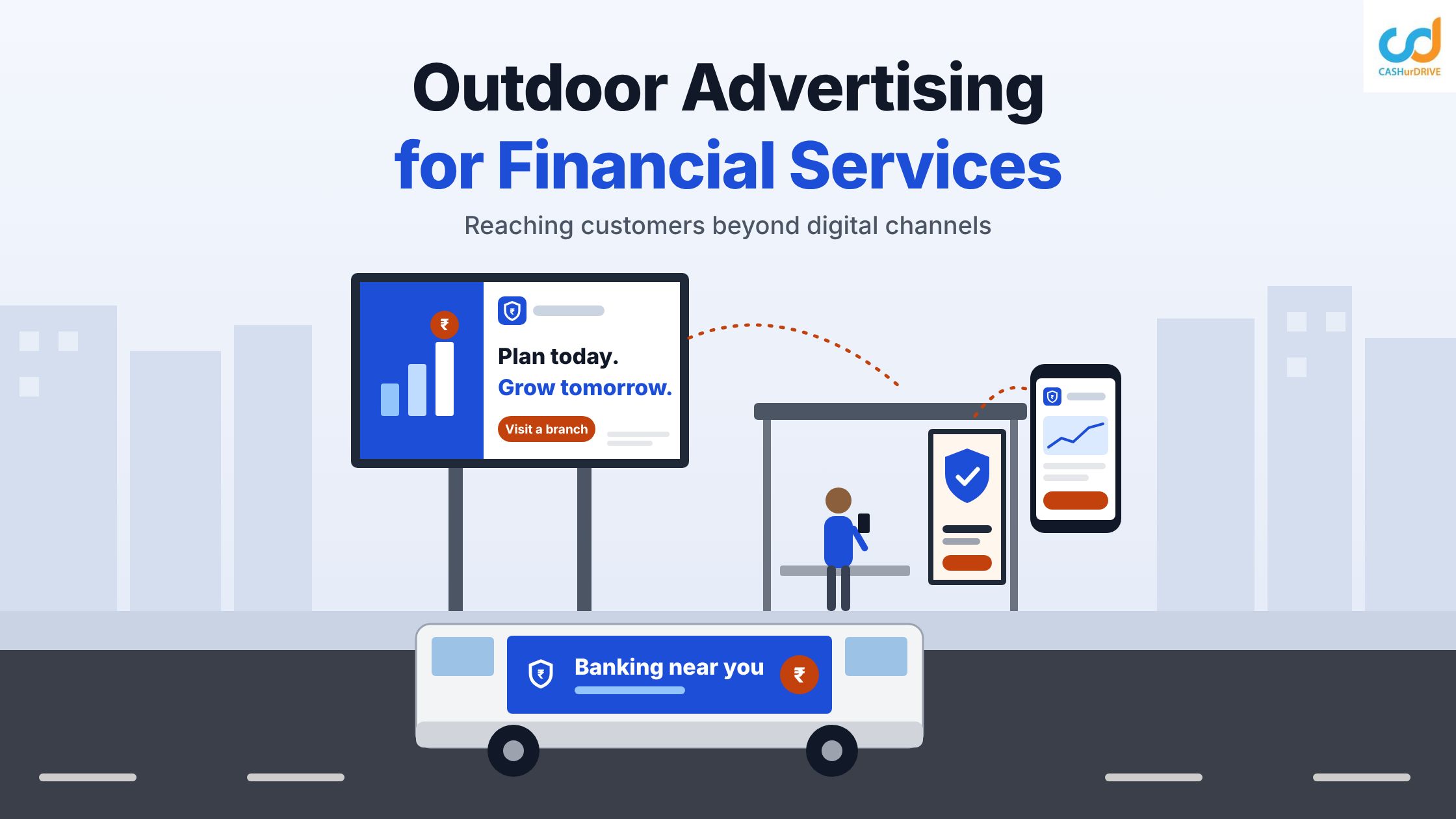
Outdoor advertising for financial services is a form of out-of-home media. It places bank, insurance, and investment brand messages in high-traffic physical environments. Consumers see them without ad blockers, algorithm filters, or competing content.
India’s BFSI brands are under growing pressure from digital ad costs. Social advertising CTR has dropped by about 33%, while CPC has risen by about 20%, according to AdQuick’s 2026 market analysis. Meanwhile, 58% of consumers trust OOH advertising – a figure that has grown year-on-year as digital trust declines (Talon OOH, 2026).
This post explains how financial services brands can use outdoor advertising to build verified reach, comply with India’s OOH regulatory framework, and measure campaign outcomes. It covers the formats that work, the locations that matter, and the data layer that makes OOH accountable.
Why Digital Fatigue Is Hitting Financial Services Hardest
Financial services brands compete in one of digital advertising’s most expensive categories. CPC rates for BFSI keywords – insurance, mutual funds, credit cards, and personal loans – are among the highest on Google Search and Meta’s ad network.
However, rising spend is not producing better results. CTR for financial services display ads has declined steadily since 2023. Consumers scroll past ads faster than before. Moreover, ad fatigue is sharpest in the urban demographic that most BFSI brands target. The 25-to-45-year-old urban professional is overexposed to financial product promotions across every digital touchpoint.
By contrast, OOH advertising operates outside the algorithm. Consumers cannot block it or skip it. In addition, it appears in physical environments where financial decisions often happen – near bank branches, ATMs, fintech offices, and metro stations close to financial districts.
According to Talon OOH’s 2026 trust report, 58% of consumers trust outdoor advertising. That figure stands well above banner ads and social media promotions. For financial services – a category where trust directly determines whether a consumer clicks or calls – this gap matters commercially.
What Outdoor Advertising Delivers That Digital Cannot
Physical Permanence
A billboard stands for 30 days. Ad blockers cannot remove it. It stays up even when a campaign budget is paused. For financial brands, that physical consistency signals stability. This matters most for products built on long-term trust, such as life insurance and investment accounts.
Ambient Authority
A large-format hoarding in Connaught Place or Bandra-Kurla Complex reads as a statement of scale. It signals that a brand is established and well-resourced. This ambient authority is hard to replicate through digital channels at the same psychological weight. According to the OAAA’s 2025 effectiveness research, brands with consistent OOH presence score higher on consumer trust and unaided recall. Specifically, they outperform brands that rely only on digital media on both metrics.
Audience Density at the Right Location
Outdoor advertising for financial services is most effective when placed where your target audience is predictably, frequently present. India’s metro corridors, central business districts, and premium transit routes deliver daily audience densities that most digital campaigns cannot match in context-relevance. A financial services brand appearing at a metro station near a commercial district reaches commuters at a moment when financial services are relevant. That is very different from reaching them while they scroll through a social media feed.
OOH Formats That Work for BFSI Brands
The right outdoor advertising for financial services format depends on your campaign objective, target geography, and budget. However, four formats consistently perform across BFSI campaigns in India.
Large-Format Hoardings and Unipoles
Large-format hoardings deliver brand presence at scale. They work especially well for insurance and banking brands that need to build category authority in a new market. Unipoles – single-pole structures visible from highways and arterial roads – work for financial brands entering Tier 2 cities. In addition, they build familiarity with consumers who have not yet seen the brand through digital channels.
Metro Station Advertising
Delhi Metro’s network averages 6.46 million passenger journeys daily. That figure covers 235.8 crore journeys in 2025. For financial services brands, metro station advertising delivers a captive, high-income, urban audience. The dwell time at metro platforms – typically 3 to 7 minutes per journey segment – lets consumers process brand messaging in ways that a 3-second scroll cannot.
Yellow Line stations from Samaypur Badli to HUDA City Centre reach north Delhi’s residential and commercial corridors. By contrast, Blue Line stations from Dwarka Sector 21 to Noida Electronic City cover the IT and corporate hub corridors where financial services professionals concentrate. Each line therefore serves a distinct audience profile within the same metro network.
Cab Wraps and Vehicle Branding
A branded cab in Mumbai or Delhi generates an estimated 30,000 to 50,000 impressions per month on high-traffic routes. For financial services brands targeting urban professionals aged 25 to 44, cab advertising offers high-frequency exposure without the CPM inflation of premium digital placements. Moreover, cab wraps keep a brand visible across diverse locations throughout the day – far beyond any single billboard site.
Bus Shelter Advertising
Bus shelter advertising positions financial services brands at the point of consideration. Consumers waiting at bus shelters typically have 5 to 10 minutes of dwell time. That is much more engagement opportunity than most digital formats allow. In particular, bus shelters near bank branches, fintech offices, and commercial districts reach an audience that is already in a financial services mindset.
DOOH Screens
Digital OOH screens allow financial services brands to run time-of-day targeting. A bank can serve different messaging during morning commute, lunchtime, and evening return journeys – without changing the site. DOOH also allows faster creative updates than static formats. As a result, it suits campaign-driven financial products with regulatory change windows. See DOOH Advertising Cost in India for a full breakdown of rates and formats.
Where to Place Your Financial Services OOH Campaign in India
Outdoor advertising for financial services performs best when site selection leads with audience data, not intuition. Location is the single variable that most determines OOH campaign performance. For financial services, the approach is audience-first, not format-first.
In Delhi NCR, the most effective zones are Connaught Place, Aerocity, and the Noida Sector 18 and Sector 62 corridors. Metro interchanges at Rajiv Chowk and Kashmere Gate also rank among the top-performing sites. These locations concentrate the urban professional audience – salaried employees aged 28 to 45 – that most BFSI brands target.
In Mumbai, Bandra-Kurla Complex and Lower Parel deliver access to financial services professionals and high-net-worth consumers. The Western Express Highway is effective for large-format brand presence. Meanwhile, suburban railway corridors from Borivali to Churchgate provide high-frequency exposure for retail financial products targeting a broader income bracket.
In Bangalore, the Outer Ring Road corridor – particularly Bellandur to Whitefield – delivers a concentration of IT-sector employees. This audience consistently ranks among the most responsive to insurance, investment, and digital banking products. Consequently, it is a priority zone for fintech and wealth management brands entering Bangalore.
For brands entering Tier 2 markets such as Lucknow, Jaipur, or Chandigarh, highway unipoles and city-centre hoardings provide the category-establishment signals that metro-focused campaigns deliver in larger cities.
How Atlas Makes OOH Accountable for Financial Brands
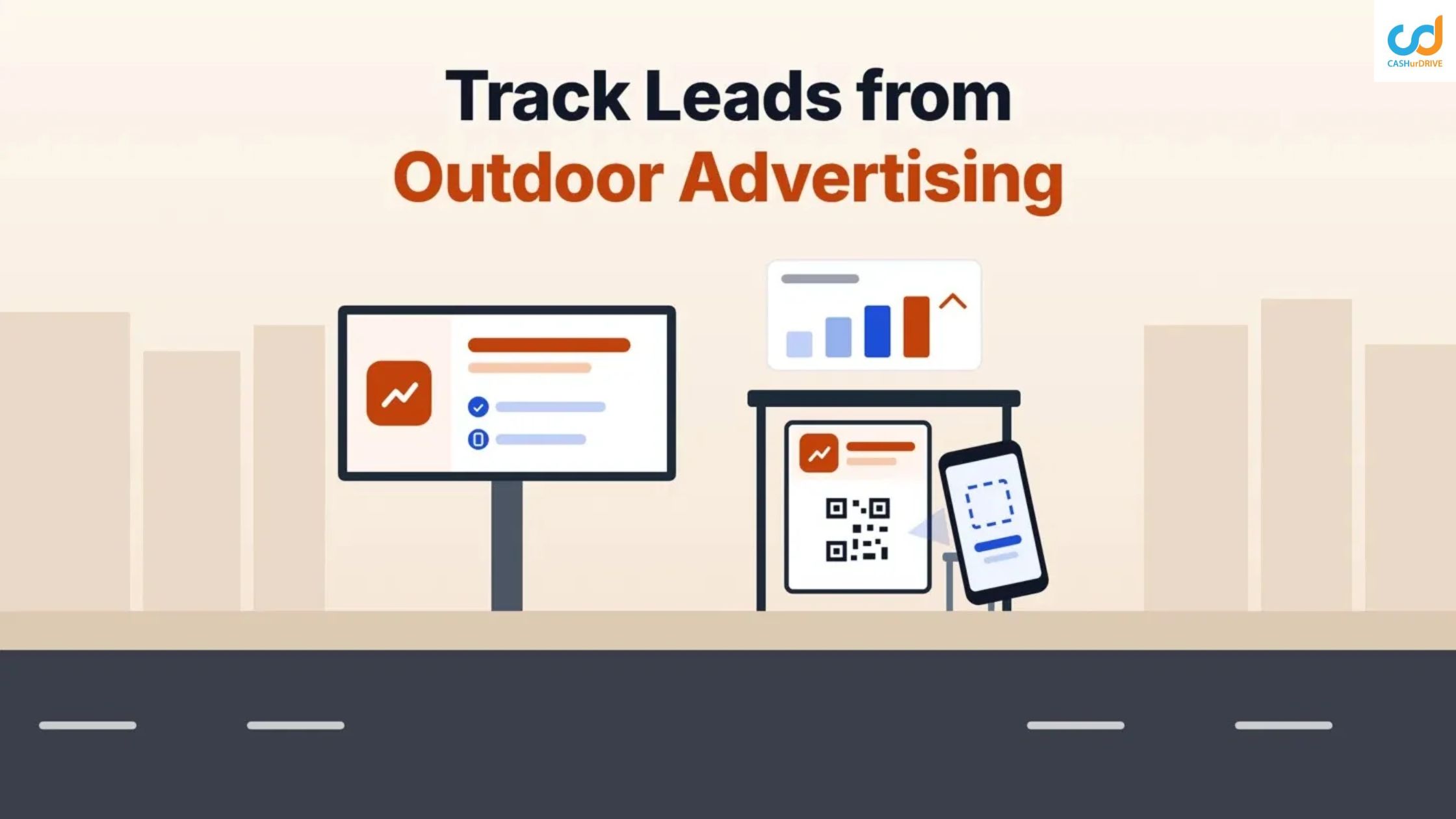
Outdoor advertising for financial services has historically faced one objection: measurement. The standard industry response – circulation data and estimated impressions – is not enough for performance-led CMOs. They expect attribution dashboards. They want OOH to meet the same standard.
Atlas is CashUrDrive’s audience intelligence platform. It addresses this accountability gap directly.
Before the campaign, Atlas uses device-level geofencing to verify which audience segments are present at proposed OOH sites. For a financial services brand, that means confirming whether the audience at a shortlisted location matches your NCCS profile – not just that the location has high footfall. Specifically, brands are not buying billboard locations. They are buying verified audience reach at those locations. That distinction changes the entire planning process.
During the campaign, Atlas applies Real-World Intelligence (RWI) scoring to track audience movement patterns. This delivers an ongoing view of who the campaign is reaching as it runs.
After the campaign, Atlas measures footfall attribution – how many exposed individuals later visited a branch or store location. It also tracks brand lift through panel studies. These post-campaign outputs give the OOH accountability layer that performance-focused BFSI teams require.
For multi-city financial services campaigns – an insurance company running in Delhi, Mumbai, Bangalore, and Pune at the same time, for example – Atlas delivers audience continuity. In addition, it ensures the same NCCS profile holds across all city deployments, not just the target city where the brief was written.
Regulatory Compliance for Financial Services OOH in India
Financial services brands face advertising regulations from three separate bodies in India. Each applies to outdoor and transit media. However, the compliance requirements differ in scope and timeline.
SEBI Common Advertisement Code 2026 (effective 8 April 2027)
SEBI has notified the Common Advertisement Code 2026 (Regulations 16G–16Q). This code explicitly includes “outdoor advertising and similar channels.” It is not yet in force – SEBI takes effect on 8 April 2027. However, existing applicable SEBI advertising requirements continue until commencement. Financial services brands working on OOH campaigns for investment products, mutual funds, and securities should therefore review copy against both current requirements and the forthcoming 2027 framework. In addition, compliance review timelines for creative should allow for regulatory change.
RBI Amendment Directions (effective 1 January 2027)
The RBI issued Amendment Directions on 15 June 2026. These directions cover advertising standards for banks, NBFCs, housing finance companies, and cooperative banks. They are channel-agnostic – they apply to outdoor media as much as digital or print. They take effect on 1 January 2027. Consequently, financial services brands in these categories should audit existing OOH creative for compliance well ahead of that date. The core principle is clarity: interest rates, fees, and product terms must appear clearly in all advertising, including outdoor formats.
IRDAI guidelines for insurance brands
Insurance brands face an additional regulatory layer from IRDAI. The guidelines cover product claim accuracy and mandatory disclosures. For OOH formats where space is constrained – transit wraps, bus shelters, cab branding – the main creative carries brand or product messaging. The mandatory disclosure text then appears in a clearly readable secondary panel. Specifically, compliance review should sit within the creative approval workflow, not as a final step at the print stage.
Measuring What Outdoor Advertising for Financial Services Delivers
Impression delivery
Impression delivery is the baseline measurement. Atlas calculates it from verified daily traffic counts at each OOH site, the campaign duration, and the confirmed creative placement. Atlas uses device-level data for this calculation. As a result, it independently audits the impression figure rather than accepting publisher-supplied estimates alone.
Brand lift and search attribution
Brand lift measurement uses panel studies before and after the campaign. It tracks shifts in unaided awareness, brand recall, and purchase intent within the target audience. Atlas generates brand lift reports based on exposed versus unexposed audience panels. This output is directly comparable to digital brand lift studies. Consequently, it is straightforward to include OOH in a cross-channel effectiveness review alongside digital media spend.
Footfall and conversion attribution
Footfall attribution measures how many OOH-exposed consumers later visited a physical location – a branch, a store, or a dealership. For financial services brands, this is the most commercially useful measurement output. Agree the measurement framework with CashUrDrive before the campaign launches. That way, you establish the attribution methodology from day one rather than applying it retroactively.
Frequently Asked Questions
Q1: Is outdoor advertising effective for financial services brands in India?
Outdoor advertising for financial services brands in India is effective for building brand authority, reaching high-income urban audiences, and driving measurable footfall to branch locations. According to Talon OOH’s 2026 trust data, 58% of consumers trust outdoor advertising – much higher than digital formats. For BFSI brands where trust is a core purchase driver, that credibility advantage translates directly into campaign performance.
Q2: Which OOH formats work best for BFSI brands?
Metro station advertising and large-format hoardings deliver the strongest results for BFSI brands targeting urban professionals. Metro advertising reaches a captive, high-income audience during dwell time at platform level – typically 3 to 7 minutes per segment. Hoardings in central business districts build category authority. In addition, cab wraps add high-frequency exposure across diverse city locations throughout the day. DOOH screens allow time-of-day targeting, which is especially useful for financial product campaigns tied to market hours.
Q3: What compliance requirements apply to OOH advertising for financial services in India?
Three regulatory bodies govern financial services OOH advertising in India. SEBI’s Common Advertisement Code 2026 (Regulations 16G–16Q) explicitly includes outdoor advertising. SEBI has notified it, but it takes effect on 8 April 2027. The RBI issued Amendment Directions on 15 June 2026, effective 1 January 2027, covering banks, NBFCs, and housing finance companies. Additionally, IRDAI guidelines apply to insurance brands and govern product claim accuracy and mandatory disclosures on all advertising formats.
Q4: How do financial brands measure the ROI of OOH campaigns?
Financial brands measure OOH ROI through three outputs: impression delivery, brand lift, and footfall attribution. Impression delivery tracks verified audience exposure at each site. Brand lift measures unaided awareness and recall shifts through panel studies. Footfall attribution tracks branch or store visits by OOH-exposed consumers. Atlas, CashUrDrive’s audience intelligence platform, delivers all three. However, you must agree the measurement framework before the campaign launches – not apply it retroactively.
Q5: How does audience targeting work for financial services OOH campaigns?
Atlas uses device-level geofencing to identify which audience segments are present at shortlisted OOH locations before the campaign is confirmed. For financial services brands, this means verifying that a proposed site actually reaches your NCCS profile – high-income urban professionals, for example – rather than relying on estimated circulation data. As a result, the OOH buy shifts from a location purchase to a verified audience reach purchase. That distinction is fundamental to performance-led campaign planning.
Q6: What budget should a financial services brand allocate to OOH in India?
OOH budgets for financial services campaigns in India typically range from ₹10 lakh to ₹2 crore per month, depending on city, format, and campaign duration. Metro station advertising commands a premium over transit wraps or bus shelters due to higher dwell time and audience quality. For brands testing outdoor media for the first time, a starting allocation of 15 to 20% of total media budget – with Atlas audience verification included – is a sound entry position. Consequently, brands can validate OOH performance data before scaling spend.
CONCLUSION
India’s financial services brands face a media environment where digital costs are rising and consumer trust in online advertising is declining. Outdoor advertising for financial services offers a measurable alternative. It places brand messaging in physical environments where the target audience is predictably present – without ad blockers or algorithm interference.
The formats, locations, regulatory framework, and measurement approach are all in place. However, the difference between high-performing BFSI OOH campaigns and expensive awareness exercises comes down to planning discipline. Audience-first site selection, pre-campaign verification through Atlas, and a clear attribution framework from day one are what make the difference.
Request a free Atlas audience map for your financial services campaign and get a verified view of your target audience’s OOH footprint before you commit to sites.
AUTHOR
CashUrDrive Editorial Team
This article was produced with AI assistance and reviewed by the CashUrDrive editorial team.