How to Plan a Festival OOH Campaign: Budget, Locations, Formats and Timeline
 By Annu
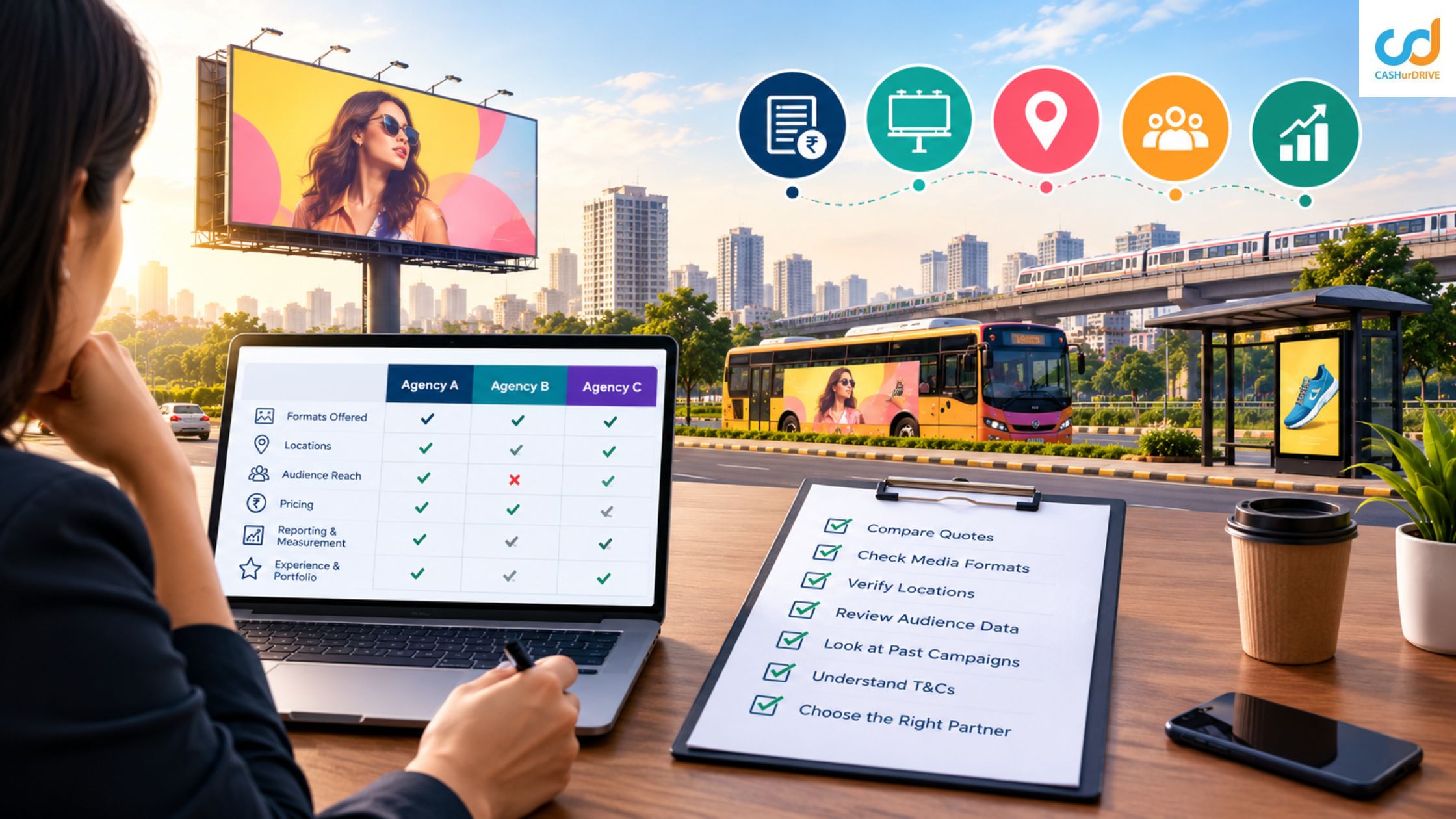
Most festival OOH campaigns fail before the creative is even designed. The creativity is fine. The problem is the OOH campaign planning. Briefing started too late, the inventory was already gone, the artwork specs were wrong, or no one set up proof of display. However, none of these are creative problems. They are planning problems.
This guide covers how to plan a festival OOH campaign from scratch. It is written for India’s three biggest festive windows: Ganesh Chaturthi (14 September), Navratri (11-19 October) and Diwali (8 November 2026). The steps work for any festival, however. The timeline and logic are the same.
Start With the Festival Date, Not the Creative Brief
The single biggest planning mistake is starting with the creative. Instead, start with the festival date and work backwards.
For Diwali 2026, that date is 8 November. So the campaign window starts on or around 1 November. As a result, all sites must be live by 31 October. Artwork must arrive by late October. Creative must be approved by mid-October. So the creative brief must go out in September.
That is a 10-week chain from today to launch. Most brands try to run it in four. That’s why campaigns launch late.
Always plan backwards from the festival. Never plan forwards from the brief.
Step 1: Define the Audience and Geography
This is the most important step. It is also the most skipped. However, without a clear audience definition, every other decision is guesswork.
Define three things before anything else:
- Who is the audience? Age, income, buying behaviour, which cities they live in. Be specific. ‘Urban India’ is not an audience. ‘SEC B women, 28-40, buying gold on Dhanteras in Delhi and Mumbai’ is.
- Where does this audience move? Not just where they live, but where they go. During Navratri in Ahmedabad, they move to garba venues every evening. During Diwali in Delhi, they shop in Chandni Chowk, Karol Bagh and Lajpat Nagar. The media plan follows the movement, not the postcode.
- What do you want them to do? Brand awareness, store footfall, app download, product trial. Each goal needs a different format and location. Fix this before briefing any vendor.
↳ If you cannot answer these three questions before starting, the plan is not ready to start.
Step 2: Choose the Right Format for the Objective
Format follows objective. Not the other way around. However, most brands choose the format first and then try to fit the goal around it.
Here is a quick guide for festival campaigns specifically:
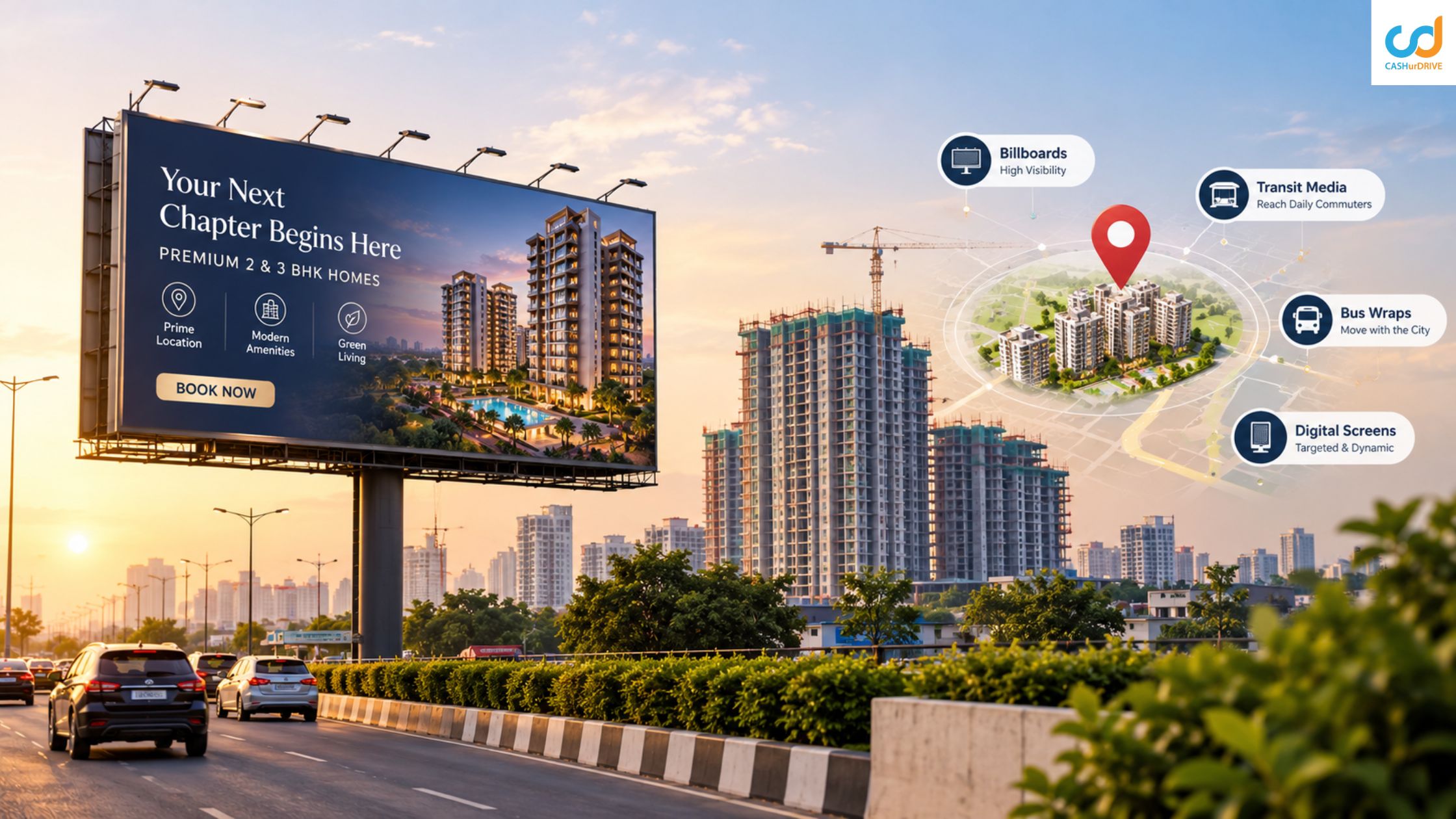
City-wide brand awareness: Large unipoles and hoardings on arterial roads, ring roads and expressways. Also, DOOH at premium junctions. These deliver the highest daily impression count per site.
Market zone and footfall reach: Standard hoardings on approach roads to key markets and festive zones. For example, Chandni Chowk approaches roads for Diwali, garba venue corridors for Navratri in Ahmedabad.
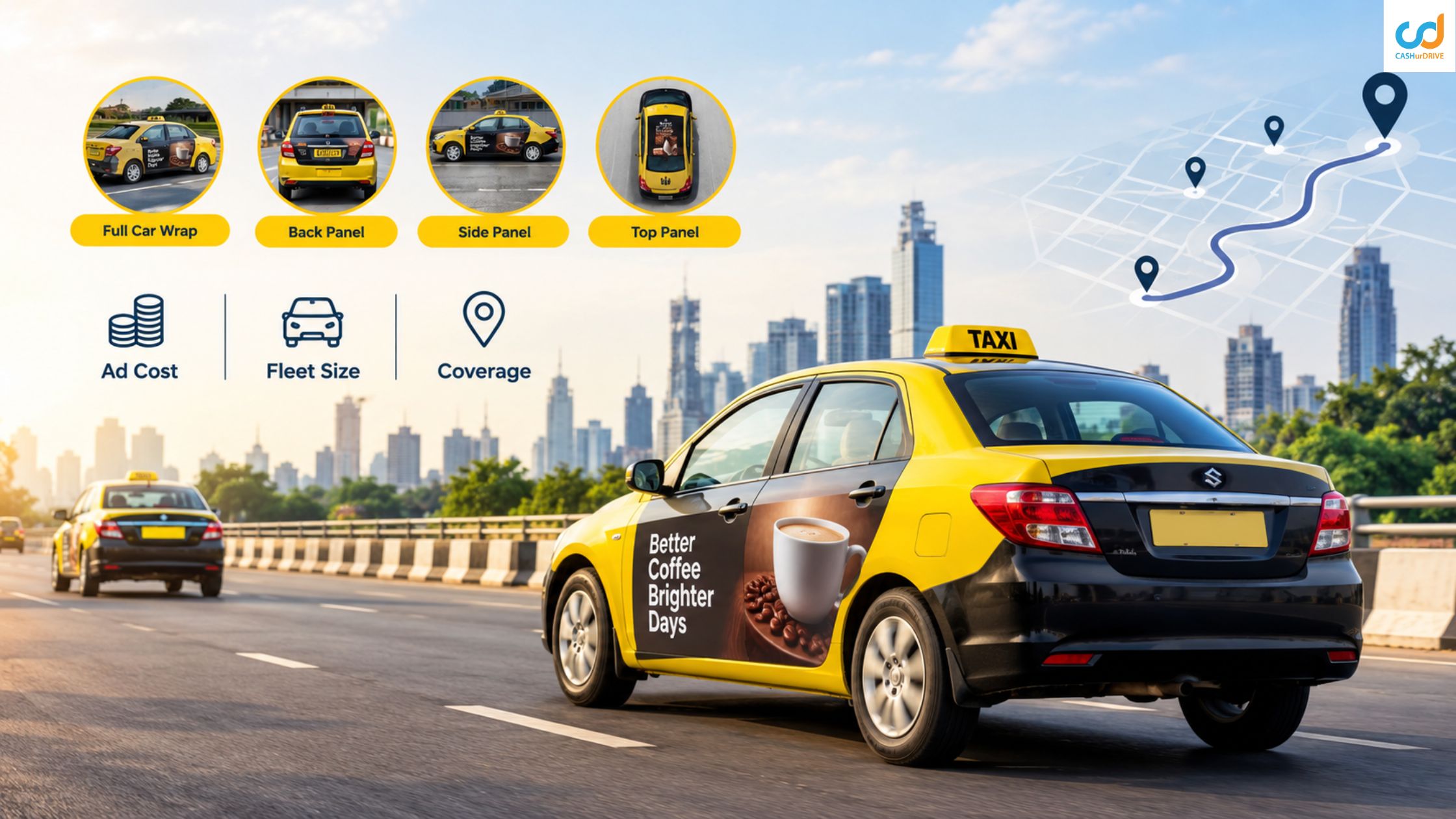
High-frequency corridor reach: Transit media – bus, auto-rickshaw and cab wraps – on the routes most used by the target audience during the festive period. See the guide to transit media advertising for a full format breakdown.
Captive premium audience: Metro station branding where relevant. However, this needs the most lead time. Start 10-12 weeks out for the metro.
Local and residential reach: Wall painting and secondary hoardings in target neighbourhoods. These are the lowest cost per impression and the easiest to book.
Pick one or two formats that suit the goal. Do not try to use every format at once. A focused plan on fewer formats almost always outperforms a spread-thin plan.
Need help matching formats to your festival campaign goal? Get a Campaign Plan with Locations, Formats & Timeline →
Step 3: Select Locations Based on Audience Movement
Location selection is where most campaigns are won or lost before a creative is even printed.
The test for any festival OOH site is simple. Does the target audience actually pass this location during the festival window? However, high traffic volume is not enough. A road carrying mostly trucks does not serve a Diwali jewellery campaign. A garba venue approach road in Ahmedabad serves it very well.
Before confirming any site, ask the vendor for:
- Daily traffic count and methodology
- Direction of traffic flow and site visibility
- Site photographs showing current visibility
- Availability confirmation for the exact campaign window
For a city-level look at the best OOH locations in Delhi NCR and how to evaluate them, see the full guide to OOH campaign planning.
Also, festival-specific sites matter. Navratri garba venue approach roads in Ahmedabad are high-value sites that non-specialist vendors will not have. Diwali market zone proximity sites in Delhi are similarly specific. So use an OOH partner who knows the festival geography, not just the general outdoor inventory.
Step 4: Set the Budget Correctly
Festival OOH budgets have two common errors. First, brands underestimate the festive premium. Second, they forget production.
The festive season from October to December pushes OOH rates 1.5x to 2x above standard rates. So if a site costs ₹1 lakh per month in August, it may cost ₹1.5 lakh to ₹2 lakh in November. Plan for this from the start.
Production is separate from media. Budget for it separately:
- Static hoarding print: ₹15,000-₹50,000 per creative.
- Bus and auto vinyl + installation: ₹3,000-₹15,000 per unit.
- DOOH: No print cost, but design and upload fees may apply.
Also, allow for permits, taxes and any agency charges. These are often left out of first-draft budgets and then become surprises.
A practical starting point for a single-city Diwali campaign with 3-4 standard hoarding sites (Delhi or Mumbai, 30 days): budget roughly ₹8 lakh to ₹10 lakh including media and production. Premium market zone sites will push this significantly higher.
Step 5: Book Inventory at the Right Time
This is the most time-sensitive step. Premium sites in Delhi and Mumbai fill up 6–8 weeks before Diwali. For Diwali 2026 (8 November), that means early September.
By the time the festival calendar becomes public, the best sites are often gone. So start site discovery before the creative brief, not after.
Different formats need different lead times. Here is the general rule:
- Metro station branding: 10-12 weeks. DMRC approval is a formal process. Start this first.
- Premium roadside hoardings: 6-8 weeks. Especially for market zone proximity sites.
- Bus and auto wraps: 4-6 weeks. Depot scheduling must align with campaign dates.
- DOOH: 3-4 weeks for most screens, but high-demand screens fill earlier.
- Wall painting: 2-4 weeks. The most flexible format in terms of lead time.
If you are reading this in September for a Diwali campaign, metro branding is already very tight. Start with roadside and transit first, then add metro if slots remain.
Step 6: Brief the Creative Team
The creative brief goes out after the media plan is confirmed. Not before.
This is the opposite of how most brands work. The usual approach is to create the campaign concept first, then try to find media that fits. The better approach: know the formats, sizes, locations and campaign duration before the creative team starts. It then solves the actual brief, not a hypothetical one.
For each format, get the exact specs from the operator before the creative team starts work. Specifically, confirm:
- Artwork dimensions for each format and site
- File type and resolution requirements
- Bleed margins and safe areas
- Deadline for artwork submission
Late spec changes cause production delays. These cause missed install windows. These cause campaigns that go live after the festival peak. So get specs first.
Step 7: Set Up Measurement Before Launch
Measurements set up after the campaign cannot reconstruct what happened during it. So decide how you will evaluate the campaign before it goes live.
Common festival OOH measurement approaches:
- Proof-of-display photos: Execution confirmation that each site is live and showing the right creative. Set this up with the operator before install, not after.
- Branded search lift: Compare search volume for the brand in campaign cities versus non-campaign cities during the festival window.
- Store footfall change: If the campaign targets retail zones, compare footfall during and after the campaign period.
- QR scan rates: If QR codes are used on creative, these give a direct response signal from OOH.
- Digital performance of OOH-exposed audiences: Geofencing and mobile data tools can identify people who were in range of OOH sites and measure their downstream digital behaviour.
Also, agree on the post-campaign reporting format with the operator before launch. Asking for reports after the campaign ends often produces incomplete data.
The Festival OOH Planning Timeline
The table below uses Diwali 2026 (8 November) as the reference date. For Navratri (11 October), move everything forward by four weeks. For Ganesh Chaturthi (14 September), this process should already be well underway.
|
When |
What to do |
Why it matters |
| 12 weeks out (Mid-August) | Fix the campaign goal, audience and geography | This decision sets everything else. Changes here later add cost and delay. |
| 10 weeks out (Late August) | Select formats. Begin metro branding approval if needed. | Metro stations need formal DMRC approval. Start this before inventory discussions. |
| 8 weeks out (Mid-September) | Begin inventory discussions for roadside and transit sites | Premium market zone sites commit in this window. Waiting costs access. |
| 6 weeks out (Late September) | Confirm all site bookings. Issue creative brief to agency. | Brief goes out only after media plan is locked, not before. |
| 4 weeks out (Mid-October) | Creative sign-off. Submit artwork to all operators. | Operators need lead time to print, schedule and install. |
| 2 weeks out (Late October) | Install hoardings and DOOH. Wrap buses and autos. | Confirm proof-of-display photo process with each operator. |
| 1 week out (1 November) | Go-live check. All sites confirmed live. | Review execution photos. Flag any misses to the operator immediately. |
| Festival week (6-10 November) | Campaign runs. Monitor sites. Confirm Dhanteras placements. | Dhanteras (6 Nov) and main Diwali (8 Nov) are peak days. |
| Post-campaign | Collect reporting from operators. Analyse results. | Branded search, footfall and proof-of-display data close the loop. |
Note: lead times vary by format, city, vendor and inventory availability. Confirm specific timelines with the media partner before planning.
Common OOH Campaign Planning Mistakes
These are the errors that appear most often in festival OOH campaigns. In fact, all of them are avoidable with earlier planning.
Starting with the creative instead of the audience
Specifically, the creative is a tool, not a starting point. However, most campaign briefs arrive at the media team with a finished creative and a request to find sites that fit. The right order is: audience – format – location – creative.
Booking sites by habit, not by performance
Many brands book the same sites every year. However, that site may have had a new building go up in front of it, or lost traffic after a road change. So, always do a visibility check before confirming.
Treating Dhanteras as Day 1 of Diwali
Dhanteras (6 November 2026) is the biggest single purchase day for gold and electronics in India. In fact, it deserves its own planning and booking decision – not to be bundled into a general Diwali media buy.
Spreading budget too thin across formats
A ₹10 lakh budget split across hoardings, auto wraps, bus branding, DOOH and metro station will build zero frequency with anyone. Instead, pick one or two formats and own them. Frequency builds awareness. Spread kills it.
For a more detailed look at how to build a pan-city OOH campaign without spreading thin, see the guide to citywide OOH campaign planning.
Frequently Asked Questions
Q1. How early should you start planning a festival OOH campaign?
For most formats, start 8 weeks before the festival date. Metro station branding needs 10–12 weeks because of DMRC’s approval process. Similarly, premium market zone sites in Delhi and Mumbai often commit 6–8 weeks out. For Diwali 2026 (8 November), inventory discussions should start in mid-September at the latest.
Q2. What is the right budget for a festival OOH campaign?
It depends on the format, city and campaign duration. However, as a starting point: a single-city campaign with 3–4 standard hoarding sites in Delhi or Mumbai for 30 days will cost roughly ₹8 lakh to ₹10 lakh including media and production. Also, add the festive premium of 1.5x to 2x on top of standard base rates for the October–November window.
Q3. Which OOH format works best for festival campaigns?
It depends on the campaign goal. Large unipoles on arterial roads deliver the highest daily impression count for city-wide brand awareness. For market zone reach during Diwali, standard hoardings on approach roads work better. For high-frequency corridor reach, transit media – bus, auto, cab – is the strongest option. In fact, most effective campaigns use two formats, not one.
Q4. How do you measure the effectiveness of a festival OOH campaign?
Set up measurement before launch, not after. Common approaches include proof-of-display photos from the operator, branded search volume change in campaign cities versus non-campaign cities, store footfall data where relevant, and QR scan rates if QR codes are used in the creative. Also, agree on the post-campaign reporting format with the operator before the campaign starts.
The Plan Comes Before the Creative
Festival OOH works when it is planned in the right order. Audience first. Format second. Location third. Budget fourth. Booking fifth. Creative sixth. Measurement set up before launch.
However, most brands get this backwards. That is why they run late, pay more, and then can’t tell whether it worked. However, the fix is not a bigger budget. Instead, it is an earlier start and the right sequence.
In summary, the festive window is short. So the planning window is shorter. Work backwards from the festival date and the rest follows.
Get a Campaign Plan with Locations, Formats & Timeline – start here
Author: CashUrDrive Editorial Team
This article was produced with AI assistance and reviewed by the CashUrDrive editorial team.