Airport Advertising Cost in India 2026: Complete Media Buying Guide
 By Annu
Airport advertising cost in India varies by format, terminal and city. However, the range is wide. Small formats start from ₹20,000 per month. Premium departure lounge and jet bridge positions run ₹50 lakh or more. So understanding where you sit in that range matters before building any media budget.
Specifically, this guide covers airport advertising cost by format, terminal and city. All rates are indicative planning ranges for 2026. They are not fixed rate cards. In fact, the final cost depends on the airport, terminal and format size. So use these numbers as a starting point. Then confirm current rates with the airport media operator before booking.
Why Airport Advertising Costs More Than Other OOH Formats
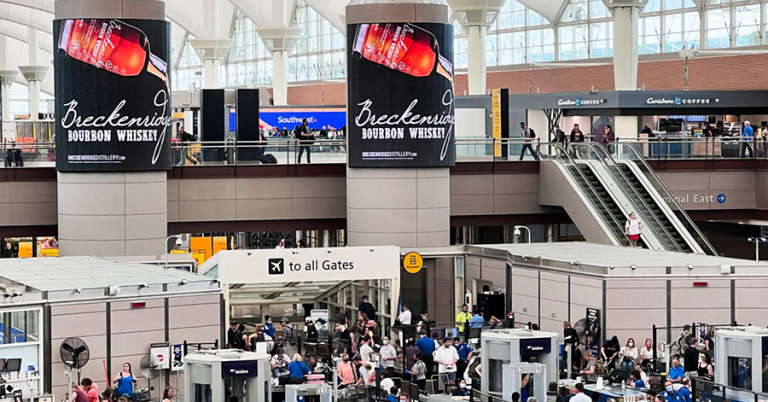
Three things make airport advertising expensive. First, the audience. Specifically, airport travellers in India are mostly SEC A. They are high-income experts, decision-makers and premium consumers. Specifically, no other OOH format concentrates this demographic so densely.
Second, dwell time. A departure lounge traveller sits with the same brand for 60 to 90 minutes. In fact, no other OOH format matches this dwell time. However, a roadside billboard gets two to three seconds of attention per pass. This makes airport formats very different from outdoor advertising elsewhere.
Third, limited inventory. Each terminal has a fixed number of panels, screens and special positions. So demand regularly exceeds supply. As a result, premium airport rates do not negotiate the way standard OOH rates do.
Airport Advertising Formats and Where They Appear
Airport advertising covers several distinct format categories. Also, each format category sits at a different point in the passenger journey. Consequently, similar-sized formats at the same airport can have very different rates.
Check-in and arrivals: Specifically, these include counter-top banners, floor graphics, pillar wraps and screens. Specifically, these reach passengers at the first point of contact inside the terminal.
Security and pre-departure: Digital screens and backlit panels in the security queue zone. Dwell time here runs 10-20 minutes. Dwell time here is 10-20 minutes. Consequently, this is high-attention inventory.
Departure lounge and gates: In fact, this is the premium zone. DOOH screens, large backlit panels, gate branding and seating-area displays. Average dwell time is 60-90 minutes. In fact, this is where most large airport media budgets go.
Baggage claim: Similarly, backlit panels, overhead displays and baggage belt wraps in arrivals. Similarly, this reaches a captive audience waiting 15-25 minutes. It also reaches the traveller’s companions.
Jet bridge and boarding gate: Premium close-up exposure at the exact moment of boarding. However, this inventory has limited supply. Consequently, it commands the highest per-unit rates in any terminal.
Washrooms: Also, mirror panels, door wraps and digital screens. These have high dwell time and very close viewing distance. Also, they are typically the lowest-cost format per unit.
External and approach: Billboards and DOOH on the airport road, approach highway and car park zones. Furthermore, these reach a broader audience including drop-off and pick-up traffic.
For a broader look at all OOH format types and how they compare, see OOH advertising.
Indicative Costs by Format: 2026 Rates
All rates below are indicative planning ranges only. They are not fixed rate cards. Actual costs vary by airport, terminal, position, campaign duration, seasonal demand and operator. Always confirm current rates with the airport media partner before booking.
Specifically, the rates below reflect premium Tier 1 airport inventory at large terminals. These include Delhi T3, Mumbai T2 and Bengaluru KIA. Smaller airports and secondary terminals will be lower.
| Format | Indicative planning range |
Notes |
| Departure lounge – large DOOH screen | ₹2L-₹15L+ / month | Premium location; dwell time up to 90 minutes |
| Departure lounge – backlit panel | ₹1L-₹10L / month | Size and position affect rate significantly |
| Baggage claim – belt wrap | ₹2L-₹12L / month | Captive audience; 15-25 min dwell time |
| Jet bridge / boarding gate branding | ₹5L-₹50L+ / month | Highest CPM format; limited inventory |
| Check-in zone – digital screen | ₹75K-₹4L / month | Depends on screen size and terminal tier |
| Security queue – DOOH / backlit | ₹1L-₹6L / month | High-attention zone; 10–20 min exposure |
| Washroom advertising | ₹25K-₹1.5L / month | Close-up viewing; lower cost per unit |
| Airport road hoarding | ₹50K-₹5L / month | Depends on size, proximity and approach traffic |
| Kiosk / pillar display | ₹50K-₹2.5L / month | Depends on placement in passenger flow |
However, these are strategy examples, not fixed packages or guaranteed results. The right split depends on the audience, campaign duration, season, stock and actual site rates.
Need indicative airport advertising costs for a specific terminal or format? Get an Indicative Airport Advertising Cost and Media Plan →
Costs by City and Airport
Airport advertising rates vary substantially by city. In general, Delhi and Mumbai airports command the highest rates in India. However, Bengaluru, Hyderabad, Chennai and Kolkata offer strong audience quality at lower cost.
Delhi – Indira Gandhi International Airport (IGI)
Delhi IGI has three terminals: T1, T2 and T3. Specifically, T3 handles the largest share of international and premium domestic traffic. It is also the most expensive terminal for advertising. However, T1 and T2 offer access to domestic travellers at lower rates.
Indicative planning range for T3 premium formats: ₹3L to ₹50L+ per month. T1 formats run from ₹1L to ₹10L per month.
Mumbai – Chhatrapati Shivaji Maharaj International Airport (CSIA)
Mumbai CSIA has two terminals: T1 (domestic) and T2 (international and select domestic). T2 is the premium terminal. Also, Mumbai ranks alongside Delhi for SEC A and business traveller audience quality.
Indicative planning range for T2 premium formats: ₹3L to ₹30L+ per month. T1 formats run from ₹1L to ₹8L per month.
Bengaluru – Kempegowda International Airport (KIA)
Bengaluru KIA serves a strong technology and startup-sector traveller demographic. Furthermore, it has seen strong passenger growth since Terminal 2 opened in 2023. Indicative range: ₹1L to ₹20L per month for key formats.
Hyderabad, Chennai and Kolkata
Hyderabad RGIA, Chennai MAA and Kolkata NSIA are strong secondary options. Specifically, they offer high-income regional audiences at 30-50% lower rates than Delhi and Mumbai. Indicative range: ₹75K to ₹10L per month for premium formats.
Tier 2 airports
Airports in Pune, Ahmedabad, Jaipur, Lucknow and Goa handle large seasonal and business traffic. Also, they offer premium-audience access at far lower rates. Indicative range: ₹20K to ₹2.5L per month.
For digital OOH formats at airports and premium locations, see DOOH advertising.
How Airport Advertising Rates Are Set
Airport media rates are not set the same way as roadside OOH. Instead, several factors drive airport pricing that do not apply elsewhere.
Terminal tier and traffic volume: Specifically, a T3 panel in Delhi commands a premium. It has high passenger volume, international traffic and strong brand perception. A panel at a smaller domestic terminal costs less, even at the same size.
Position in passenger flow: Specifically, departure lounge and jet bridge positions sit at the end of the journey. These are the highest-dwell, highest-rate positions. Check-in and arrivals are lower.
Operator exclusivity: Airport operators sell media through exclusive media partners. In India, operators like Times OOH, Percept OOH and MIAL (Mumbai) control the inventory. Consequently, there is no direct-owner negotiation the way there can be with roadside hoardings.
Seasonal demand: For example, Diwali, summer holidays and Christmas drive demand and rates higher. However, airport rates do not spike the way roadside festive OOH does.
Campaign duration: Also, longer bookings (3-6 months) may attract better rates. Short-term bookings (under one month) are harder to negotiate.
What’s in the Quote – and What Isn’t
Airport advertising quotes often cover only the media rental. However, several additional costs add up quickly.
What’s usually included
- Media rental for the agreed period
- Basic proof-of-display and campaign reporting
What’s usually NOT included
- Creative production and design fees
- Print and material for static formats (₹20K–1L+ per creative)
- Digital content production and asset upload fees
- Installation, removal and restoration costs
- GST at 18% on the media rental
- Airport access permits and agency fees
A quote that shows only the media rental is a partial quote. Always ask for the all-in cost before approving a booking.
For a comparison across transit and OOH formats, see transit media advertising.
Who Should Consider Airport Advertising
Airport advertising is not the right format for every campaign. However, for certain brands, it is among the most powerful OOH options in India.
Specifically, it works best for:
Premium consumer brands: For example, luxury goods, watches, jewellery, premium skincare and fashion. The airport audience mirrors the target demographic.
Financial services and fintech: Specifically, banking, wealth management, credit cards and investment platforms. Business travellers are a core segment for these categories.
Hospitality and aviation: For example, hotels, resorts, airlines and travel platforms. Specifically, passengers in transit are actively thinking about travel and accommodation.
Consumer electronics: Also, premium smartphones, laptops and accessories. Furthermore, the technology-sector traveller demographic is strong at Bengaluru, Hyderabad and Delhi.
Pharma and healthcare: Similarly, premium healthcare, diagnostics and pharmaceutical brands benefit from the high-SEC A reach.
B2B and corporate services: In fact, management consulting, enterprise software, professional services. In fact, business lounges and gate areas are the most effective B2B OOH environment in India.
Airport advertising concentrates SEC A buyers for 60 to 90 minutes in one place. No other format delivers that combination of audience quality and dwell time.
For a full range of outdoor and transit options across Indian cities, see outdoor advertising services.
Frequently Asked Questions
Costs and Formats
Q1. How much does airport advertising cost in India?
Airport advertising cost in India starts from around ₹20,000 per month for a small kiosk. At the top end, a jet bridge at Delhi T3 or Mumbai T2 runs ₹50 lakh or more. However, these are indicative planning ranges. Specifically, the final rate depends on the terminal, format, position, campaign duration and demand.
Q2. Which airport is most expensive for advertising in India?
Delhi IGI T3 and Mumbai CSIA T2 are the most expensive airports for advertising. Both handle the highest volumes of business and international travellers. Specifically, these formats command the highest CPMs in all of Indian OOH. Bengaluru KIA is close behind, particularly for technology-sector audiences.
Q3. What is the most effective airport advertising format?
Departure lounge and gate-area formats deliver the highest dwell time and audience engagement. Specifically, a departure gate passenger sits with the same brand for up to 90 minutes. There is no competing media. Baggage belt wraps also deliver strong results. The audience has nothing else to look at while waiting. However, the right format depends on the campaign goal and target audience.
Booking and Planning
Q4. How far in advance should brands book airport advertising?
Premium positions at Delhi T3 and Mumbai T2 often commit 8 to 12 weeks out. This is especially true for peak travel periods. Smaller airports and secondary formats may be available on shorter notice. So start inventory discussions 8 to 10 weeks before the campaign launch date. Also, confirm whether the booking requires airport authority approval separately from the media operator.
Q5. Is GST charged on airport advertising?
Yes. GST at 18% applies to airport advertising media rental in India. However, most quotes show only the base media rate. So always clarify whether the quoted figure includes or excludes GST. Also ask about production, install and any airport access fees before finalising the budget.
Q6. Can small brands advertise at airports?
Yes, if the target audience and campaign goal justify it. Also, tier 2 airports offer access from ₹20,000 to ₹1 lakh per month. Specifically, these let smaller brands test airport media before committing to Tier 1 inventory. However, the key is matching the format to the audience, not the budget alone.
Use Airport Advertising for Audience Quality, Not Just Reach
Airport advertising in India is not the cheapest OOH format. However, it is the most precise for reaching high-income, decision-ready audiences at scale. In fact, no transit format delivers 90 minutes of captive attention from an SEC A audience.
Consequently, the CPM comparison with roadside formats often looks unfavourable. But the audience quality and dwell time comparison does not. So evaluate airport advertising on cost per qualified impression, not cost per total impression.
In summary, use airport advertising when the target audience travels. Use it when the category benefits from premium brand associations. Also, use it when the goal justifies a higher CPM for better exposure quality.
Get an Indicative Airport Advertising Cost and Media Plan
Author: CashUrDrive Editorial Team
This article was produced with AI assistance and reviewed by the CashUrDrive editorial team.