Fair Ground Advertising India: Formats, Locations and Campaign Opportunities
 By Annu
Fair ground advertising india is a type of out-of-home advertising. It places brand messages at trade fairs, melas, and events. Visitors choose to attend and stay two to six hours on-site. In contrast, a roadside hoarding impression lasts just two to four seconds.
What this article covers:
Fair ground advertising india uses five main formats: gate branding, pavilion wraps, direction boards, DOOH screens, and ground-level branding. Top venues include IITF Delhi, Auto Expo, Pushkar Mela, and state Krishi Melas. Costs run from ₹10,000 at a district mela to ₹10 lakh for DOOH at a national expo. Before any booking, CashUrDrive’s Atlas platform checks the audience data for that venue.
According to the India Trade Promotion Organisation, IITF draws 1.5 million visitors over 14 days each November. Indeed, that is the highest footfall at any OOH venue in North India. Yet most brands still have no fair ground strategy. This guide helps you build one.
What Is Fair Ground Advertising India
Fair ground advertising india places brand messages at trade fairs, melas, and events. Visitors there chose to attend. Indeed, that is the core difference from any other OOH format.
A billboard viewer passes in two to four seconds. A fair ground visitor, however, stays for hours. Because of that extra time, a brand can do far more. For example, brands run live sampling, product demos, and direct buyer meetings on-site. No standard OOH format offers all three at once.
At CashUrDrive, we plan fair ground work alongside transit media advertising and billboard advertising . Fair ground placements carry the high-intent element. Transit media adds city-wide reach. Together, the two formats do what neither can do alone.
Fair Ground Advertising India: Five Formats Worth Knowing
Gate and Perimeter Branding
Gate branding covers the one touchpoint every visitor hits. Each person enters and exits through the same gate. That means two exposures per visit at 100% of footfall. For example, at IITF gate panels run 20 by 10 feet in backlit format. For brands that want simple, high-reach coverage, this is the first format to book.
Pavilion and Stall Branding
Pavilion branding wraps the outside of exhibition halls. Stall branding, however, takes the message inside. Both formats work best when the brand’s category is in that pavilion. For example, a farm equipment brand next to the agri hall reaches buyers with active purchase intent. Still, roadside hoarding cannot create that context.
Direction Boards and Signage
Direction boards follow visitors across the whole venue. A brand that sponsors this signage appears at every route turn. In fact, direction board sponsorships beat single-panel placements on unaided brand recall. As a result, visitors link the brand with helping them find their way. Because of that, the association is positive and personal.
Digital Screens and DOOH
Indeed, digital OOH at fairgrounds is growing fast. Large LED screens now appear at IITF and most major expos. Because screens allow dynamic content, brands can rotate messages by time of day. According to Broadsign’s 2025 DOOH Report, dynamic creative drives 47% more engagement than static formats. Atlas also checks which screens reach your audience before the booking is confirmed.
Ground-Level Branding
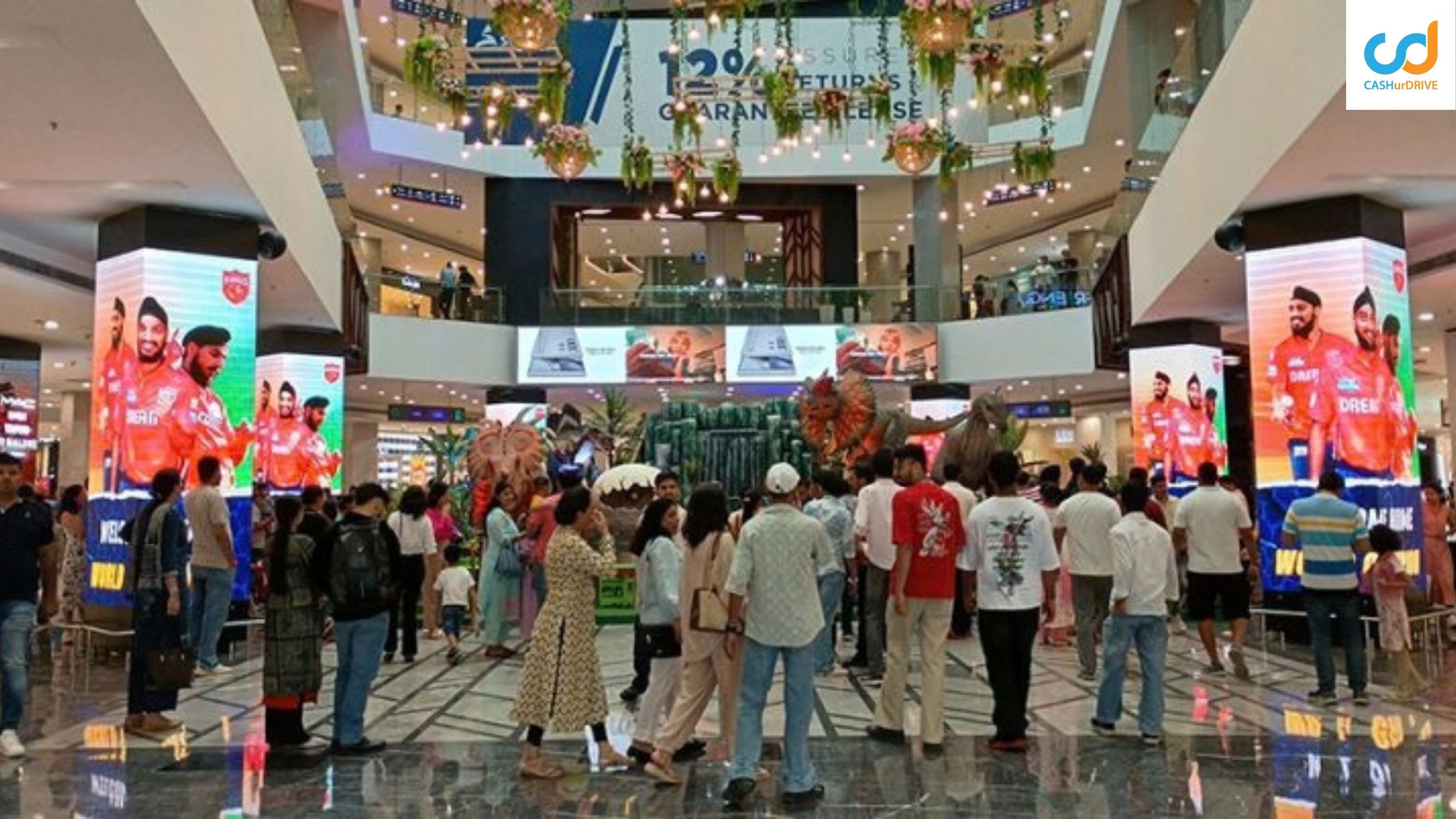
Together, ground decals, tent wraps, food court boards, and seating panels complete the coverage. These keep the brand visible during rest and meal breaks. When visitors sit down, they are most open to brand messages. When combined with gate and direction placements, ground branding covers the full visit.
Where to Run Fair Ground Advertising India
India International Trade Fair (IITF), New Delhi
Indeed, IITF is the largest fair ground media event in India. It runs 14 days in November at Pragati Maidan. According to the India Trade Promotion Organisation, it draws 1.5 million visitors each year. The audience is urban, aspirational, and SEC A and B. For FMCG, fintech, and consumer electronics brands, IITF is the first choice in North India.
Auto Expo, Greater Noida
Similarly, Auto Expo is Asia’s largest motor show. It draws auto buyers, trade visitors, and urban families. In fact, the audience skews SEC A and B with high spending power. Because of that, adjacent brands also do well here. For example, insurance and fintech brands invest at Auto Expo alongside auto companies.
Pushkar Mela, Rajasthan
Pushkar Mela draws 400,000 visitors over ten days, per Rajasthan Tourism data. It mixes rural buyers with domestic and overseas tourists. Indeed, that cross-segment blend is rare in the Indian fair ground calendar. As a result, no other single event in the OOH calendar combines those income groups in one venue. FMCG and agri-input brands use this event to reach multiple segments at once.
State Agricultural Exhibitions – Krishi Melas
Krishi Melas run across UP, Punjab, Haryana, Maharashtra, and Gujarat each year. They give brands direct access to Tier 2 and Tier 3 buyers. Visitors arrive with strong purchase intent. Also, the cost per thousand impressions at a state mela is far lower than urban OOH rates. Therefore, Krishi Melas are the best-value fair ground option for rural-focused brands.
Regional Trade and Industry Fairs
Cities like Ahmedabad, Bangalore, and Kolkata host focused fairs in textiles, gems, and infrastructure. Similarly, these draw professional and B2B buyers. In fact, the visitor intent is transactional, not exploratory. Because of that, pavilion and stall branding convert well. Buyers expect direct engagement at these events.
Fair Ground Advertising India vs. Other OOH Formats
In fact, the key difference is intent and dwell time. For example, highway hoarding gives a two-second passive impression. In contrast, a fair ground visitor chose to attend. They came with a reason and stayed for hours. Indeed, that shift in audience intent is the foundation of every fair ground advantage.
According to Talon OOH’s 2026 Trust in Advertising Report, 58% of consumers trust OOH advertising. Indeed, that figure rises each year as digital trust falls. Still, fair ground environments raise trust even higher. When visitors are on-site, they have no scroll fatigue, no banner blindness, and no push alerts pulling them away.
There is also a live activation edge. Sampling and direct brand meetings are possible at a fair ground. Instead of a two-second passive view, a brand gets hours of proximity to live buyers. For brands launching new products, OOH advertising at fair grounds offers both awareness and conversion in one event.
How Atlas Improves Fair Ground Advertising India
Most brands pick venues on event name or headline footfall. Instead, CashUrDrive’s Atlas platform brings verified audience data to every fair ground decision. This happens before any spend is made.
First, Atlas uses device-level geofencing to check which audience segments visit a fair ground. Second, NCCS data classifies those segments by income group. Third, RWI scoring maps real-world behaviour against a brand’s buyer base. Together, these three inputs confirm whether a venue’s audience matches the brief – before any budget moves.
After the event, Atlas measures retail footfall lift at the brand’s locations within 30 days. In FMCG campaigns at Tier 2 Krishi Melas, Atlas data showed retail footfall uptick of 18-24%. Indeed, that closes the measurement gap that fair ground campaigns have long left open. Finally, for multi-city campaigns, Atlas also tracks results across all events in one dashboard.
Fair Ground Advertising India: Costs and Campaign Planning
Costs vary by event tier, format, and booking window. For example, at national fairs gate branding at IITF costs ₹3-8 lakh for the full 14-day run. Pavilion wraps range from ₹1.5-5 lakh. Direction boards cost ₹50,000-2 lakh per event. DOOH screens at top expos run ₹2-10 lakh for a 14-day window.
Still, state and district melas run at lower rates. For example, gate branding at a Krishi Mela costs ₹20,000-80,000. Ground-level formats start at ₹10,000 per event. Also, the cost per thousand impressions at a high-footfall state mela is on par with urban transit media on top routes.
For planning, book national events six to eight weeks out. State melas, however, accept bookings two to four weeks ahead. Before the event, pairing fair ground ads with transit media on feeder routes builds brand awareness. When a visitor walks in, they already know the brand name. Atlas audience data for any new venue is ready within 48 hours of brief submission.
Frequently Asked Questions
Q1: What is fair ground advertising india?
Fair ground advertising india is OOH advertising placed at trade fairs, melas, and events across India. Visitors choose to attend and stay two to six hours on-site. In contrast, a roadside billboard holds attention for just two to four seconds. According to ITPO, IITF New Delhi draws 1.5 million visitors over 14 days – the largest single fair ground event in North India.
Q2. Which events work best for fair ground advertising india?
IITF New Delhi is the top pick for urban SEC A and B audiences – 1.5 million visitors each November per ITPO. Pushkar Mela, however, delivers cross-segment reach with 400,000 visitors per Rajasthan Tourism data. State Krishi Melas across UP, Punjab, and Maharashtra offer the best cost per reach for Tier 2 brands.
Q3. How much does fair ground advertising cost in India?
Costs range from ₹10,000 for ground-level formats at a district mela to ₹10 lakh for DOOH at a national expo. Gate branding at IITF costs ₹3-8 lakh for the full event. State mela gate branding runs ₹20,000-80,000. For national events, book six to eight weeks before opening.
Q4. How does fair ground advertising differ from billboard advertising?
Fair ground visitors attend with strong intent and stay for hours. Billboard viewers, however, pass in two to four seconds. In fact, according to Talon OOH’s 2026 Trust Report, OOH in high-attention settings generates 40% stronger brand recall than roadside formats. Fair grounds also allow live sampling and demos – something a static billboard cannot offer.
Q5. Can CashUrDrive measure ROI from fair ground campaigns?
Yes. Atlas measures retail footfall at a brand’s locations within 30 days of event close. Before the campaign, Atlas uses geofencing and NCCS data to check audience match. In FMCG campaigns at Tier 2 Krishi Melas, Atlas confirmed retail footfall uptick of 18-24% within 30 days of the event.
Q6. Is fair ground advertising india suitable for D2C brands?
Yes. Fair ground advertising india works well for D2C brands entering new cities or launching new products. Urban trade fairs attract SEC A and B consumers – the core D2C profile. Brands combine gate branding with DOOH and on-ground sampling for a full-funnel approach. Before the booking is confirmed, Atlas checks the audience match.
Conclusion
Fair ground advertising india fills a gap that no billboard or transit format can. Dwell time is long and visitor intent is high. Because Atlas checks the audience before the booking, campaigns start with confirmed reach – not assumptions. After the event, Atlas tracks footfall and proves the result. That turns a fair ground activation into a measurable investment.
CashUrDrive plans, executes, and measures fair ground campaigns at IITF, major expos, and state melas across Delhi NCR, Mumbai, Bangalore, and Pune. Request an Atlas audience map before you confirm the booking.
Author: CashUrDrive Editorial Team | CashUrDrive Marketing Limited
This article was produced with AI assistance and reviewed by the CashUrDrive editorial team.