FMCG Festive Advertising Strategy: How OOH and DOOH Drive Brand Visibility
 By Annu
FMCG is the largest category in Indian OOH advertising. However, FMCG brands often copy the same strategy as premium brands. They get worse results for doing so. A jewellery brand belongs on a landmark hoarding. An FMCG brand, however, belongs on the bus route through a local corridor. That is where its consumers actually live.
During Diwali, Navratri and Ganesh Chaturthi, FMCG buying habits shift. OOH is uniquely placed to influence this. So the right strategy is not just ‘more outdoor’. It is outdoor in the right formats and zones. That is what builds awareness and shifts sales.
Why FMCG Brands Need a Different OOH Approach
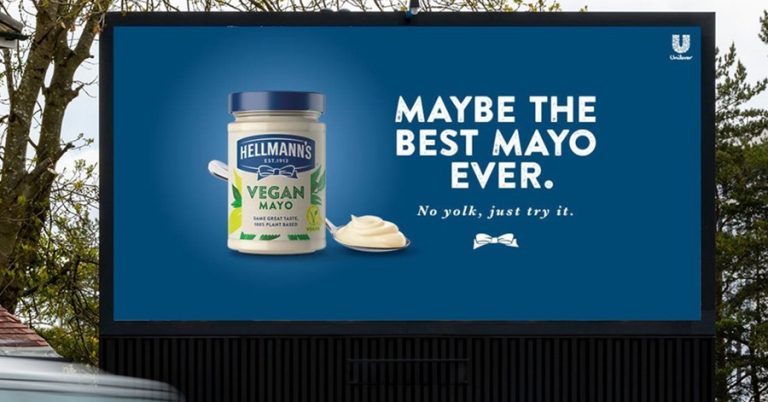
Most OOH planning prioritises premium sites with the highest impression counts. For FMCG, however, that logic does not hold. An FMCG consumer does not buy based on a premium hoarding. Instead, they buy at the kirana store. Also, they shop at the weekly market and in their local lane.
So the FMCG OOH brief is different. Specifically, it needs:
Local reach: Not just arterial roads. Think of the bus route through the target area. Also, the auto-rickshaw in the market lane and the wall painting near the corner store.
High frequency: One impressive site does not build FMCG awareness. Repeated exposure in a local area does. So the budget should create frequency, not single-point impact.
Proximity to purchase: FMCG buying decisions happen close to the point of purchase. Consequently, OOH near kirana clusters and weekly markets drives in-store interest. It does this better than city-centre hoardings.
Scale across zones: FMCG brands serve entire cities. Therefore, the media plan must cover multiple local areas at once. It should not concentrate in one premium corridor.
For a full breakdown, see the guide to FMCG outdoor advertising.
The Festive Season Opportunity for FMCG
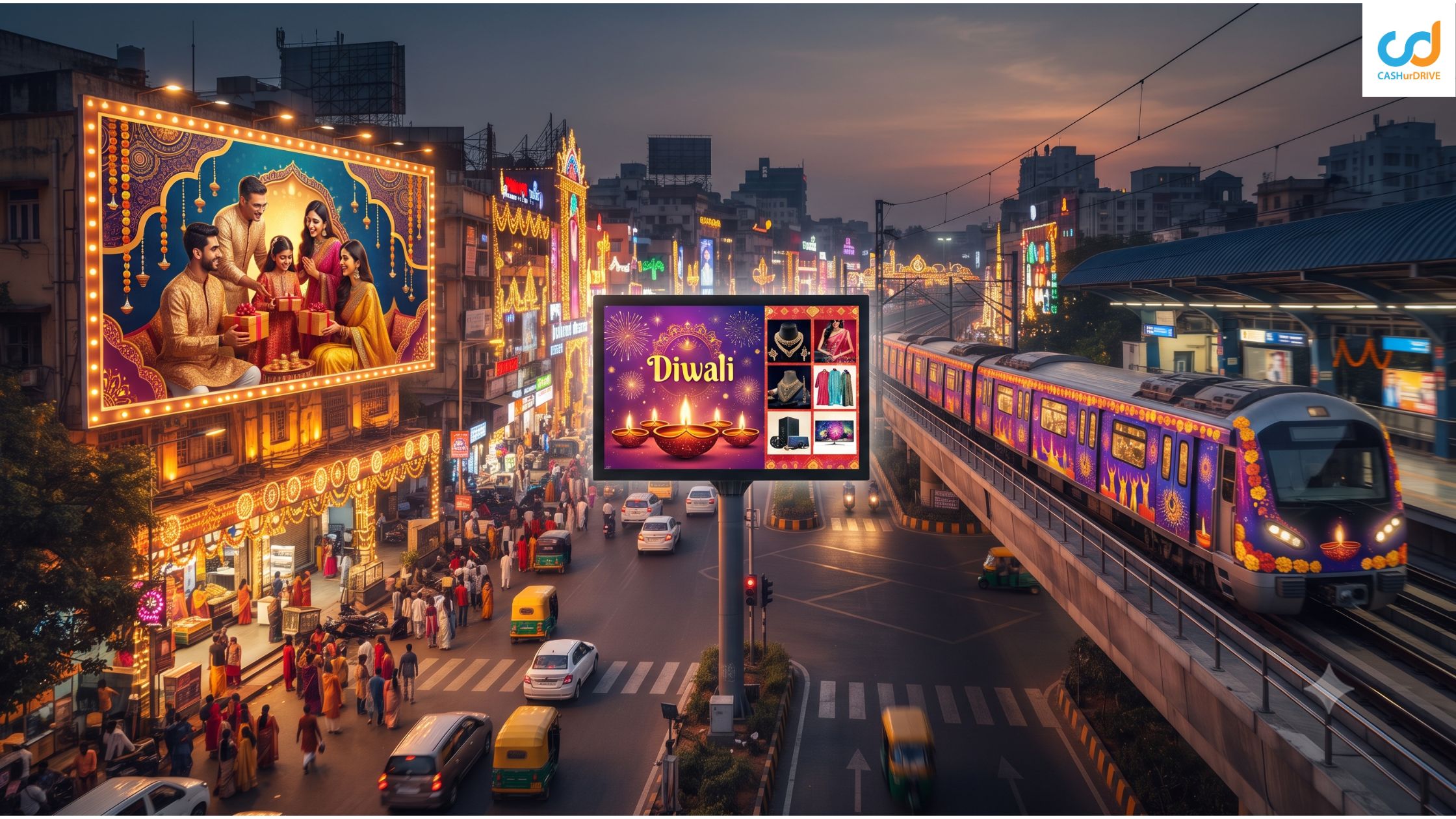
Diwali is not just the biggest OOH booking period of the year. It is also the biggest FMCG sales period. Specifically, the Diwali window drives the highest volumes of the year. This covers sweets, snacks, beverages, packaged foods, home care and personal care.
The buying pattern is also different during this period. For example, consumers stock up earlier and buy in larger volumes. They also choose brands that feel present and familiar. So OOH during the festive window is not just about awareness. It is about being top of mind at peak buying time. In fact, that moment only comes once a year.
How the FMCG festive calendar works
The festive window runs longer than most brands plan for. For Diwali 2026 (8 November), the FMCG window starts in mid-October. However, some categories peak even earlier. Home care and cleaning products rise as consumers prepare their homes before Diwali.
Similarly, Navratri (11–19 October) is strong for food and beverage FMCG. This is especially true in Gujarat, Ahmedabad and North India. Ganesh Chaturthi (14 September) is the first festive trigger of the season. It is especially relevant in Mumbai.
As a result, a well-planned FMCG festive OOH campaign runs in phases. It builds awareness in late September. It drives interest through October. Then it converts during the peak Diwali shopping week.
Want an FMCG-specific festive OOH media strategy? Get an Industry-Specific OOH Media Strategy →
OOH Formats That Work Best for FMCG
Not every OOH format delivers equal value for FMCG. The formats below are ranked by how well they serve FMCG needs. These include local reach, frequency, proximity to purchase and city-wide scale.
|
Format |
Why it works for FMCG |
Festive use case |
| Auto-rickshaw advertising | Covers local lanes beyond bus routes. Also reaches market zones and kirana clusters. | Route-level festive reach in target local zones. Strong for food and snacks. |
| DTC / BEST bus branding | High-frequency corridor coverage across the city. Reaches SEC B/C audiences on their daily routes. | Corridor-level festive presence across target areas throughout the season. |
| Wall painting | Low cost, long exposure in local areas. Reaches consumers where they live. | Local festive visibility near kirana stores and weekly market areas. |
| DOOH at retail junctions | Reaches consumers at or near the point of purchase. Also allows festive creative updates. | Diwali gifting creative near supermarket and kirana corridors. |
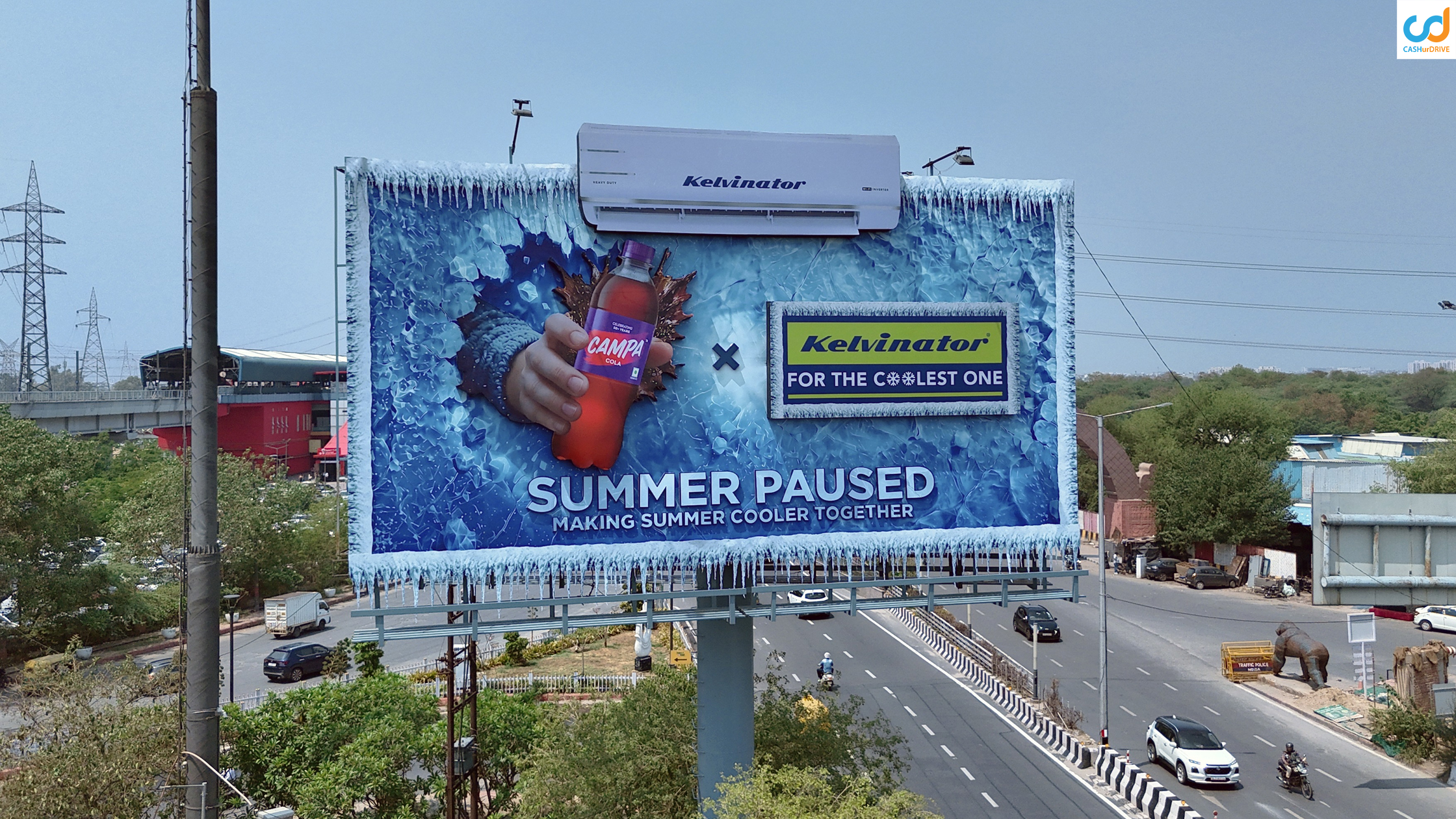
| Standard hoardings | Arterial road visibility across target city zones. | City-wide brand presence during the festive window. |
For a broader look at which sectors use OOH most well, see FMCG billboard advertising.
The most common FMCG OOH mistake: spending in premium zones. The target consumer does not actually live there.
How DOOH Specifically Benefits FMCG Festive Campaigns
DOOH is well-suited to FMCG festive campaigns because of creative flexibility. For example, a brand running across the five-day Diwali window can show different creatives. Moreover, each SKU or theme gets its own message. All this happens without paying to reprint.
Specifically, DOOH for FMCG festive campaigns enables:
SKU rotation: Show gifting pack creative during peak gifting weeks. Then switch to value-pack creative after Diwali. Also, switch back to regular SKUs post-festival without any new production cost.
Time-of-day targeting: Morning screens near supermarkets reach shoppers on their way to work. Evening screens near market zones, however, reach consumers returning from shopping. DOOH allows both in the same campaign.
Festive-day messaging: Run a Dhanteras-specific creative on 6 November. Then switch to the main Diwali creative on 8 November. Consequently, the brand feels relevant to the specific day, not just the general season.
Retail junction presence: DOOH screens near supermarkets, mall entrances and busy kirana zones drive in-store interest. This happens at the point of purchase.
The trade-off, however, is cost. DOOH runs at 1.5x to 2x the media rate of comparable static sites. Furthermore, the festive premium applies on top. So DOOH makes financial sense for FMCG when the campaign uses creative flexibility. Running one static message on a DOOH screen is just an expensive hoarding.
Building the FMCG Festive Campaign by City
FMCG campaigns are often pan-India or multi-city. However, the media mix differs by city. Here is how the approach shifts across the main FMCG markets:
Delhi NCR
Delhi’s density of local areas and transit corridors makes it the strongest FMCG OOH market in India. Specifically, the DTC bus network covers over 600 routes. It gives corridor-level access to local zones across West, North and East Delhi. Auto-rickshaws serve the lanes and market clusters that buses cannot reach.
For Diwali, West Delhi and North Delhi are among the most active FMCG festive markets. Specifically, they rank among the top markets across all of India. Karol Bagh, Rajouri Garden, Rohini and Pitampura are key zones. So brands need transit coverage. Also, local wall painting or secondary hoardings work well in these areas.
Mumbai
Mumbai’s BEST bus network delivers strong FMCG reach across the western and central city. Also, auto-rickshaw coverage in the suburbs adds to this. For example, Dadar, Andheri, Borivali and Thane are key FMCG areas for festive campaigns. Mumbai Metro Line 1 also reaches a working-class commuter audience in both directions.
Bengaluru and Other Metros
Bengaluru’s FMCG OOH strength is in its local corridors — Koramangala, HSR Layout, Whitefield and North Bengaluru. However, BMTC bus coverage is lower than Delhi or Mumbai. As a result, auto-rickshaw campaigns and wall painting often deliver better local reach. In fact, bus formats alone are not enough.
Similarly, Hyderabad, Chennai and Pune are strong FMCG markets during the festive window. Consequently, each city needs its own format mix. A direct copy of the Delhi or Mumbai approach rarely works.
For format-level inventory options, see CashUrDrive’s full guide to transit advertising formats.
Frequency vs Reach: The FMCG Planning Principle
FMCG has a clear principle in media planning. Frequency builds awareness faster than reach alone. In OOH terms, this means owning a smaller set of sites in the target zone. Build repeated exposure there. Do not place one site in each of twenty different areas.
For a festive campaign, the practical implication is clear. Concentrate the bus fleet on routes that serve the target local area. Do not spread the same fleet budget thin across every route in the city. Similarly, wall painting should focus on two or three zones. These should be the most relevant ones for the brand’s core buyer.
However, frequency planning does not mean ignoring reach. Instead, the right approach for FMCG is:
Reach layer: City arterials and corridor hoardings for broad brand visibility. This is a light layer – a few well-chosen sites at key junctions.
Frequency layer: Transit and wall painting in the target local zones. This is where the bulk of the budget should go. Also, this is where the FMCG buyer actually sees the campaign multiple times.
Point-of-purchase layer: DOOH near supermarkets and kirana zones. This is the smallest layer. However, it is often the most effective for driving in-store trial during the festive window.
A ₹50 lakh FMCG OOH budget split across 10 cities with one bus each delivers nothing. Concentrate it in 2 cities with 50 buses each. That builds frequency and shifts sales.
Frequently Asked Questions
Strategy and Formats
Q1. What is the best OOH format for FMCG festive advertising in India?
For most FMCG brands, transit advertising delivers the best combination of local reach and corridor frequency. Bus branding and auto-rickshaw wraps are the strongest formats. However, the right mix depends on the city and the target local zone. Wall painting is also strong for FMCG. It places the brand in the lanes and local markets where the consumer actually shops.
Q2. Should FMCG brands use DOOH for festive campaigns?
Yes, but only if the campaign needs creative flexibility. DOOH makes sense when the brand wants to rotate SKU creatives. Also, it works for time-of-day messaging or specific dates like Dhanteras. For a single-message festive campaign, however, static hoardings and transit formats often deliver better value. The total cost is also lower.
Q3. How much should an FMCG brand budget for a festive OOH campaign?
It depends on the number of cities and the target audience size. However, here is a rough guide. A single-city campaign with 30–50 buses, 50–100 autos runs between ₹20 lakh and ₹60 lakh. Also, add local wall painting on top. The final cost depends on the city and duration. Also, add the festive premium of 1.5x to 2x on top of standard rates.
Planning and Timing
Q4. How early should FMCG brands plan their festive OOH?
Start 8 weeks before the first festival in the window. For Diwali 2026 (8 November), that means mid-September. However, some formats need longer. Specifically, bus depot scheduling for wraps takes 4–6 weeks. Also, zone-specific auto campaigns in Delhi need permit-zone confirmation before booking. Brands that start in October often find the best transit slots already committed.
Q5. Can smaller FMCG brands run effective festive OOH on limited budgets?
Yes. The key is focus. For example, a ₹10–15 lakh budget can own one local zone. Use it for 20 buses, 40 autos and wall painting. It will outperform. The same budget spread across a whole city will not. Also, smaller brands should prioritise the right festive period. For many FMCG sub-categories, that is the two weeks before Diwali. The full festive season is often too long a commitment.
Festive OOH That Actually Moves FMCG
The brands that win FMCG festive OOH are not the ones with the biggest hoardings. They are not the ones in the most expensive zones. In fact, they are the ones that show up most consistently. They appear in the local areas, transit corridors and market zones where their buyers actually are.
So the FMCG festive OOH strategy is, at its core, a frequency story. Reach the right corridors. Build enough repetition for the brand to feel familiar when the purchase decision happens. Then make sure the campaign is live before the first purchase spike, not after.
Overall, transit advertising, wall painting and DOOH at retail junctions are the formats that deliver this. Premium hoardings alone do not.
Get an Industry-Specific OOH Media Strategy
Author: CashUrDrive Editorial Team
This article was produced with AI assistance and reviewed by the CashUrDrive editorial team.